




Circuit breakers are essential protection devices in electrical power systems. Among the most widely used technologies in medium- and high-voltage networks are Vacuum Circuit Breakers (VCB) و SF₆ Circuit Breakers. Both are designed to interrupt fault currents and protect electrical infrastructure, but they operate using different arc-quenching mediums and are suited for different voltage levels and applications.
Understanding the difference between VCB and SF₆ circuit breakers helps engineers, utilities, and industrial users select the most suitable protection solution for their power systems.
This article explains the working principles, technical differences, advantages, applications, and selection criteria for VCB and SF₆ breakers.
What Is a Vacuum Circuit Breaker (VCB)?
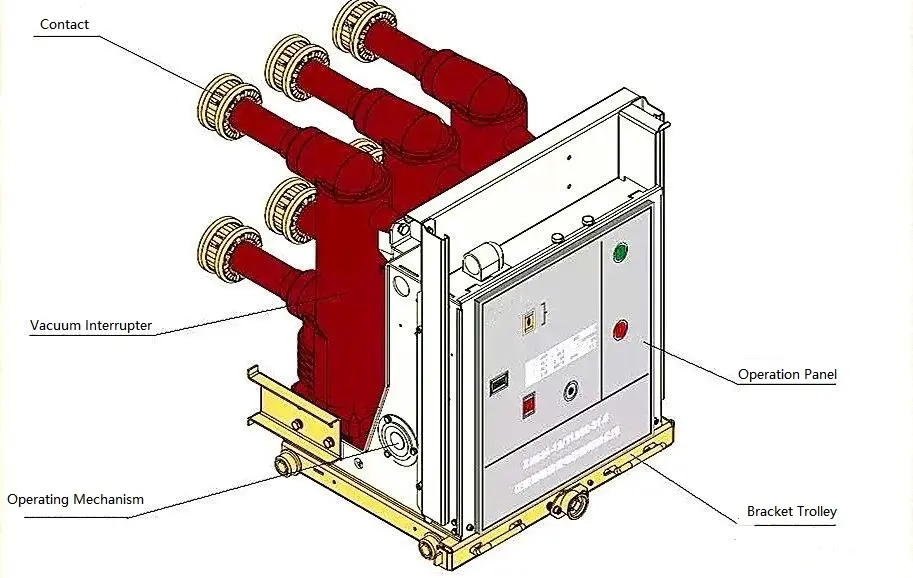
A Vacuum Circuit Breaker (VCB) is a switching device that uses a sealed vacuum interrupter to extinguish electrical arcs when the contacts separate.
Inside the vacuum chamber, the absence of gas molecules makes it difficult for the arc plasma to sustain itself. When the AC current reaches its natural zero crossing point, the arc quickly extinguishes and the vacuum regains its insulation strength.
Because of these characteristics, VCBs are widely used in medium-voltage power distribution systems.
Typical Voltage Range
- 3.3 kV – 36 kV
المزايا الرئيسية
- Excellent arc-quenching capability
- Very low maintenance
- عمر خدمة طويل
- Compact design
- Environmentally friendly operation
What Is an SF₆ Circuit Breaker?
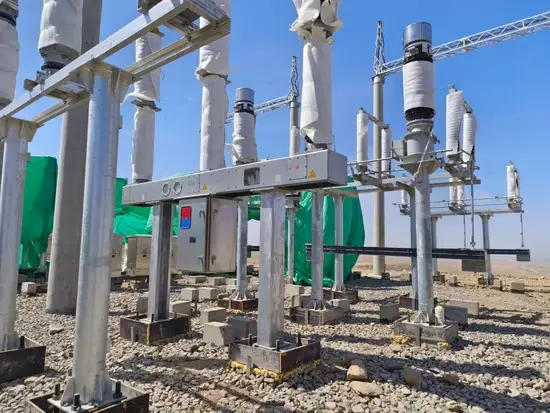
أن SF₆ Circuit Breaker uses sulfur hexafluoride gas (SF₆) as both the arc-quenching medium and insulation medium.
SF₆ gas has extremely high dielectric strength and excellent arc-cooling properties. When the contacts separate during a fault, the gas is compressed and directed toward the arc, rapidly cooling and extinguishing it.
Due to its superior insulation properties, SF₆ breakers are widely used in high-voltage and extra-high-voltage transmission systems.
Typical Voltage Range
- 72.5 kV – 800 kV
SF₆ breakers are commonly installed in:
- High-voltage substations
- Gas-insulated switchgear (GIS)
- Transmission networks
Organizations such as ABB, شنايدر إلكتريك، و Siemens Energy widely deploy SF₆ breakers in global power grids.
Working Principle Comparison
قاطع دارة تفريغ الهواء
The VCB interruption process includes:
- Contacts open inside the vacuum interrupter.
- A metal vapor arc forms between the contacts.
- The arc extinguishes naturally at the current zero point.
- The vacuum rapidly recovers dielectric strength, preventing arc re-ignition.
Because vacuum has extremely low particle density, dielectric recovery occurs very quickly.
SF₆ Circuit Breaker
The SF₆ breaker operates differently:
- Contacts separate in an SF₆-filled chamber.
- High-pressure SF₆ gas flows through the arc zone.
- The gas absorbs heat and cools the arc plasma.
- Ionized particles recombine quickly, restoring insulation.
This process allows SF₆ breakers to interrupt very high fault currents at high voltage levels.
VCB vs SF₆ Circuit Breaker: Key Differences
| الميزة | قاطع دارة تفريغ الهواء | SF₆ Circuit Breaker |
|---|---|---|
| Arc Quenching Medium | Vacuum | SF₆ Gas |
| Typical Voltage Range | 3.3 kV – 36 kV | 72.5 kV – 800 kV |
| وسيط العزل | Vacuum gap | SF₆ gas |
| الصيانة | منخفضة جداً | معتدل |
| الأثر البيئي | Environmentally friendly | SF₆ is a greenhouse gas |
| Equipment Size | مدمجة | Larger equipment |
| Operating Life | Very long | طويل |
This comparison shows that VCB and SF₆ breakers serve different roles within electrical power systems.
Advantages of Vacuum Circuit Breakers
1. Minimal Maintenance
The vacuum interrupter is sealed for life and requires almost no servicing. There is no oil replacement or gas refilling.
2. Long Service Life
Vacuum circuit breakers typically achieve:
- 20,000+ mechanical operations
- 10,000+ electrical operations
This makes them highly reliable in industrial environments.
3. Environmentally Friendly
Unlike SF₆ gas, vacuum technology does not involve greenhouse gases.
SF₆ is known to have a very high global warming potential (GWP), according to environmental studies referenced by organizations such as the Intergovernmental Panel on Climate Change (IPCC).
4. Compact Switchgear Design
Vacuum interrupters allow manufacturers to build compact medium-voltage switchgear, reducing installation space.
Advantages of SF₆ Circuit Breakers
1. Suitable for Very High Voltages
SF₆ breakers are capable of handling ultra-high voltage transmission systems, which require strong insulation and arc suppression.
2. High Interrupting Capacity
SF₆ gas breakers can interrupt very large fault currents, making them ideal for transmission networks.
3. Excellent Insulation Performance
SF₆ gas has dielectric strength approximately 2–3 times greater than air, allowing for compact high-voltage equipment such as Gas Insulated Switchgear (GIS).
Applications of VCB vs SF₆ Breakers
Vacuum Circuit Breaker Applications
VCBs are commonly used in:
- Medium-voltage industrial power distribution
- مصانع التصنيع
- Renewable energy facilities
- المباني التجارية
- Railway electrification systems
SF₆ Circuit Breaker Applications
SF₆ breakers are typically installed in:
- محطات النقل الفرعية ذات الجهد العالي
- Gas insulated substations (GIS)
- National power grid networks
- Large utility-scale infrastructure
Environmental Considerations
One of the biggest industry trends today is reducing SF₆ emissions.
Although SF₆ provides excellent insulation, it is considered a potent greenhouse gas with a very high global warming potential.
Because of this, many utilities and manufacturers are exploring alternatives such as:
- Vacuum interrupters for higher voltage levels
- New environmentally friendly insulating gases
As power systems modernize, vacuum-based technologies are expected to expand into higher voltage ranges.
How to Choose Between VCB and SF₆ Breakers
Selecting the appropriate breaker depends on several technical factors.
1. System Voltage Level
- Below 36 kV: VCB is typically the best choice.
- Above 72.5 kV: SF₆ breakers are generally required.
2. Maintenance Strategy
Facilities that prioritize low maintenance and reliability often prefer VCB switchgear.
3. Environmental Regulations
Regions with strict environmental policies may aim to reduce SF₆ usage.
4. Installation Environment
- Compact indoor switchgear → VCB
- Large outdoor transmission substations → SF₆ breaker
الأسئلة الشائعة
Neither is universally better. VCBs are ideal for medium-voltage distribution, while SF₆ breakers are designed for high-voltage transmission systems.
SF₆ gas has excellent dielectric strength and arc-cooling properties, allowing it to interrupt high-energy arcs in transmission networks.
Vacuum technology is expanding into higher voltage levels, but SF₆ breakers are still widely used in high-voltage transmission systems. However, environmental concerns may drive future alternatives.
الخاتمة
Both قواطع دوائر تفريغ الهواء (VCB) و SF₆ Circuit Breakers are critical components in modern electrical power systems. While VCBs dominate medium-voltage distribution networks, SF₆ breakers remain essential for high-voltage transmission infrastructure.
By understanding the differences in arc-quenching technology, voltage range, environmental impact, and maintenance requirements, engineers can choose the most suitable circuit breaker technology for their specific applications.
As the power industry evolves toward more sustainable solutions, vacuum-based switching technologies are expected to play an increasingly important role in future electrical grids.
 AR
AR  EN
EN  FR
FR  ES
ES  PT
PT  IT
IT  RU
RU