





رگولاتور ولتاژ و تثبیتکننده نوسساز موج سینوسی خالص IGBT تکفاز
ثباتکننده ولتاژ AC تکفاز تماماً خودکار ۲۰ کیویایاِی (AVR) برای یخچال
رگولاتور ولتاژ خودکار ۳۰ کیویای برای مصارف خانگی و اداری
ثباتکنندهٔ ولتاژ خودکار دیواری تکفاز سفارشی ۰.۵ کاوا تا ۱۰ کاوا
سفارشیشده ثابتکننده خودکار ولتاژ تکفاز دیواری این تثبیتکننده دیواری برای ارائه تنظیم ولتاژ قابلاعتماد و محافظت از لوازم برقی خانگی و تجاری طراحی شده است. با توان ۳.۵ تا ۱۰ کیوا، این دستگاه دیواری تحویل قدرت پایدار، ایمن و کارآمد را حتی در مناطقی با ولتاژ شبکه ناپایدار یا نوسانی تضمین میکند.
ساختهشده با فناوری پیشرفته کنترل رله یا موتور سروو، این دستگاه با اصلاح خودکار شرایط ولتاژ پایین یا بالا، خروجی ثابت ۲۲۰ ولت را حفظ میکند. جمعوجور، بیصدا و کارآمد، برای خانهها، دفاتر و کسبوکارهای کوچک که به دنبال محافظ ولتاژ قابلاعتماد در طراحی شیک و قابل نصب روی دیوار هستند، ایدهآل است.
ماشینهای لباسشویی مدرن متکی بر بردهای کنترل الکترونیکی، موتورهای اینورتر، حسگرها و نمایشگرهای دیجیتال, که باعث میشود آنها نسبت به منبع تغذیه ناپایدار حساس باشند. در بسیاری از مناطق، برق خانگی ممکن است به دلیل ناپایداری شبکه، بارهای سنگین الکتریکی یا شرایط جوی نوسان داشته باشد.
نصب یک ثابتکننده ولتاژ برای ماشین لباسشویی به اطمینان حاصل کردن از دریافت یک توسط دستگاه کمک میکند تأمین ولتاژ ایمن و پایدار, ، محافظت از قطعات الکترونیکی داخلی و افزایش طول عمر مفید دستگاه.
این راهنما توضیح میدهد نحوه کارکرد تثبیتکنندههای ولتاژ ماشین لباسشویی، کاربردها، مشخصات فنی و نحوه انتخاب مدل مناسب ولتاژ پایدارکننده برای دستگاه شما.
رگولاتور ولتاژ برای ماشین لباسشویی چیست؟
A مستحکمکننده ولتاژ یک دستگاه الکتریکی است که برای حفظ یک ... طراحی شده است. ولتاژ خروجی پایدار در محدوده تلرانس ایمن, ، حتی زمانی که ولتاژ ورودی نوسان میکند.
بر اساس مراجع مهندسی برق و تحقیقات کیفیت توان منتشر شده توسط انجمن مهندسین برق و الکترونیک (مؤسسه مهندسان برق و الکترونیک), نوسانات ولتاژ یکی از شایعترین علل خرابی تجهیزات الکترونیکی در محیطهای مسکونی است.
یک تثبیتکننده ولتاژ برای ماشین لباسشویی نصب شده است. بین پریز برق دیوار و دستگاه. این ولتاژ ورودی را بهطور مداوم پایش میکند و بهطور خودکار آن را به سطحی ایمن اصلاح میکند.
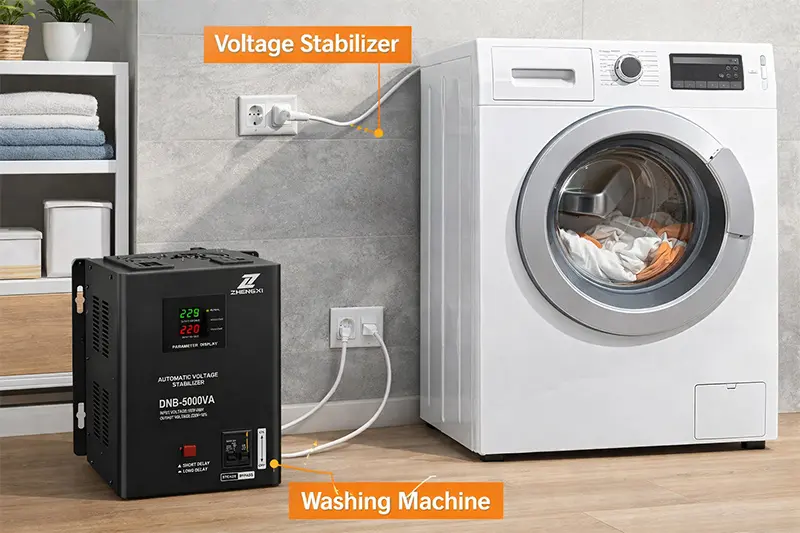
اکثر ماشینهای لباسشویی برای کارکرد در دمای زیر طراحی شدهاند:
- ۲۲۰–۲۴۰ ولت در بسیاری از مناطق (آسیا، اروپا، آفریقا)
- ۱۱۰–۱۲۰ ولت در آمریکای شمالی
اگر ولتاژ تغذیه از این محدوده فراتر رود، میتواند باعث شود:
- خرابی برد کنترل
- داغ شدن موتور
- تعطیلیهای غیرمنتظره
- آسیب الکترونیکی دائمی
یک تثبیتکننده با تنظیم ولتاژ و محافظت از دستگاه، از این مشکلات جلوگیری میکند.
چرا ماشینهای لباسشویی به تثبیتکننده ولتاژ نیاز دارند
محافظت در برابر نوسانات ولتاژ
شبکههای برق همیشه بهطور کامل تنظیم نمیشوند. نوسانات ولتاژ ممکن است به دلایل زیر رخ دهند:
- تقاضای بالای برق در مناطق مسکونی
- صاعقه یا طوفان
- سیمکشی معیوب یا عدم توازن ترانسفورماتور
- روشن و خاموش کردن تجهیزات صنعتی
در شبکههای برق با تنظیم ضعیف، ولتاژ ممکن است از ۱۴۰ ولت تا بیش از ۲۸۰ ولت, ، فراتر از محدودهٔ عملکرد ایمن اکثر لوازم خانگی.
بر اساس مطالعات کیفیت توان که در آن ارجاع شدهاند استانداردهای منبع تغذیه IEC, نوسانات طولانیمدت ولتاژ میتواند به طور قابل توجهی عمر تجهیزات الکترونیکی را کوتاه کند.
حفاظت از تجهیزات الکترونیکی حساس
ماشینهای لباسشویی مدرن شامل چندین قطعه الکترونیکی حساس هستند:
- بردهای کنترل مبتنی بر ریزپردازنده
- درایوهای موتور اینورتر
- نمایشگرها و حسگرهای دیجیتال
- سیستمهای تشخیص خودکار بار
این سیستمها نیاز دارند ولتاژ پایدار برای عملکرد دقیق. حتی افت یا افزایش جزئی ولتاژ میتواند باعث خطاهای عملیاتی یا آسیب به مدارهای الکترونیکی شود.
با استفاده از یک ثابتکننده ولتاژ مخصوص لوازم خانگی به حفظ عملکرد پایدار کمک میکند و از تعمیرات پرهزینه جلوگیری میکند.
افزایش طول عمر لوازم خانگی
ولتاژ ثابت با بهبود قابلیت اطمینان ماشینهای لباسشویی به شرح زیر است:
- کاهش تنش الکتریکی بر روی قطعات داخلی
- پیشگیری از داغ شدن بیش از حد موتورها و بردهای مدار
- تضمین عملکرد شستشوی یکنواخت
در نتیجه، یک تثبیتکننده ولتاژ میتواند طرز افزایش چشمگیر طول عمر دستگاه و کاهش هزینههای نگهداری.
کاربردهای رایج تثبیتکنندههای ماشین لباسشویی
ثابتکنندههای ولتاژ برای ماشینهای لباسشویی در محیطهای مختلف به طور گسترده استفاده میشوند.
خانههای مسکونی
در بسیاری از خانهها، تثبیتکنندهها از وسایل برقی مانند ماشینهای لباسشویی، یخچالها، تلویزیونها و کولرهای گازی محافظت میکنند.
آپارتمانها و ساختمانهای بلندمرتبه
ساختمانهای مسکونی بلندمرتبه اغلب دچار افت ولتاژ در هنگام اوج مصرف برق, ، بهویژه در سیستمهای الکتریکی قدیمیتر.
تأسیسات لباسشویی تجاری
لباسشوییهای تجاری برای راهاندازی همزمان چندین ماشین لباسشویی به ولتاژ پایدار متکی هستند. تثبیتکنندههای ولتاژ به جلوگیری از توقف کار و آسیب به تجهیزات کمک میکنند.
مناطق روستایی و در حال توسعه
کشورها در آسیا، آفریقا و آمریکای جنوبی اغلب دچار نوسانات برق میشوند، که این امر تثبیتکنندهها را برای محافظت از لوازم خانگی ضروری میسازد.
تصویر
استابلایزر دیواری ولتاژ مورد استفاده برای ماشینهای لباسشویی تجاری
انواع تثبیتکنندههای ولتاژ برای ماشینهای لباسشویی
فناوریهای تثبیتکنندهٔ مختلف بسته به نیازهای توان و دقت در دسترس هستند.
ثابتکننده ولتاژ از نوع رله
ثابتکنندههای رله تنظیم ولتاژ با سوئیچ کردن ترمینالهای ترانسفورماتور با استفاده از رلهها.
مزایا:
- باقیمتمناسب
- اصلاح سریع ولتاژ
- طراحی جمعوجور
آنها معمولاً برای لوازم خانگی کوچک و ماشینهای لباسشویی.
ثابتکننده ولتاژ سروو
ثابتکنندههای سروو استفاده از یک مکانیزم موتور سروو و برس کربنی برای تنظیم مداوم خروجی ترانسفورماتور.
مزایا:
- دقت ولتاژ بالا
- تنظیم یکنواخت
- مناسب برای بارهای بالاتر
استابلایزرهای سروو اغلب برای لوازم خانگی بزرگ یا تجهیزات تجاری.
پایدارکنندهٔ ایستا (الکترونیکی)
پایدارکنندههای ایستا استفاده کردن مدارهای کاملاً الکترونیکی و قطعات نیمهرسانا برای تنظیم ولتاژ.
مزایا:
- زمان پاسخدهی فوقالعاده سریع
- اعتمادپذیری بالا
- فرسایش مکانیکی وجود ندارد
آنها معمولاً در ... استفاده میشوند. سیستمهای پیشرفته محافظت از برق.
تصویر
عنوان جایگزین: ساختار داخلی تثبیتکننده ولتاژ سروو با ترانسفورماتور و مدار کنترل
مشخصات فنی کلیدی قابل توجه
هنگام انتخاب تثبیتکننده ولتاژ برای ماشین لباسشویی، باید چندین پارامتر ارزیابی شوند.
ظرفیت تثبیتکننده (رتبهبندی VA)
رتبهٔ تثبیتکننده باید از مصرف توان ماشین لباسشویی بیشتر باشد.
توان معمولی ماشین لباسشویی از ... تا ... است. ۵۰۰ وات تا ۱۰۰۰ وات, ، بسته به مدل و نوع موتور.
مثال محاسبه:
- توان ماشین لباسشویی: ۸۰۰ وات
- پایدارکنندهٔ پیشنهادی: ۱ کیوا
اندازه پیشنهادی تثبیتکننده
| توان ماشین لباسشویی | پایدارکنندهٔ پیشنهادی |
|---|---|
| ۵۰۰ وات | ۱ کیوا |
| ۸۰۰ وات | ۱ کیوا |
| ۱۰۰۰ وات | ۱.۵ کیوا |
انتخاب یک پایدارکننده با ۲۰–۳۰۱TP4T ظرفیت اضافی عملکرد قابلاعتماد را تضمین میکند.
محدوده ولتاژ ورودی
محدودههای ورودی تثبیتکنندهٔ رایج عبارتند از:
- ۱۴۰ ولت – ۲۶۰ ولت (مدلهای استاندارد)
- ۹۰ ولت – ۳۰۰ ولت (پایدارکنندههای با دامنه وسیع)
اگر منطقه شما نوسانات شدیدی را تجربه میکند، یک پایدارساز با محدوده وسیع ولتاژ ورودی توصیه میشود.
دقت ولتاژ خروجی
اکثر تثبیتکنندهها ولتاژ خروجی را در سطح زیر حفظ میکنند:
۲۲۰ ولت ±۵۱TP4T
ولتاژ خروجی پایدار، عملکرد صحیح ماشین لباسشویی را تضمین میکند.
زمان پاسخگویی
زمان پاسخگویی سریع به تثبیتکنندهها امکان میدهد نوسانات ولتاژ را پیش از آنکه بر قطعات الکترونیکی حساس تأثیر بگذارند، بهسرعت اصلاح کنند.
زمانهای پاسخدهی معمول:
- ثباتکنندهٔ رله: ۱۰–۲۰ میلیثانیه
- پایدارکنندهٔ ایستا: کمتر از ۵ میلیثانیه
ویژگیهای حفاظتی
پایدارکنندههای باکیفیت دارای چندین عملکرد حفاظتی هستند:
- حفاظت در برابر ولتاژ بیش از حد
- حفاظت در برابر ولتاژ پایین
- حفاظت در برابر بار بیش از حد
- حفاظت حرارتی
- محافظت در برابر افزایش ناگهانی ولتاژ
این ویژگیها ایمنی و قابلیت اطمینان دستگاه را بهبود میبخشند.
ثباتکننده داخلی در مقابل ثباتکننده ولتاژ خارجی
برخی از ماشینهای لباسشویی مدرن ادعا میکنند که شامل حفاظت داخلی در برابر ولتاژ, ، اما این سیستمها محدودیتهایی دارند.
| ویژگی | حفاظت داخلی | پایدارکنندهٔ خارجی |
|---|---|---|
| دامنهٔ اصلاح ولتاژ | محدود | پهن |
| محافظت در برابر افزایش ناگهانی ولتاژ | پایهای | پیشرفته |
| طول عمر تجهیزات | متعادل | بالاتر |
| مناسب برای شبکههای ناپایدار | همیشه نه | بله |
به گفته تولیدکنندگان تجهیزات قدرت مانند اشنایدر الکتریک و اِیبیسی, تثبیتکنندههای ولتاژ خارجی فراهم میکنند تنظیم ولتاژ قابلاعتمادتر برای لوازم خانگی در محیطهای شبکه ناپایدار.
تصویر
استابلایزر ولتاژ دیجیتال مدرن برای ماشین لباسشویی با نمایشگر LED
چگونه تثبیتکننده مناسب برای ماشین لباسشویی را انتخاب کنیم
هنگام انتخاب تثبیتکننده، این مراحل را دنبال کنید.
۱. توان ماشین لباسشویی را بررسی کنید
به برچسب مشخصات روی دستگاه نگاه کنید. اکثر دستگاهها مصرف میکنند ۵۰۰–۱۰۰۰ وات.
۲. انتخاب ظرفیت تثبیتکننده صحیح
یک تثبیتکننده را با ۱۲۰–۱۵۰۱TP4T از توان نامی دستگاه.
مثال:
- ماشین لباسشویی ۸۰۰ وات
- پایدارکنندهٔ پیشنهادی: ۱ کیوا
۳. محدوده ولتاژ مناسب را انتخاب کنید
اگر منطقه شما دچار قطعی و وصل برق میشود، یک را انتخاب کنید. ثابتکننده با محدوده ورودی گسترده.
۴. نوع نصب را در نظر بگیرید
گزینههای رایج نصب عبارتند از:
- ثابتکنندههای پلاگاندپلی
- پایدارسازهای نصبشده روی دیوار
- ثابتکنندههای چندلوازم
۵. تأیید گواهیهای ایمنی
پایدارکنندههای قابلاعتماد مطابق با استانداردهای بینالمللی زیر هستند:
- استانداردهای ایمنی الکتریکی IEC
- گواهی CE
- سیستمهای مدیریت کیفیت ایزو
پرسشهای متداول
بسیاری از ماشینهای لباسشویی مدرن شامل مدارهای حفاظتی پایهٔ ولتاژ, ، اما آنها نمیتوانند نوسانات شدید ولتاژ را تحمل کنند. یک تثبیتکنندهٔ خارجی فراهم میکند حفاظت قویتر و محدوده اصلاح ولتاژ گستردهتر, ، بهویژه در مناطقی که برق ناپایداری دارند.
اکثر ماشینهای لباسشویی خانگی به یک تثبیتکننده با درجه ... نیاز دارند. ۱ کیوا تا ۱.۵ کیوا, ، بسته به مصرف توان و نوع موتور.
بله، اما تثبیتکننده باید ظرفیت کافی داشته باشد. با این حال، استفاده از یک پایدارساز ولتاژ اختصاصی برای ماشین لباسشویی پاسخ سریعتر و محافظت بهتر را فراهم میکند.
نتیجهگیری
A ثابتکننده ولتاژ برای ماشینهای لباسشویی یک راهحل مؤثر برای محافظت از لوازم خانگی مدرن در برابر نوسانات برق است. تثبیتکنندهها با حفظ ولتاژ پایدار، از آسیبهای الکترونیکی جلوگیری میکنند، عملکرد ماشین لباسشویی را بهبود میبخشند و عمر تجهیزات را افزایش میدهند.
خواه در خانهها، آپارتمانها، خشکشوییهای تجاری، یا مناطقی با شبکههای برق ناپایدار, ، انتخاب تثبیتکننده مناسب بر اساس ظرفیت، محدوده ولتاژ و ویژگیهای حفاظتی عملکرد قابلاعتماد دستگاه و صرفهجویی در هزینهها در درازمدت را تضمین میکند.