




ثابتکننده ولتاژ اتوماتیک سروو صنعتی SBW فضای باز ۱۰۰ کیلووارا سه فاز برای تجهیزات مکانیکی
ثابتکننده ولتاژ استاتیک غیرتماسی هوشمند، کاملاً خودکار، پرقدرت سهفاز ۱۰۰۰ کیوا با نمایشگر LCD
ثباتکننده ولتاژ سروو SJW سه فاز ۴۰ کیلووارا برای مراکز داده تجاری
ثابتکننده خودکار ولتاژ ایستا IGBT سه فاز ZBW 10Kva-4000Kva برای ماشینآلات با دقت بالا
چرا کاهش توان تثبیتکننده ولتاژ اهمیت دارد
انتخاب ظرفیت صحیح یک مستحکمکننده ولتاژ موضوع تنها تطبیق kVA یا kW نامگذاریشده تجهیزات متصل نیست. در نصبهای واقعی، شرایط محیطی مانند دمای بالا، ارتفاع زیاد و بارگذاری مداوم و سنگین میتواند بهطور قابلتوجهی ظرفیت خروجی واقعی تثبیتکننده را کاهش دهد.
این کاهش به نام کاهش ظرفیت تثبیتکننده ولتاژ. درک ضریب کاهش توان به مهندسان، پیمانکاران برق و مدیران تأسیسات کمک میکند تا از داغ شدن بیش از حد، خاموشیهای غیرمنتظره، کوتاه شدن عمر تجهیزات و عملکرد ضعیف تنظیم ولتاژ جلوگیری کنند.
یک تثبیتکنندهٔ بهدرستی انتخابشده باید بهجای کارکرد تنها تحت شرایط آزمایشگاهی، در شرایط نصب واقعی نیز بهطور قابلاعتماد عمل کند. این مقاله عوامل کلیدی مؤثر بر ظرفیت تثبیتکننده را توضیح میدهد، از جمله کاهش توان نامی دماسنج تثبیتکننده, کاهش توان در ارتفاع, ، و ظرفیت بار پیوسته.
کاهش توان تثبیتکننده ولتاژ چیست؟
کاهش ظرفیت تثبیتکننده ولتاژ به معنای کاهش حداکثر ظرفیت خروجی قابل قبول یک تثبیتکننده است، زمانی که شرایط عملیاتی از محیط طراحی استاندارد فراتر رود.
اکثر تثبیتکنندههای ولتاژ تحت شرایط استاندارد، معمولاً درجهبندی میشوند:
- دمای محیط: حدود ۴۰ درجه سانتیگراد
- ارتفاع نصب: زیر ۱۰۰۰ متر از سطح دریا
- عملکرد مداوم در بار نامی
- شرایط تهویهٔ عادی
وقتی محیط عملیاتی واقعی پرچالشتر میشود، تثبیتکننده ممکن است نتواند ظرفیت نامی کامل خود را ارائه دهد. مهندسان باید هنگام انتخاب ضریب اصلاحی را اعمال کنند.
برای مثال، یک تثبیتکننده ولتاژ ۱۰۰ kVA که در یک محیط صنعتی داغ نصب شده باشد، ممکن است بسته به شرایط دما و بار، نیاز به ارتقا به ۱۲۵ kVA یا بیشتر داشته باشد.
چرا شرایط محیطی بر ظرفیت تثبیتکننده ولتاژ تأثیر میگذارد
یک تثبیتکننده ولتاژ شامل اجزای قدرتی مانند تبدیلکنندهها, موتورهای تنظیمکننده ولتاژ، ماژولهای SCR، کنتاکتورها، هادیهای مسی و مدارهای کنترل الکترونیکی. عملکرد این قطعات تا حد زیادی به دفع حرارت و قابلیت عایقبندی بستگی دارد.
بر اساس اصول طراحی تجهیزات الکتریکی که در استانداردهایی مانند IEC 60076 برای ترانسفورماتورها و IEC 60947 برای تجهیزات ولتاژ پایین ذکر شده است، عملکرد حرارتی مستقیماً بر ظرفیت بارگذاری تجهیزات تأثیر میگذارد.
وقتی گرما نتواند بهطور مؤثر دفع شود، دماهای داخلی افزایش مییابند و باعث میشوند:
- افزایش دمای پیچش بالاتر
- کاهش طول عمر عایق
- افزایش تنش قطعه
- حفاظت در برابر قطع برق در اوج مصرف
- اعتمادپذیری بلندمدت پایینتر
کاهش توان نامی تثبیتکنندههای ولتاژ بر اثر دما
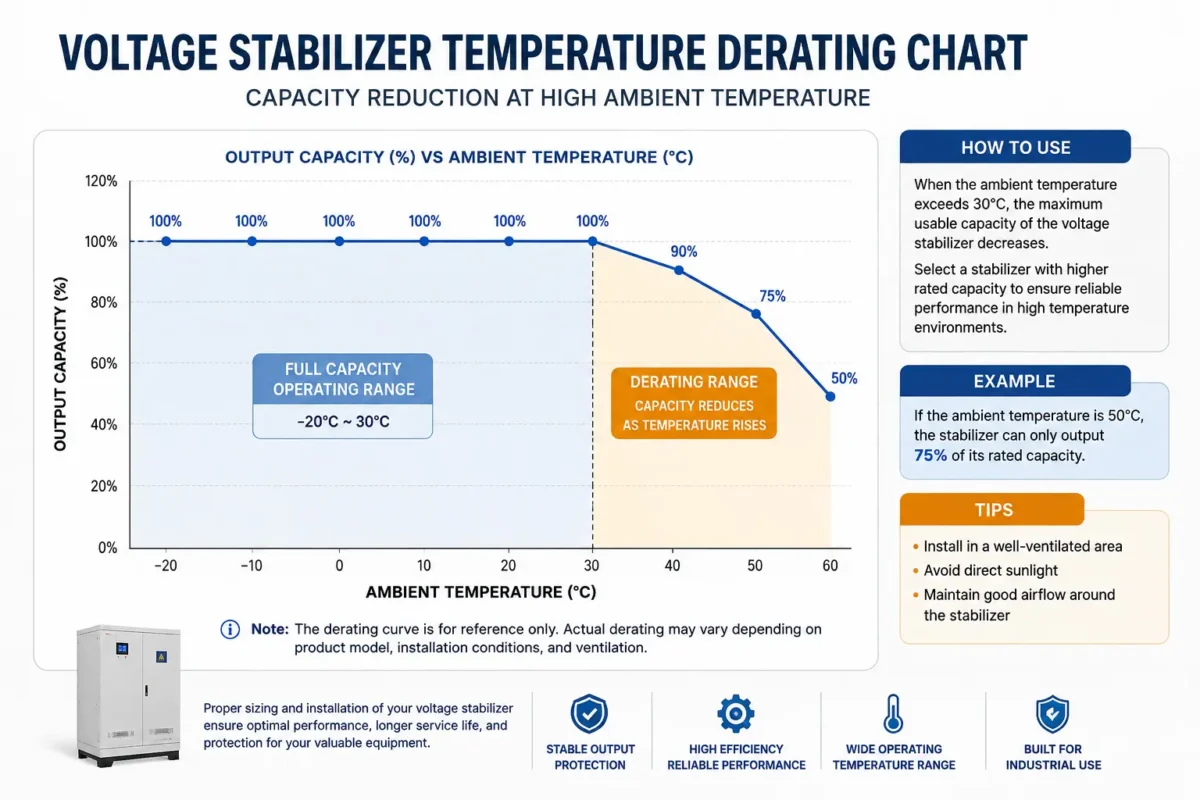
کاهش توان نامی دمای تثبیتکننده یکی از مهمترین ملاحظات هنگام نصب تجهیزات در آبوهوای گرم، اتاقهای برق در فضای باز، کارخانهها و مناطق کمهواده است.
اجزای الکتریکی در حین کار گرما تولید میکنند. با افزایش دمای محیط، حاشیه دمایی موجود کاهش مییابد، به این معنی که تثبیتکننده باید با درصد بار کمتری کار کند تا دماهای داخلی را در سطح ایمن حفظ نماید.
راهنمای معمول کاهش توان در اثر دما ممکن است به این صورت باشد:
| دمای محیط | ظرفیت بارگذاری پیشنهادی |
|---|---|
| حداکثر ۴۰ درجه سانتیگراد | ظرفیت نامگذاریشده 100% |
| ۴۵ درجه سانتیگراد | ظرفیت تقریباً ۹۵۱TP4T |
| ۵۰ درجه سانتیگراد | ظرفیت تقریباً ۸۵ تا ۹۰ ۱TP4T |
| ۵۵ درجه سانتیگراد | ظرفیت تقریباً ۸۰۱TP4T |
مقدار دقیق کاهش توان بستگی به طراحی تثبیتکننده، روش خنککاری، کلاس عایق و مشخصات سازنده دارد.
برای مثال، یک تثبیتکننده ولتاژ سروو که در یک منطقه گرمسیری با دمای محیط ۵۰ درجه سانتیگراد نصب شده است، نباید بهطور مداوم تحت بار ۱۰۰۱TP4T کار کند. انتخاب مدلی با ظرفیت بالاتر، حاشیه حرارتی و قابلیت اطمینان را بهبود میبخشد.
تصویر
التی: جدول کاهش توان بر اساس دمای تثبیتکننده ولتاژ که کاهش ظرفیت در دمای محیط بالا را نشان میدهد
کاهش توان در ارتفاع: چگونه ارتفاع زیاد ظرفیت تثبیتکننده را کاهش میدهد
کاهش توان در ارتفاع این موضوع زمانی اهمیت پیدا میکند که تثبیتکنندههای ولتاژ در مناطق کوهستانی یا مکانهایی با ارتفاع بیش از ۱۰۰۰ متر نصب شوند.
در ارتفاعات بالاتر، چگالی هوا کاهش مییابد. از آنجا که بسیاری از دستگاههای الکتریکی به خنکسازی طبیعی هوا یا تهویه اجباری متکی هستند، کاهش چگالی هوا کارایی انتقال حرارت را کاهش میدهد.
اثرات اصلی عبارتند از:
- کاهش کارایی خنککنندگی
- دمای عملیاتی بالاتر
- حاشیه عملکرد پایینتر عایق
- ظرفیت بار مداوم ایمن کاهشیافته
طبق رویههای رایج طراحی تجهیزات الکتریکی، تجهیزاتی که در ارتفاع بالای ۱۰۰۰ متر نصب میشوند ممکن است نیاز به تنظیم ظرفیت داشته باشند.
یک مثال کلی:
| ارتفاع نصب | ملاحظات کاهش توان نامی معمول |
|---|---|
| ۰-۱۰۰۰ متر | نیاز به کاهش توان اضافی نیست |
| ۱۵۰۰ متر | ممکن است کاهش ظرفیت جزئی لازم باشد. |
| ۲۰۰۰-۳۰۰۰ متر | عامل کاهش توان بالاتر توصیه میشود. |
| ۳۰۰۰ متر | طراحی ویژه در ارتفاع بالا مورد نیاز است |
برای پروژههای مناطق مرتفع، مهندسین باید طراحی سیستم خنککاری، سطح عایقبندی و مشخصات ترانسفورماتور را با سازنده تثبیتکننده تأیید کنند.
ظرفیت بار پیوسته و انتخاب تثبیتکننده ولتاژ
عامل مهم دیگری در کاهش ظرفیت تثبیتکننده ولتاژ عملکرد بار پیوسته است.
بسیاری از کاربردها مانند مراکز داده، تجهیزات پزشکی، دستگاههای CNC، سیستمهای اتوماسیون صنعتی و تأسیسات ارتباطی بهصورت ۲۴ ساعته در روز کار میکنند. برخلاف بارهای موقت، بارهای پیوسته تنش حرارتی ثابتی ایجاد میکنند.
یک تثبیتکننده که بهطور مداوم در حداکثر توان خود کار میکند، حاشیه ایمنی کمی برای: باقی میگذارد.
- تغییرات بار
- جریان راهاندازی موتور
- توسعهٔ تجهیزات آتی
- تغییرات دمای محیط
برای کارکرد مداوم، بسیاری از مهندسان توصیه میکنند که تثبیتکنندهای با ظرفیت اضافی انتخاب شود، به جای اینکه نزدیک به بارگذاری 100% کار شود.
یک رویکرد انتخابی رایج:
ظرفیت تثبیتکننده مورد نیاز = بار واقعی × ضریب ایمنی × ضریب اصلاحی محیطی
برای مثال:
- بار متصل: ۸۰ کیوا
- ضریب عملکرد مداوم: ۱٫۲۵
- اصلاح دما بالا: ۱.۱۰
ظرفیت مورد نیاز:
۸۰ × ۱.۲۵ × ۱.۱۰ = ۱۱۰ کیوا
بنابراین، یک تثبیتکننده ۱۲۰ کیلوولتبرایر حاشیه عملیاتی ایمنتری را فراهم میکند.
مقایسه کاهش ظرفیت تثبیتکننده ولتاژ: استاندارد در مقابل محیط سخت
| شرایط بهرهبرداری | نصب استاندارد | محیط سخت |
|---|---|---|
| دما | حداکثر ۴۰ درجه سانتیگراد | ۵۰ درجه سانتیگراد و بالاتر |
| ارتفاع | زیر ۱۰۰۰ متر | بالاتر از ۲۰۰۰ متر |
| الگوی بار | بار متناوب | بارگذاری مداوم ۲۴ ساعته |
| انتخاب پیشنهادی | ظرفیت نامی | ظرفیت اضافی با محاسبه کاهش توان |
تفاوت کاهش توان تثبیتکننده ولتاژ در فناوریهای مختلف
فناوریهای تثبیتکنندهٔ مختلف دارای ویژگیهای حرارتی متفاوتی هستند.
ثابتکننده ولتاژ سروو
- از فناوری ترانسفورماتور متغیر با محرک موتور استفاده میکند
- توانایی بالای تحمل بار
- مناسب برای کاربردهای صنعتی
- ملاحظهی تولید حرارت موتور و ترانسفورماتور را میطلبد.
ثباتکننده ولتاژ ثابت
- استفاده از الکترونیک قدرت مانند کنترل IGBT یا SCR
- پاسخ سریع اصلاح ولتاژ
- نیازمند سیستم خنککنندهی مؤثر است
- محدودیتهای دمایی نیمهرساناها مهم هستند.
پایدارکننده خنکشونده با روغن
- مدیریت حرارتی بهتر
- مناسب برای کاربردهای فضای باز با ظرفیت بالا
- اغلب در محیطهای صنعتی سخت ترجیح داده میشود
انتخاب فناوری مناسب به نوع بار، شرایط محیطی، الزامات پاسخدهی و انتظارات نگهداری بستگی دارد.
راهنمای عملی: نحوه انتخاب ظرفیت تثبیتکننده صحیح
پیش از خرید تثبیتکننده ولتاژ، عوامل زیر را در نظر بگیرید:
- ۱. اندازهگیری بار واقعی: به جای اتکا صرفاً به مشخصات نامی، جریان عملیاتی واقعی را بررسی کنید.
- ۲. ارزیابی شرایط ولتاژ: حداقل و حداکثر نوسانات ولتاژ ورودی را ثبت کنید.
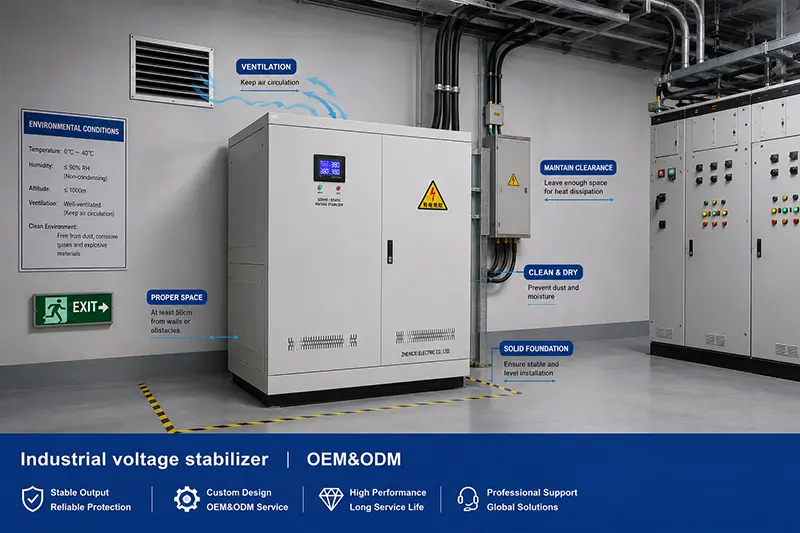
- ۳. بررسی محیط نصب: دما، ارتفاع، تهویه و شرایط گرد و غبار را در نظر بگیرید.
- ۴. محاسبه بار پیوسته: تجهیزاتی که بهصورت شبانهروزی (۲۴/۷) کار میکنند، به حاشیه ظرفیت اضافی نیاز دارند.
- ۵. گسترش آینده را در نظر بگیرید: از انتخاب پایدارکنندهای که بهطور مداوم نزدیک به ظرفیت کامل کار میکند، خودداری کنید.
روندهای صنعتی و توسعه آینده
با افزایش تقاضا برای کیفیت توان قابلاعتماد در اتوماسیون صنعتی، سیستمهای انرژی تجدیدپذیر، مراکز درمانی و مراکز داده، انتخاب تثبیتکننده ولتاژ دقیقتر میشود.
تولیدکنندگان مدرن تثبیتکننده از طریق موارد زیر در حال بهبود طراحیها هستند:
- سیستمهای نظارت هوشمند
- سنسورهای دما
- تشخیص از راه دور
- اجزای قدرت با کارایی بالاتر
- فناوریهای خنککنندگی بهبودیافته
سازمانهایی مانند IEEE و IEC به توسعه استانداردهای تجهیزات الکتریکی که بر ایمنی، قابلیت اطمینان و بهرهوری انرژی تأکید دارند، ادامه میدهند.
پرسشهای متداول
یک تثبیتکننده ولتاژ نیازمند کاهش توان نامی است زیرا شرایط محیطی مانند دمای بالا و ارتفاع، بازده خنککنندگی و عملکرد قطعات الکتریکی را کاهش میدهند. کاهش توان نامی، عملکرد ایمن و قابلاعتماد را تضمین میکند.
برای بارهای صنعتی پیوسته، مهندسان معمولاً بسته به ویژگیهای بار، شرایط محیطی و نیازهای توسعهٔ آینده، حاشیهٔ ظرفیت ۲۰۱TP4T-۳۰۱TP4T را اضافه میکنند.
بله، اما ممکن است در ارتفاعات بالای تقریباً ۱۰۰۰ متر نیاز به اصلاح ارتفاع باشد. تولیدکننده باید ضریب کاهش توان مناسب و طراحی خنککنندگی را تأیید کند.
نتیجهگیری
درک کاهش ظرفیت تثبیتکننده ولتاژ برای دستیابی به حفاظت مطمئن از توان در کاربردهای دنیای واقعی ضروری است. دما، ارتفاع و شرایط بار مداوم مستقیماً بر عملکرد واقعی یک تثبیتکننده تأثیر میگذارند.
انتخاب ظرفیت صحیح با مناسب کاهش توان نامی دماسنج تثبیتکننده, کاهش توان در ارتفاع, ، و ظرفیت بار پیوسته محاسبات به جلوگیری از داغ شدن بیش از حد، خرابیهای غیرمنتظره و هزینههای نگهداری غیرضروری کمک میکند.
بهعنوان تولیدکنندهٔ با تجربهٔ تثبیتکنندهٔ ولتاژ و ترانسفورماتور، ما راهحلهای سفارشی را بر اساس محیط عملیاتی شما، نیازهای بار و چالشهای کیفیت توان ارائه میدهیم. برای دریافت پشتیبانی حرفهای در انتخاب تثبیتکننده و راهحل مطمئن حفاظت از توان متناسب با کاربرد شما، با تیم مهندسی ما تماس بگیرید.