




In many industrial environments, the cause of machinery failure is often attributed to the low quality of the components used—but the truth is that one of the underlying factors is the voltage imbalance, which can cause overheating motors, unexpected shutdowns, and increased costs.
If your business relies on using CNC machinery, compressors, or production machinery, then the importance of balancing the 3-phase voltage cannot be overstated.
This article will provide you with the causes of the problem, the risks involved, and the ways to fix the issue effectively.
What Is 3 Phase Voltage Balancing? (Quick Answer)
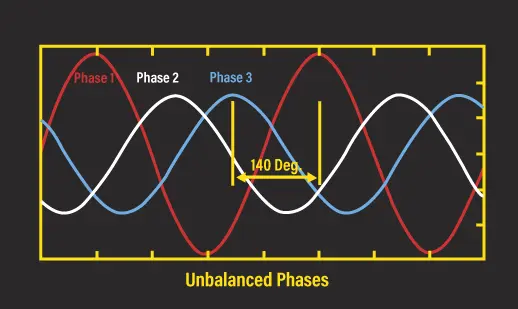
3 phase voltage balancing means all three phases in a power system have:
- Equal voltage magnitude
- A 120° phase angle difference
- Evenly distributed loads
When one phase deviates, the system becomes unbalanced—and even a small imbalance can create disproportionately large problems.
Why Voltage Imbalance Is a Serious Problem
Many engineers underestimate how damaging a small imbalance can be.
In practice:
- 1% imbalance → already affects motor efficiency
- 2–3% imbalance → noticeable overheating
- >5% imbalance → high risk of equipment failure
Real Impact on Your Equipment
- Motors run hotter → insulation degrades faster
- Torque drops → machines lose performance
- Energy consumption increases → higher electricity bills
- Unexpected downtime → production losses
👉 This is why voltage balance is strictly controlled in industrial standards.
Common Causes of 3 Phase Voltage Imbalance
In real-world installations, imbalance usually comes from:
- Uneven distribution of single-phase loads
- Old or loose wiring connections
- Transformer winding issues
- Long-distance power transmission
- Faulty or aging electrical equipment
💡 In many factories, the issue is not the grid—it’s internal load distribution.
How to Calculate Voltage Imbalance
Use this standard formula:
Voltage Imbalance (%) = (Max Deviation from Average ÷ Average Voltage) × 100
Esempio:
- Voltages: 400V / 390V / 410V
- Average: 400V
- Deviation: 10V
👉 Imbalance = 2.5%
⚠️ Recommended limit:
- Ideal: ≤1%
- Acceptable: ≤2%
Best Solutions for Voltage Balancing
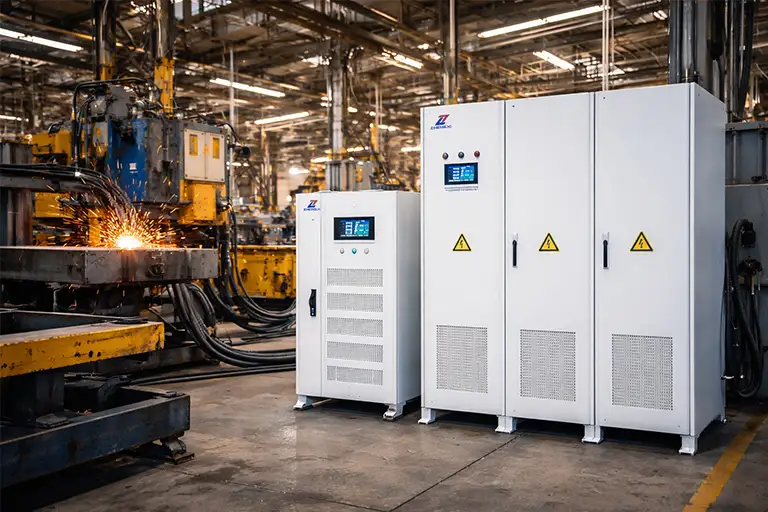
1. Install a Three Phase Voltage Stabilizer (Most Effective)
A three-phase voltage stabilizer automatically corrects imbalance in real time.
Why it works:
- Continuously adjusts each phase
- Keeps output stable even with fluctuating input
- Protects sensitive and high-value equipment
👉 Best for: factories, production lines, heavy machinery
2. Use an Automatic Voltage Regulator (AVR)
Suitable for applications where voltage fluctuation is frequent but imbalance is moderate.
3. Redistribute Loads Across Phases
A low-cost but often overlooked solution.
- Balance single-phase loads manually
- Monitor phase current regularly
👉 Works well as a short-term fix
4. Upgrade Transformer Configuration
Using proper configurations (e.g., delta-wye) can improve system balance.
Stabilizer vs No Stabilizer (Real Difference)
| Condizione | Without Stabilizer | With Stabilizer |
|---|---|---|
| Stabilità della tensione | Fluctuating | Stabile |
| Equipment Lifespan | Shorter | Longer |
| Downtime Risk | Alta | Basso |
| Efficienza energetica | Più basso | Più alto |
| Maintenance Cost | Più alto | Reduced |
How to Choose the Right Voltage Balancing Solution
If you’re planning to install a stabilizer or upgrade your system, focus on:
Key Selection Factors
- Capacity (kVA) → must match total load
- Intervallo di tensione in ingresso → especially important in unstable grids
- Balancing Accuracy → aim for ±1%
- Velocità di risposta → faster = better protection
- Metodo di raffreddamento → air-cooled vs oil-cooled
- Ambiente di installazione → indoor / outdoor / high temperature
💡 Choosing the wrong size or type is a common mistake that leads to poor performance.
When Do You Actually Need a Voltage Stabilizer?
You should seriously consider installing one if:
- Motors frequently overheat
- Equipment trips without clear reason
- Voltage fluctuates daily
- You operate sensitive or high-value machinery
- Your facility runs 24/7 production
FAQ
Ideally below 1%, but up to 2% may be tolerated depending on equipment.
Yes. Even small imbalance can cause overheating, efficiency loss, and early failure.
In most industrial cases, yes—especially when downtime costs are high. The ROI often comes from reduced failures and energy savings.
Final Thoughts: Don’t Ignore Small Voltage Problems
Voltage imbalance is often invisible—but its impact is very real.
What starts as a small deviation can quickly turn into costly equipment damage and production downtime.
The good news is:
👉 With the right solution, it’s completely preventable.
👉 Looking for a Reliable Voltage Balancing Solution?
If you’re dealing with unstable voltage or equipment issues, choosing the right solution makes all the difference.
A professional manufacturer can help you:
- Analyze your load and power conditions
- Recommend the correct stabilizer capacity
- Customize solutions for your industry
- Ensure long-term reliability and support
Get in touch today to find the right 3 phase voltage stabilizer for your application and keep your operations running smoothly.
 IT
IT  EN
EN  FR
FR  ES
ES  PT
PT  RU
RU  AR
AR  FA
FA