




L'attuale mondo elettrico globale si trova ad affrontare problemi di compatibilità di tensione, soprattutto nell'uso di apparecchiature straniere e nella costruzione di impianti industriali internazionali. Il trasformatore step-down diventa essenziale per garantire che l'elettricità fornita ad alta tensione possa essere convertita in bassa tensione per evitare danni o sprechi di energia.
Che si tratti di macchine americane con alimentazione a 220 volt o di apparecchiature industriali, la scelta del trasformatore di tensione corretto è imperativa.
In questo articolo, discutiamo il funzionamento dei trasformatori step down, le applicazioni dei dispositivi e le considerazioni da fare durante la loro selezione.
Che cos'è un trasformatore step-down?
A trasformatore step down è un dispositivo elettrico che riduce un'alta tensione in ingresso a una tensione in uscita più bassa, mantenendo inalterata la frequenza. Funziona in base al principio dell'induzione elettromagnetica.
In parole povere:
👉 Entra alta tensione → Esce bassa tensione
Ciò lo rende essenziale per le applicazioni in cui le apparecchiature devono funzionare a una tensione inferiore a quella dell'alimentazione disponibile.
Come funziona un trasformatore step-down?
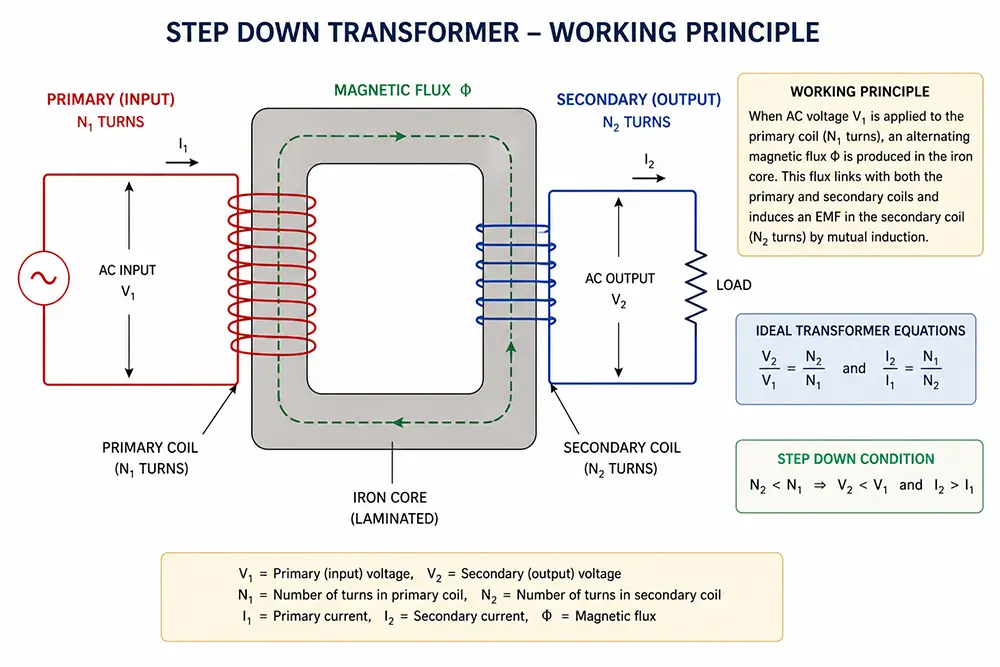
A trasformatore è costituito da due bobine principali:
- Avvolgimento primario (collegato alla tensione di ingresso)
- Avvolgimento secondario (collegato al carico di uscita)
La conversione di tensione dipende dal numero di spire di ciascuna bobina:
V₁ / V₂ = N₁ / N₂
Dove:
- V₁ = Tensione primaria
- V₂ = tensione secondaria
- N₁ = Numero di spire nella bobina primaria
- N₂ = Numero di spire della bobina secondaria
Se la bobina secondaria ha meno spire di quella primaria, la tensione di uscita si riduce.
👉 Questo principio semplice ma potente consente ai trasformatori di fornire una conversione di tensione stabile ed efficiente senza modificare la frequenza.
Scenari comuni di conversione della tensione
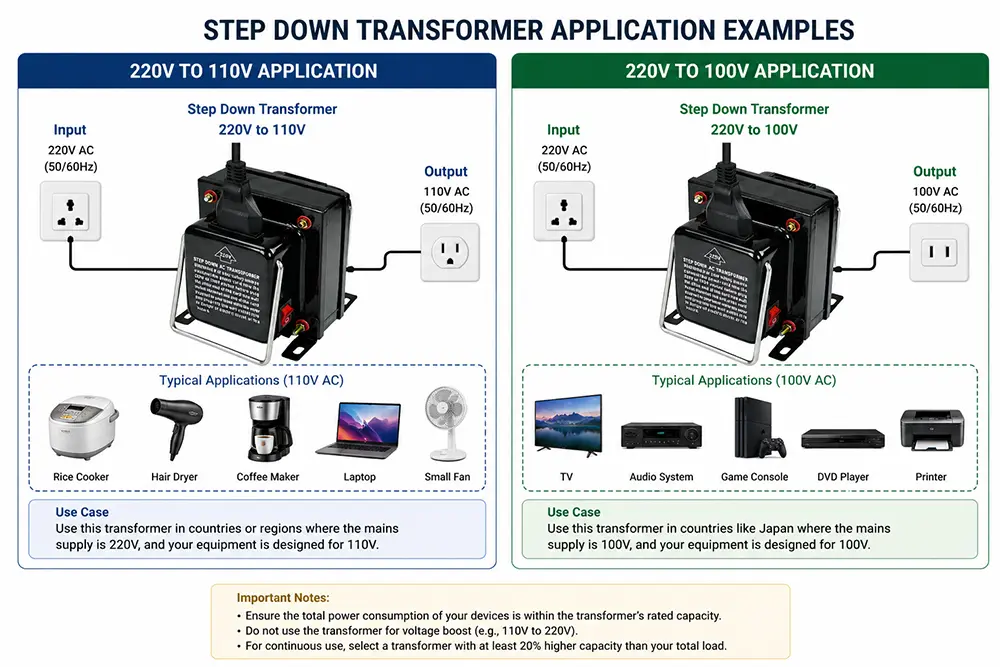
1. Trasformatore da 220V a 110V
Uno degli scenari più comuni del mondo reale è l'uso di un Trasformatore da 220V a 110V per far funzionare i dispositivi nordamericani in paesi in cui la tensione standard è di 220V-240V.
Casi d'uso tipici:
- Elettrodomestici importati
- Attrezzature per ufficio
- Elettronica di consumo
2. Trasformatore da 220V a 100V
L'elettronica giapponese funziona spesso a 100 V. Utilizzando un Trasformatore da 220V a 100V assicura:
- Funzionamento sicuro
- Prestazioni stabili
- Maggiore durata delle apparecchiature
Applicazioni dei trasformatori step down
I trasformatori step down sono ampiamente utilizzati in diversi settori industriali:
Uso residenziale
- Far funzionare in modo sicuro gli apparecchi importati
- Protezione dei dispositivi elettronici sensibili
Applicazioni industriali
- Macchine CNC
- Attrezzature di produzione
- Pannelli di controllo e sistemi di automazione
Infrastruttura commerciale e IT
- Centri dati
- Apparecchiature mediche
- Sistemi per ufficio
Sistemi di energia rinnovabile
- Sistemi di energia solare
- Integrazione della rete e regolazione della tensione
👉 I principali fornitori di soluzioni elettriche sottolineano la corretta gestione della tensione come fattore chiave per l'efficienza energetica e la protezione delle apparecchiature.
Specifiche tecniche da conoscere
Prima di scegliere un trasformatore, è importante comprendere questi parametri chiave:
- Tensione di ingressoad esempio, 220V / 240V
- Tensione di uscitaad esempio, 110V / 100V
- Potenza nominale (VA o kVA): Deve superare il carico totale di 20-30%
- Frequenza: Compatibilità 50Hz o 60Hz
- Efficienza: Tipicamente 95%-98%
- Metodo di raffreddamento: Raffreddato ad aria o ad olio
Trasformatore step-down vs. convertitore di tensione
| Caratteristica | Trasformatore step-down | Convertitore di tensione |
|---|---|---|
| Efficienza | Alta | Moderato |
| Durata | Lunga durata di vita | Durata di vita breve |
| Capacità di carico | Alta | Limitato |
| Stabilità dell'uscita | Molto stabile | Può fluttuare |
| Applicazione | Uso industriale e continuo | Viaggi e lavori leggeri |
👉 Conclusione: Se avete bisogno di prestazioni affidabili e a lungo termine, un trasformatore è sempre la scelta migliore.
Step Down rispetto ad altri tipi di trasformatori
Trasformatore Step Down vs Step Up
- Step Down: Riduce la tensione (220V → 110V)
- Step Up: Aumenta la tensione (110V → 220V)
Trasformatore di isolamento
- Nessuna variazione di tensione
- Utilizzato per la sicurezza e la riduzione del rumore
Autotrasformatore
- Design a singolo avvolgimento
- Più piccolo e più efficiente, ma meno isolante
Come scegliere il giusto trasformatore step-down
La scelta del trasformatore giusto è fondamentale per la sicurezza e le prestazioni.
1. Calcolo del carico totale
Sommare la potenza di tutti i dispositivi e scegliere un trasformatore con una potenza nominale di almeno 20-30% superiore.
2. Confermare i requisiti di tensione
Assicuratevi che corrisponda esattamente alle vostre esigenze:
- 220V → 110V
- 220V → 100V
3. Considerare l'ambiente
- Installazione all'interno o all'esterno
- Temperatura e umidità
4. Controllare le caratteristiche di sicurezza
Cercare:
- Protezione da sovraccarico
- Protezione da cortocircuito
- Protezione termica
5. Valutare la qualità della costruzione
I trasformatori di alta qualità utilizzano tipicamente:
- Avvolgimenti in rame
- Materiali isolanti resistenti
- Contenitori metallici resistenti
Fattori di prezzo dei trasformatori step down
Il prezzo di un trasformatore step down dipende da diversi fattori:
- Capacità di potenza (VA/kVA)
- Avvolgimenti in rame e alluminio
- Tipo di raffreddamento (a secco o ad olio)
- Requisiti di personalizzazione
👉 I trasformatori di livello industriale costano di più, ma offrono una durata e prestazioni nettamente superiori.
Vantaggi dei trasformatori step-down
- Alta efficienza con bassa perdita di energia
- Tensione di uscita stabile
- Adatto al funzionamento continuo
- Lunga durata di vita
- Ampio campo di applicazione
Limitazioni
- Dimensioni maggiori rispetto ai convertitori elettronici
- Costo iniziale più elevato
- Peso maggiore
👉 Tuttavia, spesso si tratta di compromessi accettabili per una maggiore affidabilità e sicurezza.
Tendenze di sviluppo future
L'industria dei trasformatori si sta evolvendo rapidamente con innovazioni quali:
- Tecnologia dei trasformatori intelligenti
- Sistemi di monitoraggio abilitati all'IoT
- Materiali isolanti ecologici
- Design più compatto ed efficiente
👉 Si prevede che la digitalizzazione migliorerà in modo significativo le prestazioni, il monitoraggio e la manutenzione nei prossimi anni.
FAQ
Non sempre. Assicurarsi che la capacità del trasformatore sia superiore alla potenza del dispositivo. Anche le apparecchiature sensibili possono richiedere la stabilizzazione della tensione.
Un trasformatore è progettato per un uso stabile e a lungo termine, mentre un convertitore è tipicamente destinato ad applicazioni a breve termine o in viaggio.
Sì, purché la tensione e la potenza nominale corrispondano ai requisiti del dispositivo.
Si consiglia di scegliere un trasformatore con un valore nominale di almeno 20-30% superiore del carico totale.
Sì. I trasformatori di alta qualità sono progettati per il funzionamento continuo, soprattutto in ambienti industriali.
Perché scegliere un produttore di trasformatori professionale?
La scelta del fornitore giusto è importante quanto la scelta del trasformatore stesso.
Un affidabile produttore di trasformatori può fornire:
- Soluzioni di tensione personalizzate (da 220V a 110V, da 220V a 100V, ecc.)
- Prestazioni stabili ed efficienti
- Design dell'avvolgimento in rame di alta qualità
- Supporto OEM/ODM per applicazioni industriali
Per i requisiti su larga scala o personalizzati, la collaborazione diretta con un produttore esperto garantisce un migliore controllo della qualità e una maggiore efficienza dei costi.
Potresti essere interessato anche a:
- soluzioni di trasformazione personalizzate
- stabilizzatore di tensione del servo
- stabilizzatore di tensione industriale
Conclusione
A trasformatore step down è essenziale per una conversione di tensione sicura ed efficiente in applicazioni residenziali, commerciali e industriali.
Se avete bisogno di un Da 220V a 110V o Da 220V a 100V La scelta delle specifiche giuste e del fornitore giusto fa la differenza.
👉 Cercate un trasformatore step down affidabile e ad alte prestazioni?
Forniamo soluzioni di trasformatori personalizzati in base alle vostre esatte esigenze di tensione, capacità e applicazione. Contattateci oggi stesso per ricevere assistenza da parte di esperti e prezzi competitivi.
