




La domanda globale di energia rinnovabile continua a crescere, sistemi solari fotovoltaici (PV) sono ampiamente diffusi in applicazioni residenziali, commerciali e su scala industriale. Tuttavia, una delle sfide tecniche più critiche di questi sistemi è il mantenimento di una tensione stabile in condizioni operative altamente variabili.
A Stabilizzatore di tensione per impianti fotovoltaici-noto anche come Stabilizzatore di tensione solare, Regolatore di tensione FV, o Stabilizzatore di tensione bidirezionale-svolge un ruolo cruciale nell'assicurare la stabilità dell'erogazione di energia, nel proteggere le apparecchiature elettriche e nel migliorare la compatibilità generale della rete.
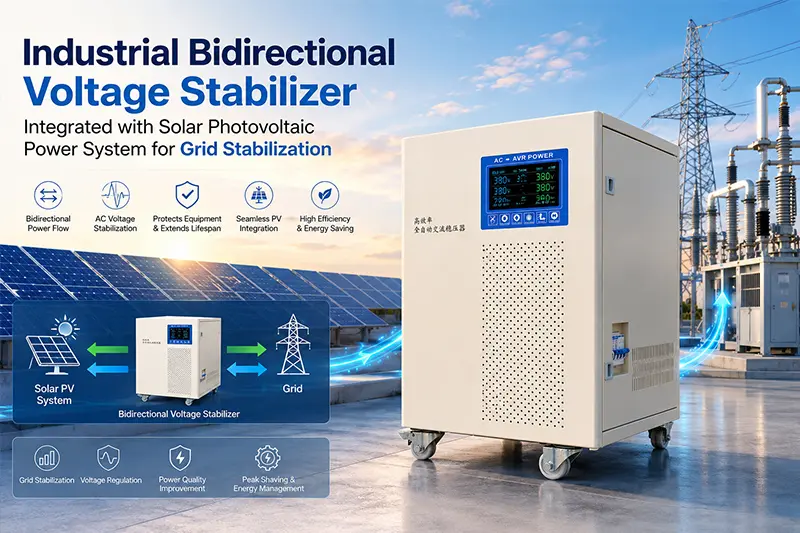
Questo articolo spiega come funzionano gli stabilizzatori di tensione fotovoltaici, dove vengono utilizzati, le principali considerazioni tecniche e perché stanno diventando sempre più importanti nelle moderne infrastrutture per le energie rinnovabili.
Cos'è uno stabilizzatore di tensione per impianti fotovoltaici?
A Stabilizzatore di tensione FV è un dispositivo avanzato di regolazione elettrica progettato per mantenere una tensione di uscita stabile nonostante le fluttuazioni causate dalla variabilità della generazione solare o dall'instabilità della rete.
A differenza degli stabilizzatori convenzionali, un moderno Stabilizzatore di tensione bidirezionale può regolare il flusso di energia in entrambe le direzioni:
- Dalla rete al carico
- Dall'impianto fotovoltaico alla rete o al carico
Questa capacità bidirezionale è essenziale nei sistemi che integrano il solare fotovoltaico, l'accumulo di energia e l'infrastruttura della rete intelligente.
Funzioni principali
- Regolazione automatica della tensione (AVR)
- Protezione da sovratensione e sottotensione
- Stabilizzazione della qualità dell'alimentazione
- Protezione delle apparecchiature per carichi sensibili
- Supporto per la conformità alla rete basato sugli standard delle utility
Perché la stabilità della tensione è importante negli impianti solari fotovoltaici
La generazione di energia solare è intrinsecamente intermittente. Le fluttuazioni di tensione sono influenzate da fattori ambientali e operativi quali:
- Variazioni dell'irraggiamento solare
- Effetti di copertura nuvolosa e ombreggiatura
- Variazioni della temperatura ambiente
- Instabilità della rete e reti deboli
- Variazioni di carico improvvise
- Impedenza della linea di trasmissione a lunga distanza
Il mantenimento della tensione entro limiti accettabili è essenziale per un funzionamento sicuro ed efficiente della rete.
Senza un'adeguata regolazione della tensione, gli impianti fotovoltaici possono soffrire di:
Interventi frequenti dell'inverter
Perdite di energia production
Riduzione dell'efficienza del sistema
Invecchiamento accelerato delle apparecchiature
Problemi di non conformità della rete
Alt: Inverter solare che si disconnette dalla rete a causa dell'instabilità della tensione in un impianto fotovoltaico
Regolatore di tensione bidirezionale: La soluzione moderna per i sistemi a energia solare
A Regolatore di tensione bidirezionale è stato progettato specificamente per gli ambienti di energia rinnovabile in cui l'energia fluisce dinamicamente tra più fonti e carichi.
Funzionamento tradizionale o bidirezionale
Stabilizzatore tradizionale:
Griglia → Stabilizzatore → Carico
Stabilizzatore bidirezionale:
Rete ↔ Stabilizzatore ↔ Sistema fotovoltaico ↔ Carico
Questa architettura consente di correggere la tensione in tempo reale indipendentemente dalla direzione del flusso di energia, rendendola ideale per i sistemi solari collegati alla rete e per le applicazioni di accumulo di energia ibrida.
Vantaggi
Un regolatore di tensione bidirezionale è stato progettato specificamente per gli ambienti di energia rinnovabile in cui l'energia scorre dinamicamente tra più fonti e carichi.
Supporta sistemi ibridi collegati alla rete e non collegati alla rete.
Compatibile con i sistemi di accumulo di energia a batteria (BESS)
Migliora la stabilità operativa dell'inverter
Gestisce in modo efficiente il flusso di potenza inverso
Migliora la resilienza e l'affidabilità della rete
Come funziona uno stabilizzatore di tensione solare
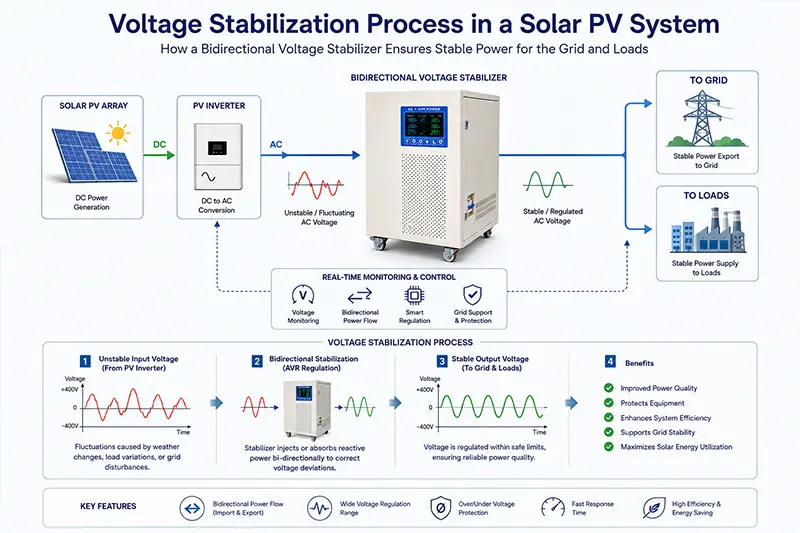
Un moderno stabilizzatore solare utilizza algoritmi di rilevamento e controllo avanzati per monitorare e regolare continuamente la tensione del sistema.
Monitoraggio in tempo reale
Il sistema misura continuamente la tensione di rete, la tensione di uscita dell'inverter fotovoltaico e le condizioni di tensione del lato carico.
Analisi intelligente
Un controllore digitale confronta i valori in tempo reale con le soglie di sicurezza preimpostate.
Regolazione automatica
Se la tensione scende, si attiva il funzionamento boost. Se la tensione sale, si attiva il funzionamento buck.
Ciclo di feedback continuo
Il sistema esegue regolazioni dinamiche per mantenere stabile la tensione di uscita.
Applicazioni degli stabilizzatori di tensione fotovoltaici
Fattorie solari su scala industriale
Mantenere la conformità della rete e ridurre le interruzioni causate dall'aumento della tensione.
Strutture commerciali e industriali
Migliorare l'affidabilità delle apparecchiature e ridurre al minimo i rischi di fermo macchina.
Sistemi solari residenziali
Proteggere gli elettrodomestici e migliorare la stabilità dell'inverter.
Sistemi di accumulo di energia
Supporto di un funzionamento stabile in condizioni di flusso di potenza bidirezionale.
Microgrids
Forniscono un controllo preciso della tensione per le risorse energetiche distribuite.
Tendenze di mercato che guidano la domanda
L'industria fotovoltaica mondiale continua ad espandersi rapidamente. Secondo il Agenzia Internazionale dell'Energia (AIE), L'energia solare rimane una delle fonti rinnovabili in più rapida crescita a livello mondiale.
I principali driver di mercato includono:
- Aumento della penetrazione del fotovoltaico nelle reti di distribuzione
- Rapida adozione dei sistemi di accumulo di energia
- Iniziative di modernizzazione delle reti intelligenti
- Norme di conformità alla rete più severe
- Crescente domanda di elettrificazione industriale
Parametri tecnici degli stabilizzatori di tensione fotovoltaici
| Parametro | Gamma di specifiche |
|---|---|
| Capacità | 10 kVA - 5000 kVA |
| Precisione di uscita | Da ±1% a ±3% |
| Efficienza | Fino a 98% |
| Tempo di risposta | Da millisecondi a secondi |
| Sistema di raffreddamento | Raffreddato ad aria/olio |
| Classe di protezione | IP20 - IP54 |
| Comunicazione | RS485 / Modbus / Ethernet |
Stabilizzatori di tensione bidirezionali e convenzionali
| Caratteristica | Convenzionale | Bidirezionale |
|---|---|---|
| Flusso di potenza | A senso unico | A due vie |
| Compatibilità solare | Limitato | Avanzato |
| Supporto della batteria | No | Sì |
| Controllo delle esportazioni dalla rete | No | Sì |
| Pronti per le reti intelligenti | Parziale | Completo |
Come scegliere il giusto regolatore di tensione fotovoltaico
Capacità del sistema
Scegliere un margine di 20-30% rispetto al carico di picco.
Intervallo di variazione della tensione
Valutare le fluttuazioni minime e massime.
Espansione futura
Considerare i futuri aggiornamenti delle batterie e del fotovoltaico.
Conformità alla griglia
Seguire le normative locali in materia di servizi pubblici.
Condizioni ambientali
Valutare i requisiti di temperatura, polvere e umidità.
Vantaggi principali
- Maggiore utilizzo dell'energia solare
- Riduzione degli arresti dell'inverter
- Estensione della durata di vita delle apparecchiature
- Miglioramento della qualità dell'alimentazione
- Riduzione dei costi di manutenzione
- Maggiore conformità alla rete
Tendenze future nella tecnologia di regolazione della tensione
I futuri stabilizzatori di tensione fotovoltaici si stanno evolvendo verso sistemi intelligenti di gestione dell'energia caratterizzati da:
- Algoritmi di controllo della tensione basati sull'intelligenza artificiale
- Monitoraggio remoto abilitato dall'IoT
- Integrazione della rete intelligente
- Modellazione energetica del gemello digitale
- DERMS (Sistemi di gestione delle risorse energetiche distribuite)
Conclusione
A Stabilizzatore di tensione per impianti fotovoltaici sta diventando un componente critico della moderna infrastruttura per le energie rinnovabili. Sia che si parli di stabilizzatore di tensione solare o di regolatore di tensione bidirezionale, il suo ruolo nel mantenere la stabilità della tensione, nel migliorare l'efficienza del sistema e nel garantire la conformità della rete è essenziale.
Per i parchi solari, le strutture commerciali e i sistemi energetici ibridi, la tecnologia avanzata di regolazione della tensione garantisce affidabilità a lungo termine e prestazioni energetiche ottimizzate.
FAQ
1. Qual è la differenza tra un inverter fotovoltaico e uno stabilizzatore di tensione?
Un inverter fotovoltaico converte l'energia CC in corrente alternata, mentre uno stabilizzatore di tensione assicura che la tensione CA rimanga stabile ed entro limiti operativi sicuri.
2. Perché è importante la regolazione bidirezionale della tensione?
Poiché i moderni sistemi energetici prevedono un flusso di energia bidirezionale tra energia solare, accumulo e rete, la regolazione bidirezionale garantisce la stabilità in tutte le condizioni operative.
3. Lo stabilizzatore di tensione migliora l'efficienza solare?
Indirettamente sì. Impedendo gli arresti dell'inverter causati dall'instabilità della tensione, migliora l'efficienza complessiva della raccolta di energia.
Prodotti consigliati

Regolatore automatico di tensione per servomotori OMNI AVR-2000S 3000S 5000S
Stabilizzatore di tensione a parete da 500va-10Kva per piccoli elettrodomestici
Persone Avr Serie 0.5Kva-10Kva Monofase Stabilizzatore automatico di tensione per la casa