




Em muitos ambientes industriais, a causa da avaria das máquinas é frequentemente atribuída à baixa qualidade dos componentes utilizados - mas a verdade é que um dos factores subjacentes é o desequilíbrio da tensão, que pode provocar o sobreaquecimento dos motores, paragens inesperadas e custos acrescidos.
Se a sua empresa depende da utilização de maquinaria CNC, compressores ou maquinaria de production, então a importância de equilibrar a tensão trifásica não pode ser exagerada.
Este artigo irá fornecer-lhe as causas do problema, os riscos envolvidos e as formas de o resolver eficazmente.
O que é o equilíbrio de tensão trifásico? (Resposta rápida)
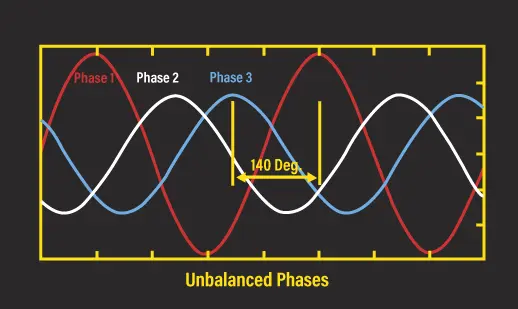
Equilíbrio de tensão trifásico significa que as três fases de um sistema elétrico têm:
- Igual magnitude de tensão
- Uma diferença de ângulo de fase de 120°
- Cargas uniformemente distribuídas
Quando uma fase se desvia, o sistema torna-se desequilibrado-e mesmo um pequeno desequilíbrio pode criar problemas desproporcionadamente grandes.
Porque é que o desequilíbrio de tensão é um problema grave
Muitos engenheiros subestimam os danos que um pequeno desequilíbrio pode causar.
Na prática:
- Desequilíbrio 1% → já afecta a eficiência do motor
- 2-3% desequilíbrio → sobreaquecimento percetível
- Desequilíbrio >5% → risco elevado de avaria do equipamento
Impacto real no seu equipamento
- Os motores funcionam mais quentes → o isolamento degrada-se mais rapidamente
- Quedas de binário → as máquinas perdem desempenho
- Aumento do consumo de energia → contas de eletricidade mais elevadas
- Tempo de inatividade inesperado → 1TP1Perdas de tensão
É por isso que o equilíbrio da tensão é rigorosamente controlado nas normas industriais.
Causas comuns de desequilíbrio de tensão trifásica
Nas instalações do mundo real, o desequilíbrio tem normalmente origem:
- Distribuição desigual das cargas monofásicas
- Ligações eléctricas velhas ou soltas
- Problemas de enrolamento do transformador
- Transmissão de energia a longa distância
- Equipamento elétrico defeituoso ou envelhecido
Em muitas fábricas, o problema não é a rede - é a distribuição interna da carga.
Como calcular o desequilíbrio de tensão
Utilize esta fórmula padrão:
Desequilíbrio de tensão (%) = (Desvio máximo da média ÷ Tensão média) × 100
Exemplo:
- Tensões: 400V / 390V / 410V
- Média: 400V
- Desvio: 10V
Desequilíbrio = 2.5%
⚠️ Limite recomendado:
- Ideal: ≤1%
- Aceitável: ≤2%
Melhores soluções para o balanceamento de tensão
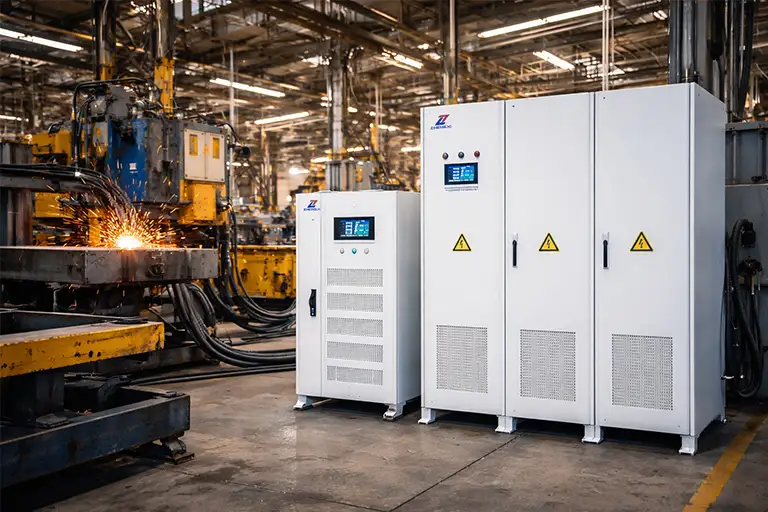
1. Instalar um estabilizador de tensão trifásico (mais eficaz)
A estabilizador de tensão trifásico corrige automaticamente o desequilíbrio em tempo real.
Porque é que funciona:
- Ajusta continuamente cada fase
- Mantém a saída estável mesmo com entrada flutuante
- Protege equipamentos sensíveis e de elevado valor
👉 Ideal para: fábricas, linhas de production, maquinaria pesada
2. Utilizar um Regulador Automático de Tensão (AVR)
Adequado para aplicações em que a flutuação de tensão é frequente mas o desequilíbrio é moderado.
3. Redistribuir as cargas entre as fases
Uma solução de baixo custo, mas frequentemente negligenciada.
- Equilibrar manualmente cargas monofásicas
- Monitorizar regularmente a corrente de fase
Funciona bem como uma solução de curto prazo
4. Atualizar a configuração do transformador
A utilização de configurações adequadas (por exemplo, delta-ye) pode melhorar o equilíbrio do sistema.
Estabilizador vs Sem Estabilizador (Diferença Real)
| Estado | Sem estabilizador | Com estabilizador |
|---|---|---|
| Estabilidade da tensão | Flutuante | Estável |
| Tempo de vida do equipamento | Mais curto | Mais tempo |
| Risco de inatividade | Elevado | Baixa |
| Eficiência energética | Inferior | Mais alto |
| Custo de manutenção | Mais alto | Reduzido |
Como escolher a solução certa de balanceamento de tensão
Se está a planear instalar um estabilizador ou atualizar o seu sistema, concentre-se:
Principais factores de seleção
- Capacidade (kVA) → deve corresponder à carga total
- Gama de tensão de entrada → especialmente importante em grelhas instáveis
- Precisão do equilíbrio → objetivo de ±1%
- Velocidade de resposta → mais rápido = melhor proteção
- Método de arrefecimento → arrefecimento a ar vs arrefecimento a óleo
- Ambiente de instalação → interior / exterior / alta temperatura
Escolher o tamanho ou tipo errado é um erro comum que leva a um mau desempenho.
Quando é que é realmente necessário um estabilizador de tensão?
Deve considerar seriamente a instalação de um se:
- Os motores sobreaquecem frequentemente
- Deslocação do equipamento sem motivo aparente
- A tensão flutua diariamente
- Trabalha com máquinas sensíveis ou de elevado valor
- A sua instalação funciona 24 horas por dia, 7 dias por semana production
FAQ
Idealmente abaixo 1%, mas até 2% pode ser tolerado em função do equipamento.
Sim. Mesmo um pequeno desequilíbrio pode causar sobreaquecimento, perda de eficiência e avaria prematura.
Na maioria dos casos industriais, sim - especialmente quando os custos de inatividade são elevados. O retorno do investimento resulta frequentemente da redução das avarias e da poupança de energia.
Considerações finais: Não ignore os pequenos problemas de tensão
O desequilíbrio de tensão é muitas vezes invisível, mas o seu impacto é muito real.
O que começa por ser um pequeno desvio pode rapidamente transformar-se em danos dispendiosos no equipamento e production tempo de inatividade.
A boa notícia é que:
Com a solução correta, é completamente evitável.
Procurando uma solução confiável de balanceamento de tensão?
Se estiver a lidar com tensão instável ou problemas de equipamento, a escolha da solução certa faz toda a diferença.
Um fabricante profissional pode ajudá-lo:
- Analisar as suas condições de carga e potência
- Recomendar a capacidade correta do estabilizador
- Soluções personalizadas para a sua indústria
- Garantir a fiabilidade e o apoio a longo prazo
Entre em contacto hoje mesmo para encontrar o estabilizador de tensão trifásico certo para a sua aplicação e manter as suas operações a funcionar sem problemas.