




But it’s not only a technical necessity, it’s a vital component in the protection and optimization of the equipment, and it’s imperative to avoid downtime, which could be quite costly.
Regardless of the application, whether it’s in industrial processes, HVAC, or even electronic devices, a fluctuating AC voltage could result in a number of problems.
In this guide, we’ll explore the process of regulating AC voltage, the best technology to use, and more.
What Is AC Voltage Regulation?
AC voltage regulation means keeping the output voltage stable even when:
- Input voltage fluctuates
- Load conditions change
- Grid quality is unstable
In real-world power systems, common issues include:
- Undervoltage (voltage drops)
- Overvoltage (spikes/surges)
- Harmonic distortion (often overlooked but critical)
Without proper regulation, equipment like CNC machines, compressors, and medical devices can suffer from reduced lifespan or sudden failure.
Main Methods to Regulate AC Voltage
1. Automatic Voltage Regulator (AVR) – Most Common Solution
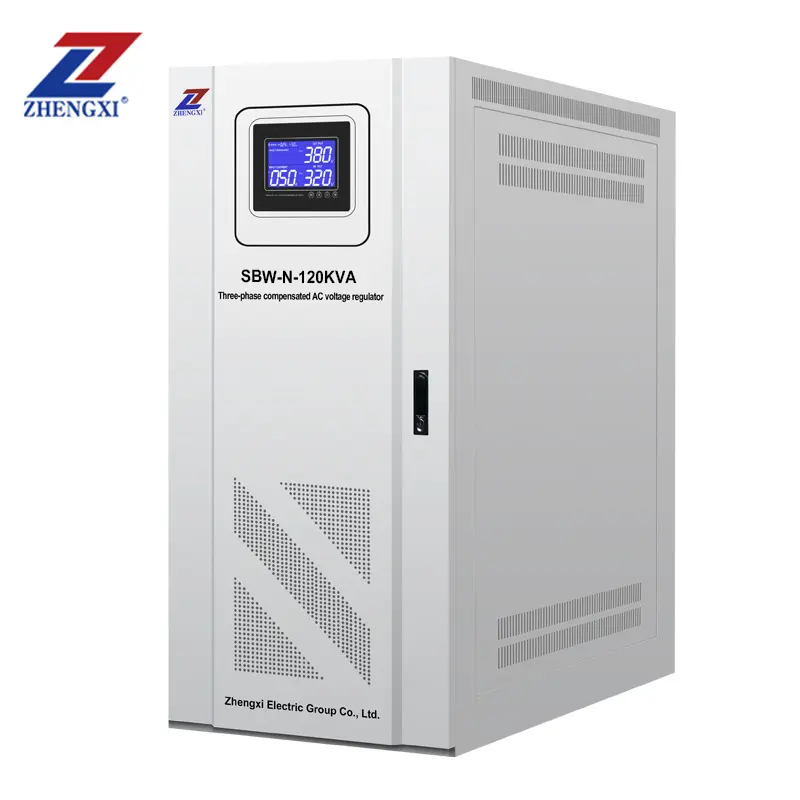
An Automatic Voltage Regulator (AVR) is the go-to solution for most applications.
How it works:
- Continuously monitors input voltage
- Automatically adjusts output via control circuits
- Maintains stable output without manual intervention
Types of AVR:
- Relay Type AVR
- Fast switching, cost-effective
- Best for residential and light commercial use
- Servo Motor AVR
- High accuracy (±1–3%)
- Ideal for industrial equipment and motor loads
- Static AVR (IGBT/SCR-based)
- Ultra-fast response (milliseconds)
- No mechanical parts → longer lifespan
- Best for precision and critical systems
2. Variac (Variable Autotransformer) – Manual Control
A Variac allows smooth, adjustable voltage output.
Key features:
- Manual knob control
- Continuous voltage adjustment (no steps)
Best for:
- Laboratory testing
- Equipment calibration
Limitations:
- Not automatic
- Not suitable for unstable power environments
3. Tap-Changing Transformers – Grid-Level Regulation
Used mainly in power distribution systems.
Types:
- Off-load Tap Changer (manual, offline adjustment)
- On-load Tap Changer (OLTC) (real-time adjustment)
How it works:
- Adjusts transformer winding ratio to regulate voltage
Typical applications:
- Substations
- Utility-scale power systems
4. Buck-Boost Transformers – Cost-Effective Voltage Correction
Designed for small voltage adjustments (±10–20%).
Functions:
- Buck → reduce voltage
- Boost → increase voltage
Common use cases:
- HVAC systems
- Light industrial equipment
5. Static Voltage Stabilizers – High-End Solution
Modern stabilizers using IGBT or SCR technology offer:
- Millisecond-level response
- High precision (up to ±1%)
- No wear-and-tear components
These are increasingly used in:
- Data centers
- Medical systems
- Automation lines
Where AC Voltage Regulation Is Used
Stable voltage is critical in:
- Manufacturing: CNC machines, motors, robotics
- Healthcare: MRI, CT scanners, lab equipment
- Data Centers: Servers and networking systems
- Renewable Energy: Solar/wind output stabilization
- Commercial Buildings: Elevators, HVAC systems
👉 SEO增强:覆盖行业关键词,提高长尾流量
Comparison of AC Voltage Regulation Methods
| Method | Accuracy | Response Speed | Automation | Best For |
|---|---|---|---|---|
| Relay AVR | Medium | Fast | Yes | Home appliances |
| Servo AVR | High | Medium | Yes | Industrial equipment |
| Static AVR | Very High | Ultra-fast | Yes | Critical loads |
| Variac | Very High | Manual | No | Testing/labs |
| Tap Changer | High | Slow | Yes/No | Power distribution |
AVR vs Other Voltage Regulation Methods
- AVR vs Variac: Automatic vs manual control
- AVR vs Tap Changer: Faster, more compact, easier to install
- Servo vs Static AVR: Mechanical precision vs electronic speed
👉 In modern systems, static voltage stabilizers are becoming the preferred choice due to speed and reliability.
How to Choose the Right AC Voltage Regulator
Choosing the right solution depends on several key factors:
✔ Load Type
- Inductive loads (motors, compressors) → require stable regulation
- Sensitive electronics → need high precision
✔ Power Capacity
- Calculate total load (kVA/kW)
- Add 20–30% safety margin
✔ Input Voltage Range
- Wide fluctuations → choose servo or static stabilizer
✔ Accuracy Requirement
- ±1% → static stabilizer
- ±3–5% → standard AVR
✔ Response Time
- Critical systems → require millisecond response
FAQ
A relay-type AVR or small servo stabilizer is usually sufficient for most household appliances.
Yes, using a Variac or transformer—but these are manual and not practical for continuous use.
High voltage → overheating, insulation damage
Low voltage → motor failure, reduced efficiency
Conclusion
AC voltage regulation is a key part of any reliable power system. From simple manual solutions like Variacs to advanced static voltage stabilizers, the right choice depends on your application, load type, and precision requirements.
For most industrial and commercial environments, a high-precision automatic voltage regulator or static stabilizer delivers the best balance of protection, efficiency, and long-term reliability.
Get the Right Solution for Your Application
Looking for a reliable AC voltage regulator, servo stabilizer, or static voltage stabilizer?
Our engineering team can help you:
- Select the right model based on your load
- Customize solutions for your industry
- Improve equipment lifespan and reduce downtime
👉 Contact us today for a fast quote and expert guidance tailored to your project.
 EN
EN  FR
FR  ES
ES  PT
PT  IT
IT  RU
RU  AR
AR  FA
FA