




PINE offers vacuum circuit breakers (VCBs) designed to protect medium-voltage power distribution systems. The function of a VCB is to use a sealed vacuum interrupter for the interruption of the arc that forms when its contacts open.
Indoor or outdoor, fixed-mounted or withdrawable units – choose the type of configuration you need based on your project needs and parameters of your power distribution network.
Need a vacuum circuit breaker for your project? Provide your electrical parameters and contact us for further assistance with reviewing the configuration needed and obtaining a quotation.
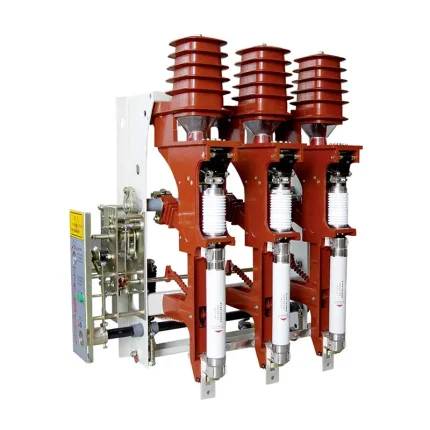
FKN12A-12 Interrupteur à coupure de charge à vide haute tension d'intérieur LBS avec fusible
Type:FKN12A-12
Cet interrupteur à vide de haute tension peut être installé avec un interrupteur de mise à la terre ayant la fonction de fermer le courant de court-circuit. L'interrupteur permet deux modes différents - manuel et électrique. Son utilisation dans les systèmes d'alimentation lui permet de se conformer à trois types de contrôles (à distance, télémétrie et télésignalisation).

VF(R)-12kv Embedded High Voltage AC Medium Voltage Vacuum Circuit Breaker
Le disjoncteur haute tension moyenne tension VF(R)-12kV AC est une nouvelle génération d'équipement haute tension développée pour répondre à la demande du marché. Il adopte des concepts modernes et est conçu spécifiquement pour les appareillages de commutation intérieurs blindés à isolation par air, afin de garantir un fonctionnement sûr et stable dans la plage de tension nominale.
Le VF(R)-12 est un appareil combinant un interrupteur et un fusible CA à haute tension hautement intégré, adapté à une variété de systèmes de réseaux électriques, et dont la conception met l'accent sur l'avancement et la fiabilité. Dans les réseaux électriques modernes, il est très apprécié des utilisateurs en raison de ses excellentes performances et de son large éventail de scénarios d'application.
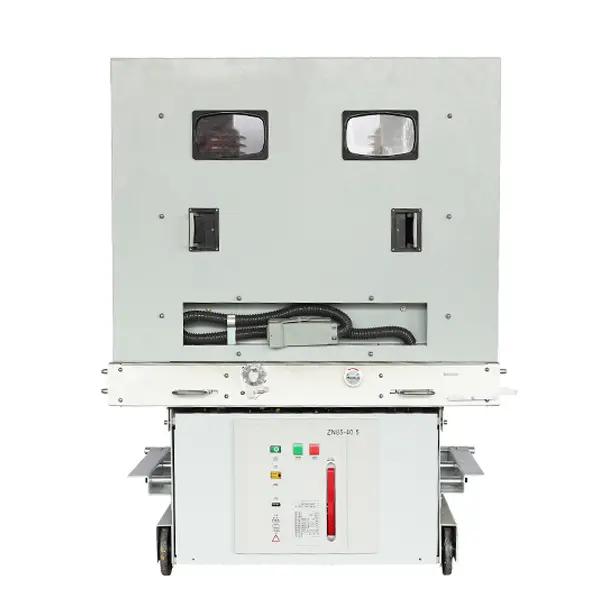
ZN85-40.5 Disjoncteur à vide haute tension d'intérieur pour appareillage de commutation KYN61
Le disjoncteur à vide haute tension d'intérieur ZN85-40.5 est un type de dispositif électrique haute tension conçu pour un système d'alimentation en courant alternatif 50 Hz, 35 kV, particulièrement adapté au chariot de transformateur de tension dans un appareillage de commutation de 1200 mm de large. La structure même du disjoncteur ne prévoit pas de mécanisme d'actionnement. Il est conçu pour mesurer efficacement et en toute sécurité la tension dans un système à haute tension et pour protéger le système.
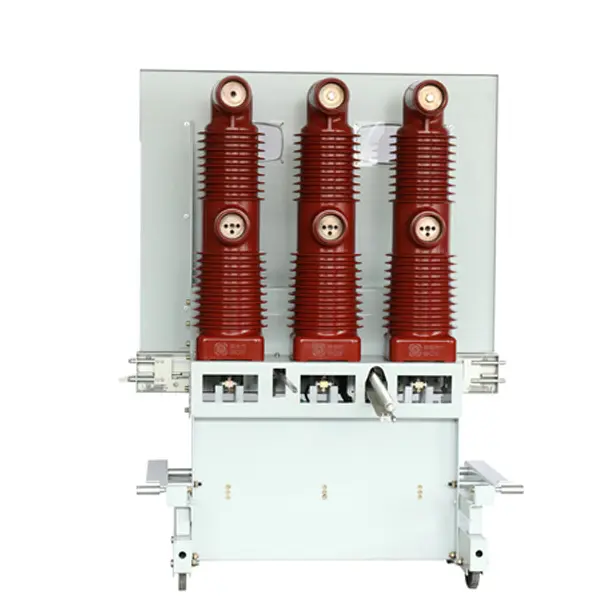
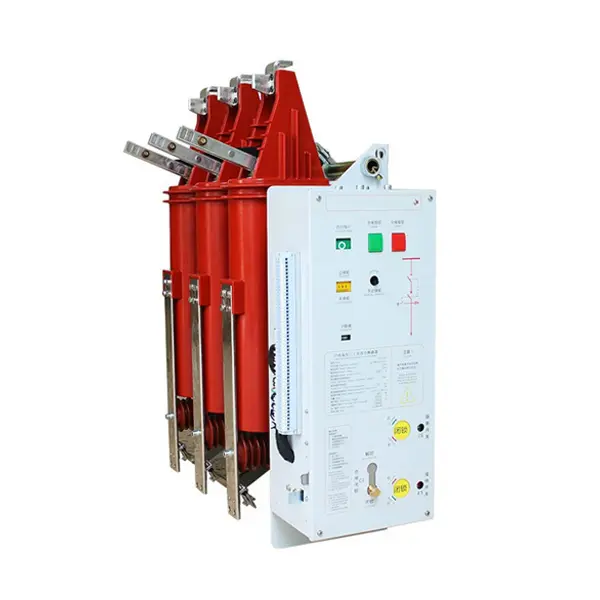
BQVN-12GD Disjoncteur à vide intérieur à trois postes
Le disjoncteur à vide haute tension intérieur à trois stations de la série BQVN-12GD possède d'excellentes propriétés électriques et mécaniques, une structure compacte et stable, et convient à une variété de systèmes d'alimentation haute tension, en particulier aux réseaux d'alimentation moyenne tension de 6 à 12 kV, pour fournir une protection de haute qualité. La conception du product est conforme à la tendance de la miniaturisation moderne, a une grande fiabilité, une longue durée de vie et de faibles exigences de maintenance, et constitue un dispositif de protection de sécurité idéal dans le système électrique.
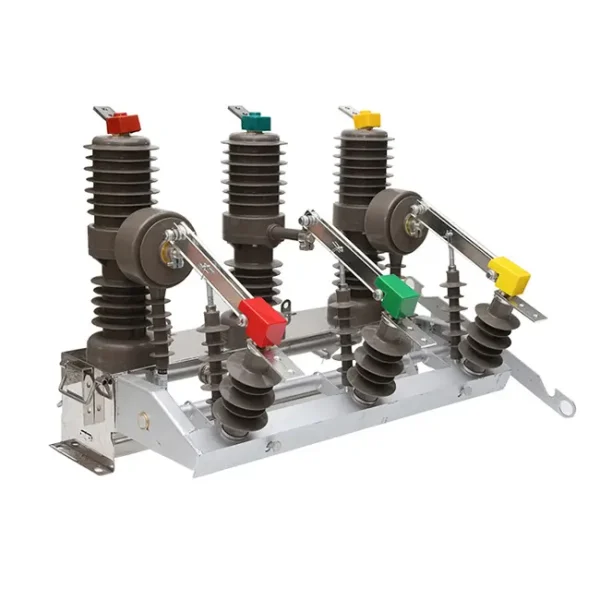
Vacuum Circuit Breaker Product Range
Compare available VCB configurations and follow the product links to review model-specific specifications.
| Product type | Typical installation |
| Indoor vacuum circuit breaker | Medium-voltage switchgear in factories, commercial buildings and substations |
| Outdoor vacuum circuit breaker | Outdoor distribution networks and substations |
| Withdrawable vacuum circuit breaker | Compatible switchgear with a removable breaker truck |
| Fixed-mounted vacuum circuit breaker | Switchgear designed for fixed installation |
What Is a Vacuum Circuit Breaker?
A vacuum circuit breaker is a switching device that uses a vacuum as its arc-extinguishing medium. When the breaker opens, its contacts separate inside a sealed vacuum interrupter. The arc is extinguished as the current passes through zero, allowing the circuit to withstand the recovery voltage under the breaker’s specified operating conditions.
Vacuum circuit breakers are commonly used in medium-voltage power distribution systems. They do not use insulating oil for arc extinction. Although the vacuum interrupter is sealed, the breaker’s operating mechanism, insulation, control circuits and other components still require inspection according to the manufacturer’s instructions.
Types of Vacuum Circuit Breakers
Indoor Vacuum Circuit Breaker
An indoor VCB is designed for installation inside medium-voltage switchgear and electrical distribution rooms. Typical applications include factories, commercial buildings, industrial substations and power distribution stations.
Available mounting arrangements may include fixed-mounted and withdrawable designs. Confirm compatibility with the switchgear’s rated voltage, busbars, terminals, control circuits and interlocks.
Outdoor Vacuum Circuit Breaker
An outdoor VCB is designed for use in external distribution networks and substations. Its enclosure and insulation system must suit the installation environment and project specifications.
Selection factors include ambient temperature, humidity, pollution level, altitude, insulation requirements and mechanical mounting arrangement.
Withdrawable Vacuum Circuit Breaker
A withdrawable VCB is mounted on a removable truck or trolley designed for compatible switchgear. It can be moved between defined operating and disconnected positions according to the switchgear design.
Before ordering a replacement, verify the breaker’s dimensions, terminal positions, control voltage, mechanical interface and interlocking arrangement.
Fixed-Mounted Vacuum Circuit Breaker
A fixed-mounted VCB is installed directly into the designated switchgear structure. It may suit projects where a fixed installation is specified.
Check compatibility with the switchgear’s busbars, terminals, operating mechanism, protection system and installation dimensions.
Key Features of Vacuum Circuit Breakers
Vacuum Arc Extinction
The vacuum interrupter extinguishes the switching arc under its designed operating conditions. This makes VCBs suitable for medium-voltage switching and fault interruption when correctly rated for the system.
No Arc-Extinguishing Oil
A vacuum circuit breaker does not use insulating oil for arc extinction. The specific environmental and maintenance requirements still depend on the breaker design and installation.
Maintenance Based on the Breaker Design
The sealed interrupter reduces routine servicing associated with the arc-extinguishing medium. Mechanical components, insulation, auxiliary circuits, contacts and wear indicators—where applicable—still require inspection according to the product manual.
Configurations for Different Switchgear Systems
Indoor, outdoor, fixed-mounted and withdrawable options are available across different product families. The selected VCB must match the electrical and mechanical requirements of the complete switchgear assembly.
Vacuum Circuit Breaker Technical Specifications
Use the product datasheet to confirm model-specific ratings. These are the main parameters to review when selecting a VCB:
| Paramètres | What to confirm |
|---|---|
| Tension nominale | System voltage and equipment rated voltage |
| Fréquence nominale | 50 Hz or 60 Hz, as required |
| Rated normal current | Continuous current capacity in amperes |
| Courant nominal de rupture en court-circuit | Maximum specified fault current the breaker can interrupt |
| Rated short-circuit making current | Peak current the breaker can close onto under specified conditions |
| Courant nominal de courte durée | Current withstand capability over the specified duration |
| Rated insulation level | Power-frequency withstand voltage and lightning impulse withstand voltage, where applicable |
| Mécanisme de fonctionnement | Spring-operated or other specified mechanism |
| Installation type | Indoor or outdoor |
| Mounting configuration | Fixed-mounted or withdrawable |
| Tension de commande | Required voltage for operating and control circuits |
| Applicable standards | IEC or other standards specified for the project |
Note technique : Rated normal current and short-circuit breaking current are different values. A high continuous-current rating does not by itself mean the breaker is suitable for a system with a high prospective fault current. Verify both ratings for the installation.
Applications of Vacuum Circuit Breakers
Vacuum circuit breakers are used in medium-voltage power distribution systems where switching and fault interruption are required.
Installations industrielles
Switch and protect distribution circuits supplying motors, production lines, industrial transformers and other medium-voltage loads.
Sous-stations
Support switching and protection functions in compatible medium-voltage distribution and substation arrangements.
Bâtiments commerciaux
Provide switching and fault interruption for medium-voltage incoming supplies and distribution circuits where a VCB is specified.
Projets dans le domaine des énergies renouvelables
Serve in suitable medium-voltage collection and distribution systems for solar and other renewable energy installations, subject to the system design and project specifications.
Utility Distribution Networks
Support switching and fault isolation in distribution systems when selected for the required voltage, current and fault levels.
Comment choisir le bon disjoncteur à vide ?
Selecting a VCB involves more than matching its rated current to the expected load. The breaker must suit the electrical system, switchgear assembly and protection scheme.
1. Confirm the System Voltage
Identify the nominal system voltage and select equipment with the appropriate rated voltage and insulation level. Consider insulation coordination, altitude and environmental conditions specified for the project.
2. Calculate the Required Current Rating
Determine the expected continuous load current, including planned load expansion where applicable. Confirm that the breaker and switchgear current-carrying ratings suit the operating conditions.
3. Check the Short-Circuit Level
Obtain the prospective short-circuit current at the installation point. The breaker’s breaking, making and short-time withstand ratings must meet the applicable system requirements.
4. Select the Installation and Mounting Type
Determine whether the project requires an indoor or outdoor breaker and whether the switchgear uses a fixed-mounted or withdrawable design.
For replacement projects, verify the existing breaker’s dimensions, terminal positions, control voltage, mechanical interface and interlocking arrangement.
5. Verify Control and Protection Requirements
Confirm the operating mechanism, trip and close coil requirements, auxiliary contacts, protection relay interface, and any electrical or mechanical interlocks.
6. Confirm Standards and Documentation
Check project requirements for applicable standards, type-test documentation, routine test reports, drawings and other technical records. Confirm which documents are available for the specific model before ordering.
For a replacement or retrofit, providing the existing breaker’s model number, nameplate photo or switchgear drawing can help identify compatibility requirements.
Vacuum Circuit Breaker vs. Other Circuit Breakers
Circuit breaker technologies are designed for different voltage levels and operating conditions. Compare the equipment ratings and application requirements before selecting a technology.
| Fonctionnalité | Disjoncteur à vide | SF₆ circuit breaker | Air circuit breaker |
|---|---|---|---|
| Common application | Medium-voltage systems | Medium- and high-voltage systems, depending on design | Primarily low-voltage systems |
| Arc-extinguishing medium | Le vide | Sulfur hexafluoride gas | Air |
| Typical installation | Indoor and outdoor designs | Indoor and outdoor designs | Low-voltage switchboards |
| Maintenance considerations | Mechanical parts, insulation and interrupter condition | Gas system, sealing and applicable environmental requirements | Contacts, arc chutes and operating mechanism |
| Selection priority | Medium-voltage switching and fault interruption | Applications requiring a suitable SF₆-based design | Low-voltage circuit protection |
These are general comparisons, not absolute limits. The suitable technology depends on rated voltage, interruption duty, environmental conditions, applicable regulations and lifecycle requirements.
Why Work with PINE?
For distributors, panel builders, EPC contractors and industrial buyers, choosing a VCB supplier involves more than comparing unit prices. The breaker must fit the electrical system and the switchgear where it will be installed.
PINE can support specification review for vacuum circuit breaker projects, subject to the available product range and confirmed model details.
- Application-based selection: Review system voltage, current, fault level and installation conditions.
- Configuration review: Confirm mounting arrangement, control requirements and switchgear compatibility.
- Technical documentation: Identify datasheets, drawings, test reports and compliance documents required for the project.
- OEM and project requirements: Discuss labeling, packaging and other customization options where available.
- B2B order coordination: Support distributors, panel builders and project buyers with specification review and product coordination.
Product availability, customization scope, certifications and delivery schedules should be confirmed for the specific model and order.
FAQ
What is the main purpose of a vacuum circuit breaker?
A vacuum circuit breaker switches medium-voltage electrical circuits and interrupts fault currents when commanded by the protection system. Its vacuum interrupter extinguishes the arc produced when the contacts separate.
What voltage levels are vacuum circuit breakers used for?
VCBs are commonly used in medium-voltage systems. Product families may include ratings such as 12 kV, 24 kV or 40.5 kV, depending on the manufacturer and model. Confirm the rated voltage and insulation requirements against the actual system specification.
What is the difference between a VCB and an ACB?
A vacuum circuit breaker is commonly used in medium-voltage systems and uses a vacuum interrupter for arc extinction. An air circuit breaker (ACB) is primarily used in low-voltage distribution systems and uses air-based arc interruption technology. They are designed for different voltage classes and are not interchangeable without an appropriate system design.
Quelle est la durée de vie d'un disjoncteur à vide ?
Service life depends on the breaker design, number of mechanical operations, electrical switching duty, fault interruptions and maintenance conditions. Check the manufacturer’s specified mechanical and electrical endurance for the selected model.
Does a vacuum circuit breaker require regular maintenance?
Yes. Although the vacuum interrupter reduces routine maintenance associated with the arc-extinguishing medium, the operating mechanism, insulation, auxiliary circuits and interlocks still require inspection according to the manufacturer’s instructions.
Can a vacuum circuit breaker replace an existing model?
Sometimes, but direct replacement should not be assumed. Check rated voltage, current, short-circuit ratings, insulation level, mounting dimensions, terminal arrangement, control voltage and switchgear interlocks before selecting a replacement.