In today’s industrial, commercial, and residential power systems, ensuring safe and stable voltage distribution is essential. Among all transformer types, the Low Voltage Dry-Type Transformer has become increasingly popular due to its safety, reliability, and eco-friendly design. Whether used in buildings, factories, or renewable energy systems, it serves as a critical component that ensures efficient power conversion without the use of flammable insulating oil.
This article explains what dry-type transformers are, how they work, where they are used, and why they are becoming the preferred choice for modern distribution networks.
What Is a Low Voltage Dry-Type Transformer?
A Low Voltage Dry-Type Transformer is a transformer that operates within the low-voltage range—typically below 1kV on the secondary side—and uses air cooling and solid insulation materials instead of oil. Unlike traditional oil-filled transformers, dry-type transformers rely on:
Air convection for cooling
Epoxy resin, varnish, NOMEX, or cast resin for insulation
Encapsulation of windings to enhance safety and durability
Dry-type technology is also widely used on the medium-voltage side, such as 6kV to 35kV distribution networks, forming the category of Medium Voltage Dry-Type Transformers.
How Does a Dry-Type Transformer Work?
The working principle is based on electromagnetic induction:
It produces an alternating magnetic field in the transformer core.
Secondary Coil (Output side) picks up this magnetic flux and generates electricity.
The voltage ratio depends on the number of coil turns (turns ratio).
Because the windings are coated or cast in solid insulation, the transformer performs safely without the risks associated with oil leakage or combustion.
Key Advantages of Low Voltage Dry-Type Transformers
1. High Safety – No Oil, No Fire Risk
Dry-type transformers contain no flammable liquid, making them suitable for high-occupancy and high-risk locations such as:
Hospitals
Shopping centers
Schools
Residential buildings
Even in fault conditions, the risk of fire or explosion is extremely low.
2. Environmentally Friendly
With no insulating oil, there is:
Zero risk of oil pollution
No need for oil testing or disposal
Reduced environmental compliance costs
This makes dry-type models a preferred option for green buildings and eco-friendly projects.
Routine dust removal and tightening of connections are usually enough to keep them running for years.
4. Adaptable to Harsh Environments
Modern dry-type transformers achieve:
F/H-class insulation
High moisture resistance
High mechanical strength
They can operate in:
High-temperature plants
Humid basements
Dusty workshops
Coastal environments
Special “sealed” or “cast resin” models are also suitable for critical applications like data centers and renewable energy storage systems.
Common Applications of Low Voltage Dry-Type Transformers
1. Residential & Commercial Buildings
They convert medium-voltage grid power to 380V/220V for:
Lighting
HVAC
Elevators
Office equipment
Their safety features make them ideal for densely populated environments.
2. Hospitals & Medical Facilities
Dry-type transformers ensure clean, stable power for:
MRI machines
CT scanners
ICU equipment
Their low noise and low fire risk are major advantages.
3. Industrial Plants
Factories use dry-type transformers to supply:
Motors
Pumps
Automation lines
PLC systems
The rugged insulation withstands shock, vibration, and overloads.
4. Solar PV & Energy Storage
In renewable energy systems, they handle:
AC output from inverters
Step-up/down voltage for grid connection
Isolation for safety
Dry-type designs are perfect for containerized energy storage units where oil-filled transformers are unsuitable.
Low Voltage vs Medium Voltage Dry-Type Transformers
Feature
Low Voltage Dry-Type Transformer
Medium Voltage Dry-Type Transformer
Typical Voltage
400V / 690V / 220V
6kV / 10kV / 35kV
Applications
Buildings, small industries
Substations, solar farms, grid systems
Insulation
VPI, Cast Resin
Cast Resin, High-grade Epoxy
Cooling
Air-cooled
Air/Natural or Forced Cooling
Safety Level
Very high
Extremely high
Both categories share the same oil-free, environmentally friendly design, but medium-voltage units handle higher power and require more advanced insulation.
Why Dry-Type Transformers Are Growing in Demand
Global trends driving adoption:
Stricter fire-safety regulations
Expansion of commercial real estate
Rapid growth in renewable energy projects
Urban underground substations
Demand for low-maintenance equipment
As a result, many utility, industrial, and commercial projects now specify dry-type units as the standard.
CE, UL, IEC, GB standards depending on your region and application.
FAQ
1. Are dry-type transformers safer than oil-filled transformers?
Yes. Because they use no oil, they greatly reduce fire, explosion, and pollution risks.
2. Do dry-type transformers require much maintenance?
No. Routine inspection, dust cleaning, and checking connections are usually enough.
3. Can they be used outdoors?
Yes—if equipped with a protective housing or IP-rated enclosure.
4. What is the typical lifespan of a dry-type transformer?
20–30 years with proper installation and regular inspection.
5. What industries commonly use dry-type transformers?
Construction, manufacturing, healthcare, renewable energy, data centers, and public infrastructure.
6. What is the difference between cast resin and VPI dry-type transformers?
VPI: Vacuum Pressure Impregnation, suitable for general loads.
Cast Resin: Better moisture resistance and mechanical strength; ideal for harsh environments.
7. Can your factory customize dry-type transformers?
Yes. As a Low Voltage Dry-Type Transformer Manufacturer, we offer custom voltage, capacity, cooling, insulation, and configuration options to meet global project requirements.
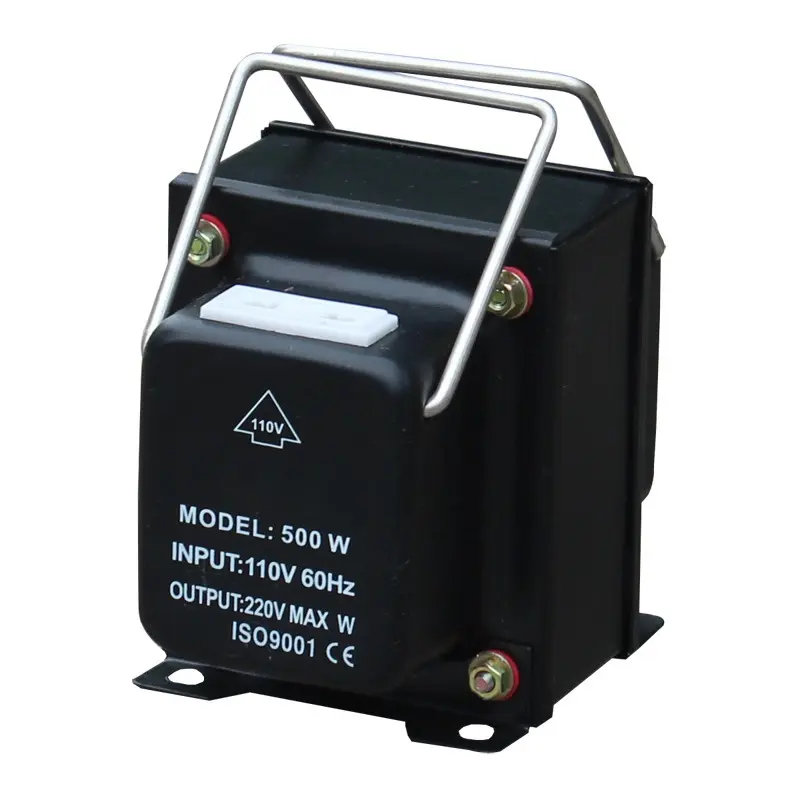
The TC Series Portable Step Up and Down Voltage Converter is designed for users who need to operate electrical appliances with different voltage standards. This reliable 110V to 220V transformer efficiently converts power between 110V–120V and 220V–240V, ensuring safe and stable performance for your devices anywhere in the world.
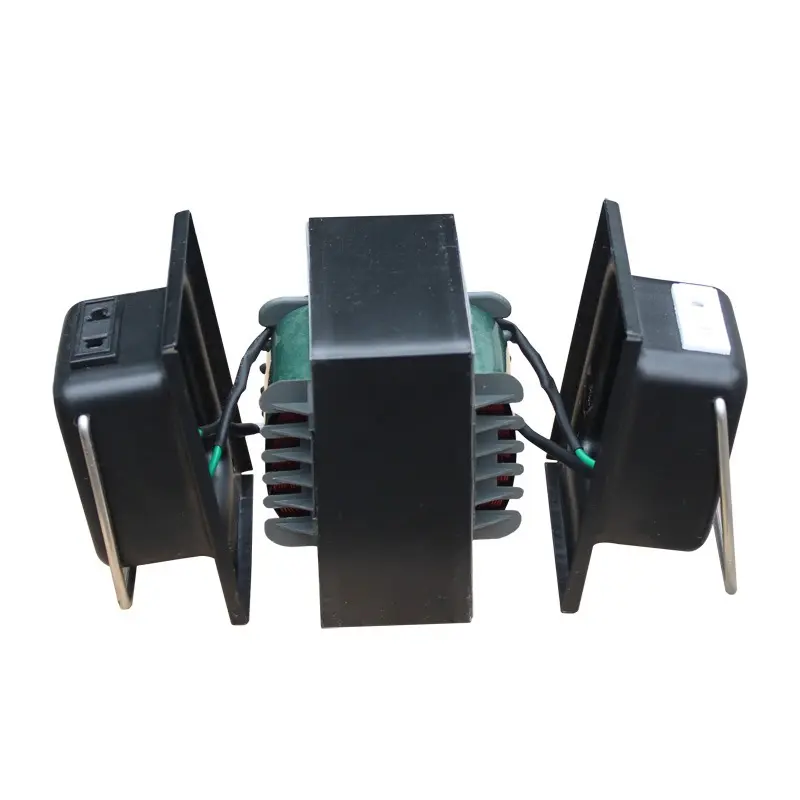
With its dual-core design, the 110 To 220 Transformer works both ways:
Converts 110V to 220V (step-up)
Converts 220V to 110V (step-down)
Simply select the correct input voltage for your region using the built-in voltage selector switch — available options: 110V / 220V / 230V / 240V. The corresponding output provides clean and stable AC power for your equipment.
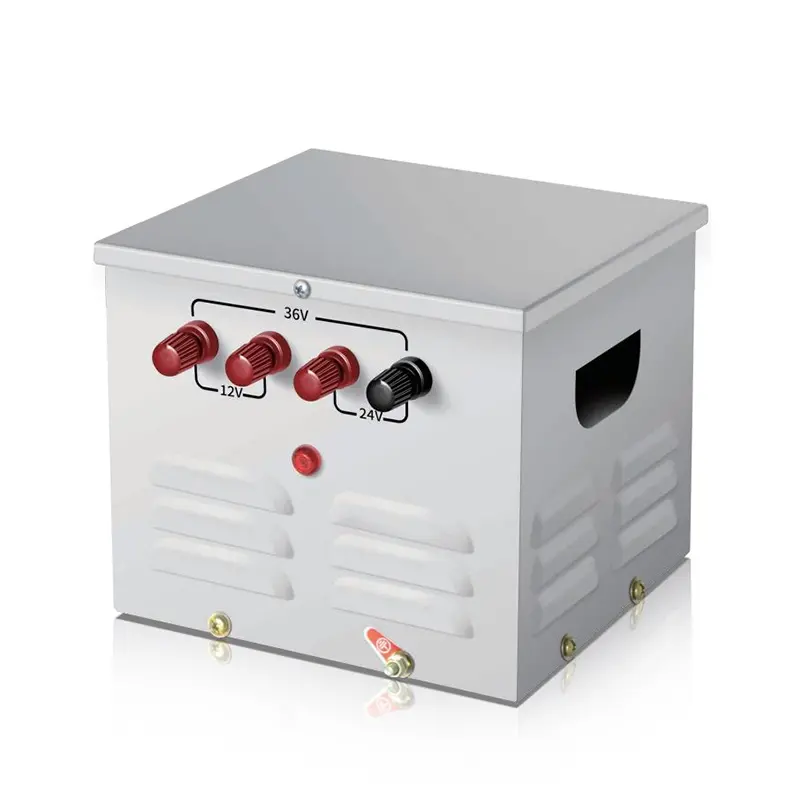
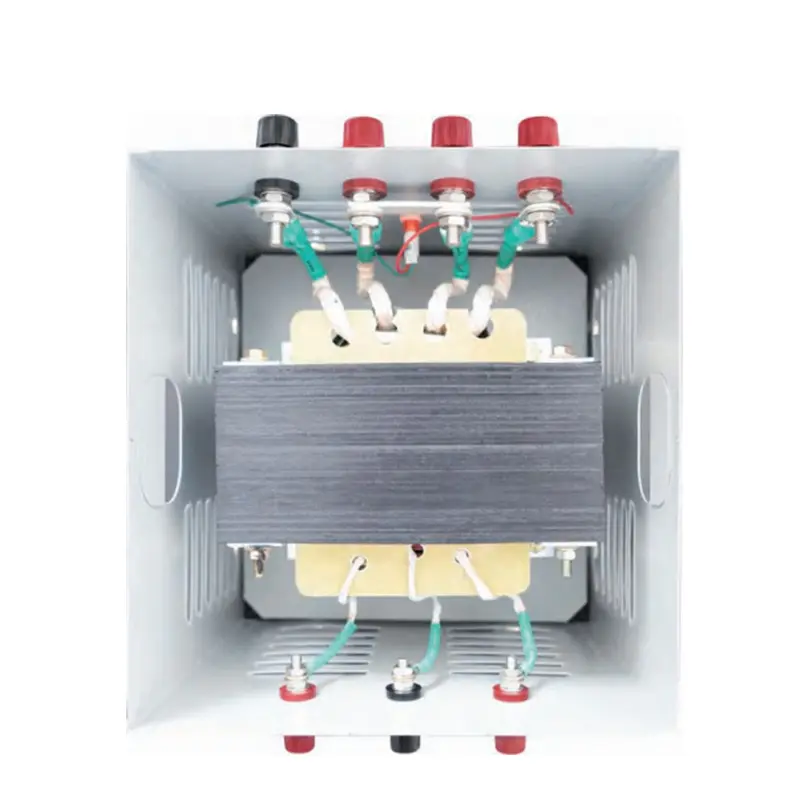
The JMB series is our rugged, portable single-phase control transformer built for lighting and small industrial equipment. It steps down common mains voltages to isolated, Safety Extra-Low Voltage (SELV) outputs — ideal for damp job sites, confined spaces and metal enclosures where safety matters. Available from 25 VA up to 50 kVA, with multiple taps and optional protective features.
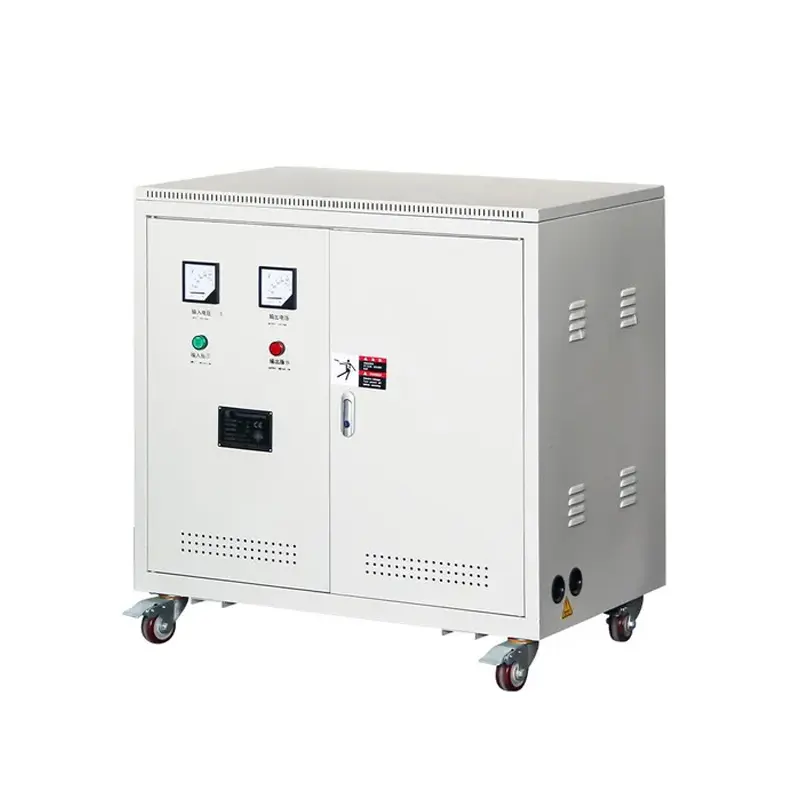
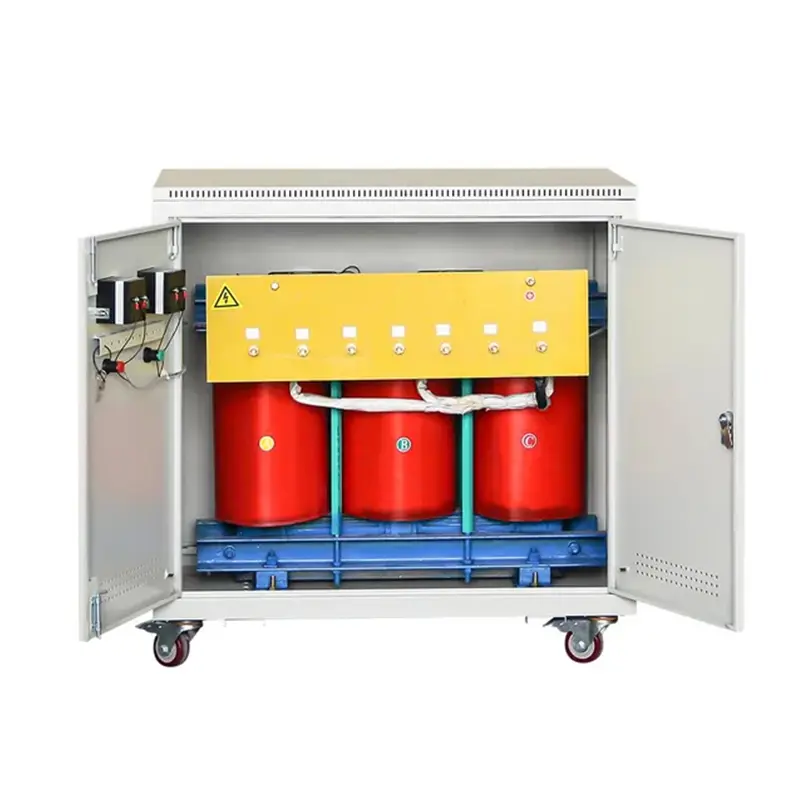
The SG series three-phase dry type isolation transformer is a high-performance power solution engineered for AC 50 Hz–60 Hz circuits up to 660 V. Designed for industrial production lines, data centers, precision machine tools, medical equipment, and imported critical devices, it provides electrical isolation, stable voltage conversion, and superior noise suppression.
With a capacity range of 10 kVA to 1000 kVA, this transformer meets and exceeds international standards including IEC 439 and GB 5226, delivering dependable power where safety and efficiency are paramount.
More than 20 years, professional supplier of all types of transformers from 30 kVA up to 2500 kVA. Its technology is at the required standard for most European and American markets, while also looking forward to being your reliable long-term partner in China
The SG series three-phase dry type isolation transformer is a high-performance power solution engineered for AC 50 Hz–60 Hz circuits up to 660 V. Designed for industrial production lines, data centers, precision machine tools, medical equipment, and imported critical devices, it provides electrical isolation, stable voltage conversion, and superior noise suppression.
With a capacity range of 10 kVA to 1000 kVA, this transformer meets and exceeds international standards including IEC 439 and GB 5226, delivering dependable power where safety and efficiency are paramount.
If your facility requires stable and efficient voltage conversion—from 440V to 220V, 380V to 220V, or other customized three-phase voltages—the ZHENGXI QSG Series Three-Phase Dry Type Autotransformer is designed to deliver reliable performance, high efficiency, and long service life. As a trusted Chinese transformer manufacturer, ZHENGXI provides advanced engineering, strict quality control, and competitive 3 phase transformer price options to support global industrial applications.
The ZHENGXI 500VA–5000VA Single Phase Step Up and Down Voltage Converter is perfect for small industrial devices, office electronics, and home appliances used in various locations since it can securely and effectively convert voltages between 110V–120V and 220V–240V.
High efficiency, low heat generation, and low noise are features of the SDT series, which is constructed with a toroidal copper-core transformer. This device provides steady, clean power to safeguard your priceless equipment, whether you're stepping down from 220V to 110V or up from 110V to 220V.
The BK series single-phase isolation control power transformer (commonly called a BK transformer) delivers stable, isolated control voltages for industrial and commercial equipment. Available from 100 VA to 5 kVA, the unit uses a thyristor (SCR) control module with feedback to provide precise closed-loop voltage regulation even when the input supply fluctuates.
This control transformer is built to international safety and efficiency standards and is perfect for CNC machines, PLCs, automation panels, lighting circuits, and other precision systems that need a stable control supply.