




1000 кВА Трехфазный мощный интеллектуальный полностью автоматический бесконтактный статический стабилизатор напряжения с ЖК-дисплеем
SJW 3-фазный сервостабилизатор напряжения 40 кВА для коммерческих центров обработки данных
ZBW 10Kva-4000Kva 3 фазы IGBT статический автоматический стабилизатор напряжения для высокоточных машин
SBW трехфазный высокой мощности 150Kva серво автоматический стабилизатор напряжения для заводского управления мощностью
Почему важно учитывать снижение номинальной мощности стабилизатора напряжения
Выбор правильной мощности стабилизатор напряжения Дело не только в том, чтобы обеспечить соответствие номинальной мощности подключенного оборудования в кВА или кВт. В реальных условиях эксплуатации такие факторы окружающей среды, как высокая температура, большая высота над уровнем моря и постоянная интенсивная нагрузка, могут значительно снизить фактическую выходную мощность стабилизатора.
Это сокращение известно как снижение номинальной мощности стабилизатора напряжения. Понимание коэффициентов понижения номинальной мощности помогает инженерам, подрядчикам по электромонтажным работам и руководителям объектов избежать перегрева, непредвиденных остановок, сокращения срока службы оборудования и ухудшения показателей стабилизации напряжения.
Правильно подобранный стабилизатор должен надежно работать в реальных условиях эксплуатации, а не только в условиях, соответствующих лабораторным номинальным параметрам. В данной статье рассматриваются ключевые факторы, влияющие на производительность стабилизатора, в том числе снижение номинальной мощности стабилизатора при изменении температуры, понижение номинальных характеристик в зависимости от высоты над уровнем моря, и номинальная нагрузка при непрерывной работе.
Что такое снижение номинальной мощности стабилизатора напряжения?
Под снижением номинальной мощности стабилизатора напряжения понимается уменьшение максимально допустимой выходной мощности стабилизатора в случае, когда условия эксплуатации выходят за пределы стандартных расчетных условий.
Номинальные характеристики большинства стабилизаторов напряжения указываются для стандартных условий, как правило:
- Температура окружающей среды: около 40 °C
- Высота установки: до 1000 метров над уровнем моря
- Непрерывная работа при номинальной нагрузке
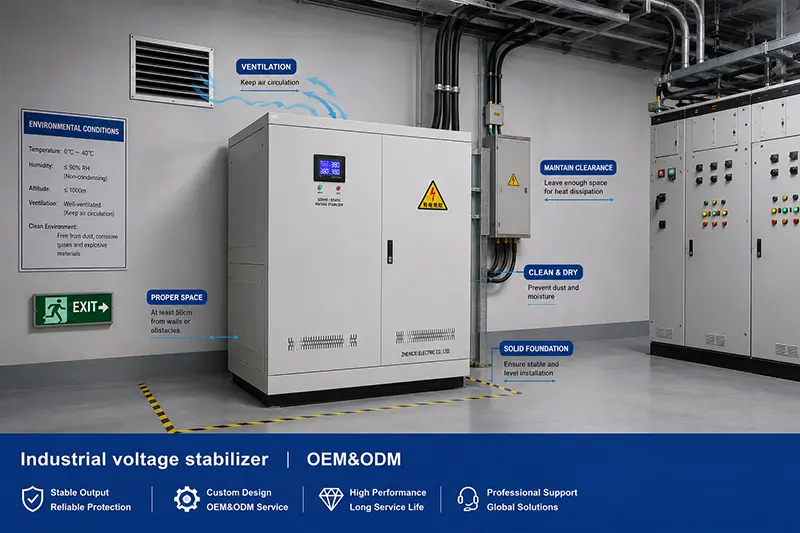
- Нормальные условия вентиляции
Если реальные условия эксплуатации становятся более сложными, стабилизатор может оказаться неспособным обеспечить свою полную номинальную мощность. При подборе оборудования инженеры должны учитывать поправочный коэффициент.
Например, стабилизатор напряжения мощностью 100 кВА, установленный в условиях высокой температуры в промышленной среде, может потребовать повышения мощности до 125 кВА или более в зависимости от температурных условий и режима нагрузки.
Почему условия окружающей среды влияют на производительность стабилизатора напряжения
Стабилизатор напряжения содержит такие силовые компоненты, как трансформаторы, двигатели с регулировкой напряжения, тиристорные модули, контакторы, медные проводники и электронные схемы управления. Рабочие характеристики этих компонентов в значительной степени зависят от эффективности отвода тепла и изоляционных свойств.
Согласно принципам проектирования электрооборудования, изложенным в таких стандартах, как МЭК 60076 для трансформаторов и МЭК 60947 для низковольтного оборудования, тепловые характеристики напрямую влияют на нагрузочную способность оборудования.
Когда тепло не удается эффективно отводить, температура внутри повышается, что приводит к:
- Более высокий нагрев обмотки
- Сокращение срока службы теплоизоляции
- Повышенная нагрузка на детали
- Отключения защиты в периоды пикового спроса
- Снижение долгосрочной надежности
Снижение номинальных характеристик стабилизаторов напряжения в зависимости от температуры
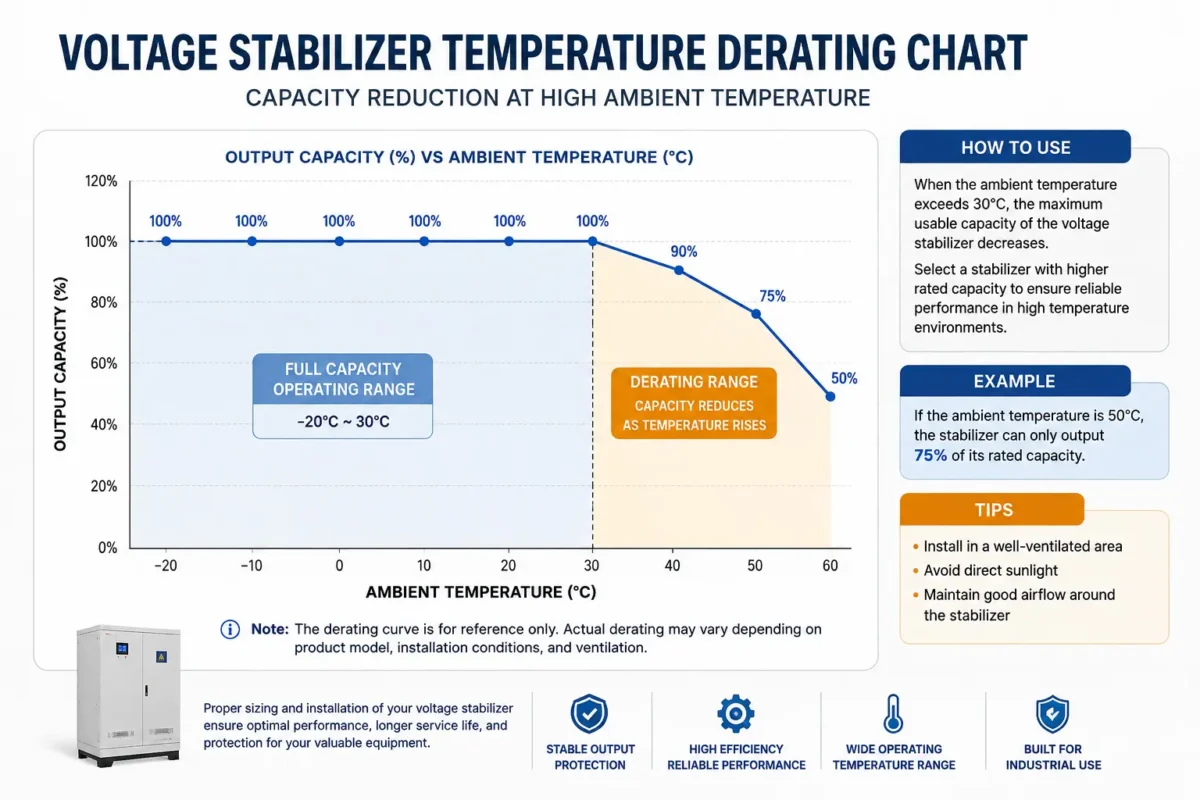
Снижение номинальной мощности стабилизатора в зависимости от температуры является одним из важнейших факторов, которые необходимо учитывать при установке оборудования в жарком климате, в открытых электрических помещениях, на заводах и в плохо вентилируемых помещениях.
Электрические компоненты выделяют тепло во время работы. По мере повышения температуры окружающей среды доступный температурный запас уменьшается, а это означает, что стабилизатор должен работать с меньшей процентной нагрузкой, чтобы поддерживать безопасную внутреннюю температуру.
Типичные рекомендации по снижению номинальной мощности в зависимости от температуры могут выглядеть следующим образом:
| Температура окружающей среды | Рекомендуемая грузоподъёмность |
|---|---|
| ≤40 °C | Номинальная мощность 100% |
| 45 °C | Емкость примерно 95% |
| 50 °C | Вместимость примерно 85–901 TP4T |
| 55 °C | Емкость примерно 80% |
Точное значение понижения номинальной мощности зависит от конструкции стабилизатора, способа охлаждения, класса изоляции и технических характеристик производителя.
Например, сервостабилизатор напряжения, установленный в тропическом регионе при температуре окружающей среды 50 °C, не должен постоянно работать при нагрузке 100%. Выбор модели с большей мощностью позволяет увеличить тепловой запас и повысить надежность.
【img】
Альтернативный вариант: Таблица понижения номинальной мощности стабилизатора напряжения в зависимости от температуры, отражающая снижение мощности при высокой температуре окружающей среды
Снижение мощности в условиях высокогорья: как высота над уровнем моря уменьшает производительность стабилизатора
Коэффициент понижения мощности в зависимости от высоты над уровнем моря Это приобретает особое значение при установке стабилизаторов напряжения в горных районах или в местах, расположенных на высоте свыше 1000 метров над уровнем моря.
На больших высотах плотность воздуха уменьшается. Поскольку многие электрические устройства используют естественное воздушное охлаждение или принудительную вентиляцию, снижение плотности воздуха приводит к уменьшению эффективности теплообмена.
К основным последствиям относятся:
- Снижение эффективности охлаждения
- Более высокая рабочая температура
- Снижение запаса прочности теплоизоляции
- Сниженная безопасная непрерывная нагрузочная способность
В соответствии с общепринятыми правилами проектирования электрооборудования, оборудование, устанавливаемое на высоте свыше 1000 метров, может потребовать корректировки номинальной мощности.
Общий пример:
| Высота установки | Типичные факторы, влияющие на снижение номинальной мощности |
|---|---|
| 0–1000 м | Дополнительное снижение номинальной мощности не требуется |
| 1500 м | Возможно, потребуется небольшое снижение мощности |
| 2000–3000 м | Рекомендуется использовать более высокий коэффициент снижения номинальной мощности |
| >3000 м | Требуется специальная конструкция для эксплуатации на больших высотах |
При реализации проектов на больших высотах инженерам следует согласовать с производителем стабилизатора расчетные параметры системы охлаждения, уровень изоляции и технические характеристики трансформатора.
Выбор стабилизатора постоянной нагрузки и напряжения
Еще одним важнейшим фактором в снижение номинальной мощности стабилизатора напряжения — это работа с постоянной нагрузкой.
Многие системы, такие как центры обработки данных, медицинское оборудование, станки с ЧПУ, системы промышленной автоматизации и средства связи, работают круглосуточно. В отличие от временных нагрузок, постоянные нагрузки создают постоянную тепловую нагрузку.
Стабилизатор, работающий непрерывно на максимальной номинальной мощности, оставляет незначительный запас прочности для:
- Колебания нагрузки
- Пусковой ток двигателя
- Будущее расширение парка оборудования
- Изменения температуры окружающей среды
Для обеспечения непрерывной работы многие инженеры рекомендуют выбирать стабилизатор с запасом мощности, а не эксплуатировать его на пределе нагрузки 100%.
Распространенный подход к отбору:
Требуемая мощность стабилизатора = Фактическая нагрузка × Коэффициент безопасности × Коэффициент поправки на условия окружающей среды
Например:
- Подключенная нагрузка: 80 кВА
- Коэффициент непрерывной работы: 1,25
- Поправка на высокую температуру: 1,10
Требуемая мощность:
80 × 1,25 × 1,10 = 110 кВА
Таким образом, стабилизатор мощностью 120 кВА обеспечит более безопасный запас по мощности.
Сравнение пониженных номинальных характеристик стабилизаторов напряжения: стандартные условия и суровые условия эксплуатации
| Рабочие условия | Стандартная установка | Суровые условия эксплуатации |
|---|---|---|
| Температура | ≤40 °C | 50 °C и выше |
| Высота | Ниже 1000 м | Выше 2000 м |
| Схема нагрузки | Прерывистая нагрузка | Непрерывная нагрузка 24/7 |
| Рекомендуемый выбор | Номинальная мощность | Завышенная мощность с расчетом по сниженной нагрузке |
В чем заключаются различия в снижении номинальной мощности стабилизаторов напряжения в разных технологиях
Различные технологии стабилизаторов обладают разными тепловыми характеристиками.
Стабилизатор напряжения сервопривода
- Использует технологию трансформатора с переменным коэффициентом трансформации и моторным приводом
- Высокая перегрузочная способность
- Подходит для промышленного применения
- Требуется учесть тепловыделение двигателя и трансформатора
Статический стабилизатор напряжения
- Использует силовую электронику, такую как управление с помощью IGBT или SCR
- Быстрая реакция системы коррекции напряжения
- Требуется эффективная система охлаждения
- Температурные ограничения для полупроводников имеют большое значение
Стабилизатор с масляным охлаждением
- Улучшенное управление тепловым режимом
- Подходит для использования на открытом воздухе в условиях высокой нагрузки
- Часто предпочитается в суровых промышленных условиях
Выбор подходящей технологии зависит от типа нагрузки, условий эксплуатации, требований к скорости срабатывания и ожиданий в отношении технического обслуживания.
Практическое руководство: как правильно подобрать мощность стабилизатора
Прежде чем приобрести стабилизатор напряжения, следует учесть следующие факторы:
- 1. Измерить фактическую нагрузку: Проверяйте фактический рабочий ток, а не полагайтесь исключительно на номинальные значения, указанные на заводской табличке.
- 2. Оцените состояние напряжения: Зафиксируйте минимальные и максимальные колебания входного напряжения.
- 3. Проверьте условия установки: Учитывайте температуру, высоту над уровнем моря, вентиляцию и запыленность.
- 4. Рассчитать постоянную нагрузку: Оборудование, работающее круглосуточно, требует дополнительного запаса мощности.
- 5. Учтите возможность будущего расширения: Не следует выбирать стабилизатор, который постоянно работает на пределе своей мощности.
Тенденции в отрасли и перспективы развития
В связи с растущим спросом на надежное качество электроэнергии в сфере промышленной автоматизации, систем возобновляемой энергетики, медицинских учреждений и центров обработки данных выбор стабилизаторов напряжения становится все более тщательным.
Современные производители стабилизаторов совершенствуют конструкции следующими способами:
- Интеллектуальные системы мониторинга
- Датчики температуры
- Дистанционная диагностика
- Силовые компоненты с повышенной эффективностью
- Усовершенствованные технологии охлаждения
Такие организации, как IEEE и IEC, продолжают разрабатывать стандарты на электрооборудование, в которых особое внимание уделяется безопасности, надежности и энергоэффективности.
ЧАСТО ЗАДАВАЕМЫЕ ВОПРОСЫ
Стабилизатор напряжения требует снижения номинальной мощности, поскольку такие условия окружающей среды, как высокая температура и высота над уровнем моря, снижают эффективность охлаждения и рабочие характеристики электрических компонентов. Снижение номинальной мощности обеспечивает безопасную и надежную работу.
При расчете на непрерывные промышленные нагрузки инженеры обычно добавляют запас мощности 20%-30% в зависимости от характеристик нагрузки, условий эксплуатации и будущих требований к расширению.
Да, но на высоте свыше примерно 1000 метров может потребоваться корректировка с учетом высоты над уровнем моря. Производитель должен подтвердить соответствующий коэффициент снижения номинальных характеристик и схему охлаждения.
Заключение
Понимание снижение номинальной мощности стабилизатора напряжения имеет решающее значение для обеспечения надёжной защиты электропитания в реальных условиях эксплуатации. Температура, высота над уровнем моря и условия непрерывной нагрузки напрямую влияют на фактические рабочие характеристики стабилизатора.
Выбор правильной мощности с учетом снижение номинальной мощности стабилизатора при изменении температуры, понижение номинальных характеристик в зависимости от высоты над уровнем моря, и номинальная нагрузка при непрерывной работе Проведение расчетов помогает предотвратить перегрев, непредвиденные отказы и ненужные затраты на техническое обслуживание.
Являясь опытным производителем стабилизаторов напряжения и трансформаторов, мы предлагаем индивидуальные решения с учетом условий эксплуатации, требований к нагрузке и проблем, связанных с качеством электроэнергии. Обратитесь к нашей команде инженеров, чтобы получить профессиональную помощь в подборе стабилизатора и надежное решение по защите электросети, разработанное специально для ваших задач.