




In most cases, the individuals looking for information on electricity stabilizer vs voltage regulator are part of an industrial or commercial power-related project and are looking for ways to deal with the negative consequences of an unstable voltage from the grid supply.
Even though the electricity stabilizer and voltage regulator serve the common objective of voltage control, their design objective, correction capacity, and application scope are vastly different.
In practical scenarios, the common mistake of considering these two terms as synonymous will lead to several issues, including overheating and premature equipment failure.
The main objective of this article is to highlight the practical differences between the electricity stabilizer and voltage regulator, particularly in the context of an industrial or commercial power-related project.
What Is a Voltage Stabilizer?
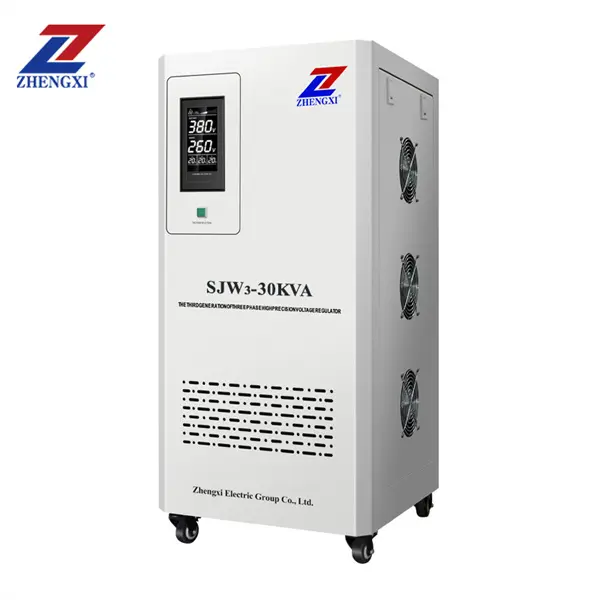
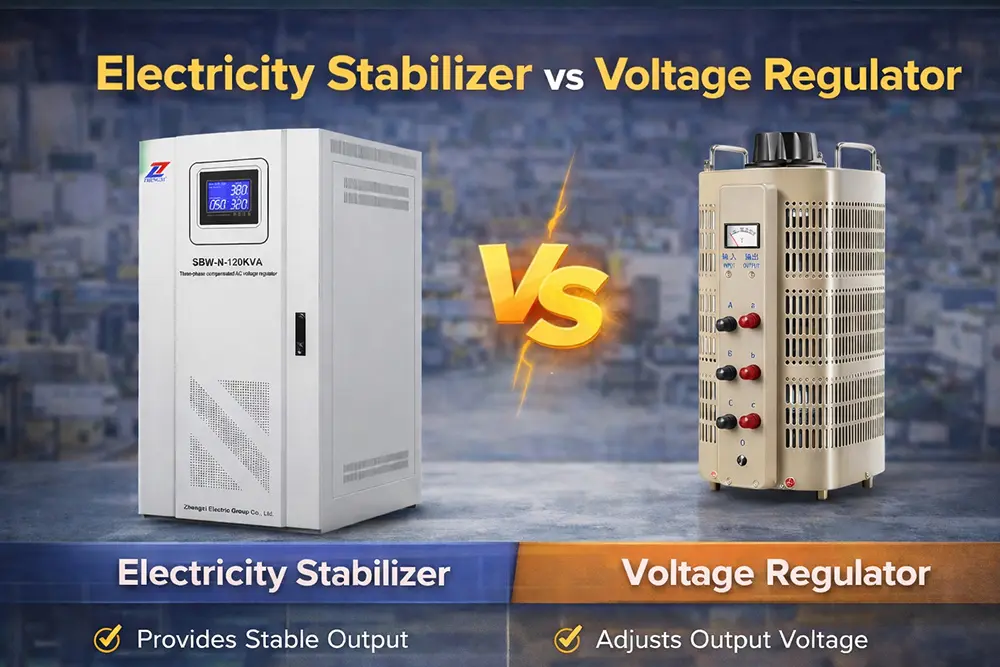
A voltage stabilizer is an automatic power conditioning device designed to maintain a stable output voltage when the input voltage fluctuates beyond acceptable limits.
It continuously monitors voltage conditions and compensates for:
- Voltage sag
- Voltage swell
- Load variation
- Grid instability and imbalance
Most industrial voltage stabilizers use servo motor–controlled or static control systems to adjust the transformer ratio in real time, ensuring the output voltage remains within a preset tolerance range.
Key purpose:
👉 Protect equipment by stabilizing unstable grid voltage, especially for medium to high-power loads.
What Is a Voltage Regulator?
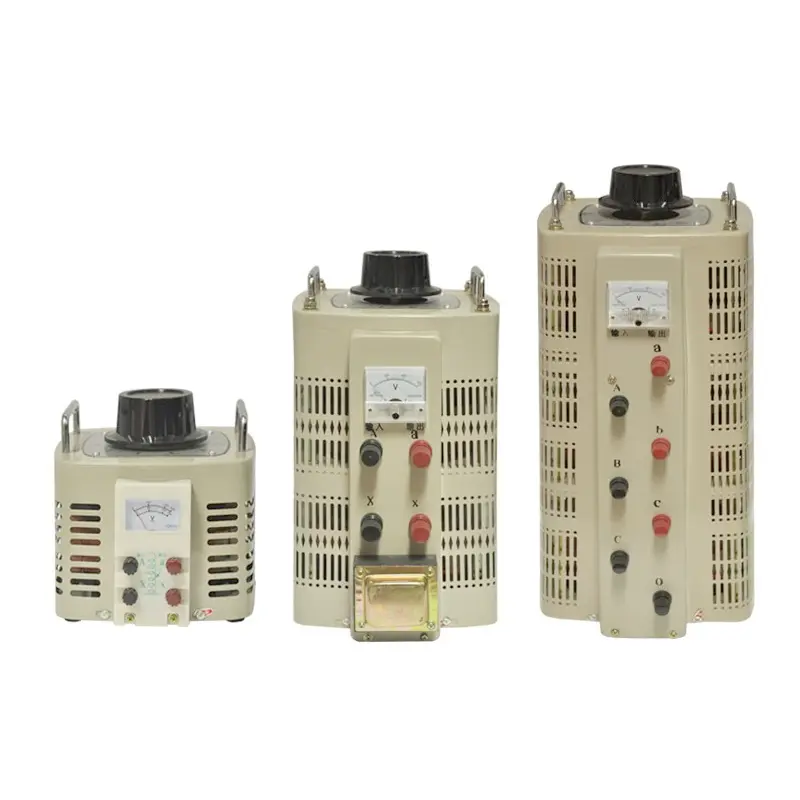
A voltage regulator, also called a variable transformer, is a voltage control device primarily used for fine voltage regulation or internal voltage stabilization, typically operating within a limited regulation range and power capacity.
It is commonly applied in situations where users need to:
- Adjust voltage to a specific value
- Compensate for small, predictable voltage deviations
Most standalone voltage regulators are not designed to handle continuous, wide-range grid fluctuations, particularly under dynamic or inductive loads such as motors.
Key purpose:
👉 Adjust voltage value, not protect against unstable power supply.
Core Difference: Voltage Stabilizer vs Voltage Regulator (Plain Explanation)
- A voltage regulator changes voltage when you set it
- A voltage stabilizer changes voltage automatically when the grid changes
This distinction is critical in industrial environments, where voltage conditions change constantly and unpredictably.
Technical Comparison: Stabilizer vs Regulator
| Parameter | Voltage Stabilizer | Voltage Regulator |
|---|---|---|
| Operating mode | Fully automatic | Manual or limited automatic |
| Input voltage tolerance | Wide (±20% to ±50%) | Narrow |
| Power capacity | Medium to very high (kVA–MVA) | Low to medium |
| Response to fluctuations | Continuous real-time correction | Limited or delayed |
| Load compatibility | Motors, CNC, compressors, HVAC | Light loads, testing equipment |
| Industrial suitability | ✅ Highly suitable | ❌ Limited |
| Risk under unstable grid | Low | High |
Application Scenarios: Which One Should You Choose?
Choose a Voltage Stabilizer if:
- You operate industrial or commercial equipment
- Grid voltage fluctuates frequently
- Your load includes motors or inductive equipment
- Equipment downtime is costly
Choose a Voltage Regulator if:
- Voltage is generally stable
- Power capacity is low
- Voltage adjustment is occasional and predictable
👉 In industrial and high-power applications, voltage stabilizers are the standard solution, not an optional upgrade.
Why Voltage Stabilizers Are Preferred in Industrial Power Systems
According to IEEE power quality guidelines, voltage fluctuation is one of the leading causes of industrial equipment malfunction.
Major manufacturers such as ABB and Schneider Electric typically recommend system-level voltage stabilization, rather than relying solely on internal regulation, especially in regions with unstable grids.
This is because:
- Internal regulators protect individual electronics
- Voltage stabilizers protect the entire power system
Final Conclusion: Making the Right Choice
To summarize the power stabilizer difference:
- A voltage regulator is mainly for voltage adjustment
- A voltage stabilizer is designed for voltage protection
👉 For industrial, commercial, and high-power applications, a voltage stabilizer is not an alternative — it is a necessity.
Related Products

1000kVA Three-Phase High-Power Intelligent Fully Automatic Non-Contact Static Voltage Stabilizer with LCD Display
SBW Three-Phase High Power 150Kva Servo Automatic Voltage Stabilizer For Factory Power Control
TSGC2 1.5Kva-30Kva 380V/430V Three Phase Manual Variable Transformer
 EN
EN  FR
FR  ES
ES  PT
PT  IT
IT  RU
RU  AR
AR  FA
FA