



A three phase stabilizer (also referred to as a 3 phase voltage stabilizer or three phase voltage regulator) is a type of industrial power conditioner used to stabilize an unstable or unbalanced three-phase input voltage and provide a stable and controlled output to the connected loads.
In a typical industrial power setup, voltage instability can be created by factors such as instability in the power grid, high motor start current, unbalanced phase loading, or high voltage drop during long-distance power transmission. If the voltage is not stabilized, these factors can cause motor overheating, warning signals in control systems, unexpected power shutdowns, or equipment damage.
Our three phase stabilizers are commonly used in various manufacturing plants, CNC machines, injection molding machines, elevators, data centers, and other critical three-phase applications where voltage stability is a concern for safety, efficiency, and continuity.

SBW Industrial Outdoor 100KVA 3 Phase Servo Automatic Voltage Stabilizer for Mechanical Equipment
In modern industrial power systems, voltage stability is a fundamental requirement rather than an optional feature. Unstable three-phase voltage can directly lead to equipment shutdowns, control system faults, motor overheating, and long-term damage to mechanical machinery.
The SBW Industrial Outdoor 100KVA 3 Phase Servo Automatic Voltage Stabilizer, manufactured by ZHENGXI, is specifically designed to provide precise and reliable voltage regulation for heavy-duty mechanical equipment operating in unstable or fluctuating grid environments. With servo motor control technology and a rugged outdoor structure, this three phase stabilizer ensures continuous, safe, and efficient industrial operation.


1000kVA Three-Phase High-Power Intelligent Fully Automatic Non-Contact Static Voltage Stabilizer with LCD Display
1000kVA Three Phase Intelligent Fully Automatic Non-Contact Static Voltage Stabilizer by ZHENGXI is designed to counteract such problems in high-load, high-precision, and fluctuating environments.
This stabilizer utilizes advanced microprocessor control for static compensation and offers rapid action, super high efficiency, and non-contact regulation. This product will ensure stable power with its efficient performance.
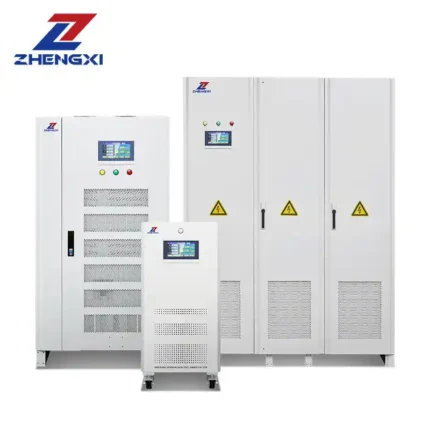
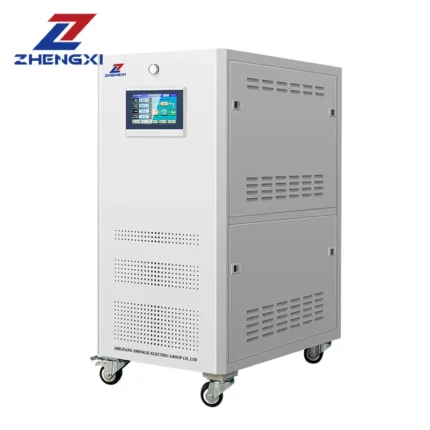
ZBW 10Kva-4000Kva 3 Phase IGBT Static Automatic Voltage Stabilizer For High-Precision Machines
ZBW 10Kva-4000Kva 3 phase igbt static automatic voltage stabilizer for High-Precision Machines
Voltage stability in modern industrial setups is no longer a luxury but an imperative requirement for precision, efficiency, and longevity. The ZBW Series 3 Phase IGBT Static Automatic Voltage Stabilizer, with capacities ranging from 10kVA to 4000kVA, manufactured by ZHENGXI, is specifically designed for precise, accurate, and distortion-free voltage regulation for high-precision machines when dealing with unstable power conditions.
The ZBW Stabilizer, which uses cutting-edge technology in IGBT Static Control, will provide a stable output voltage even when there are significant fluctuations in the input power, making this a very reliable and efficient device especially for industries with minimal shutdown times.
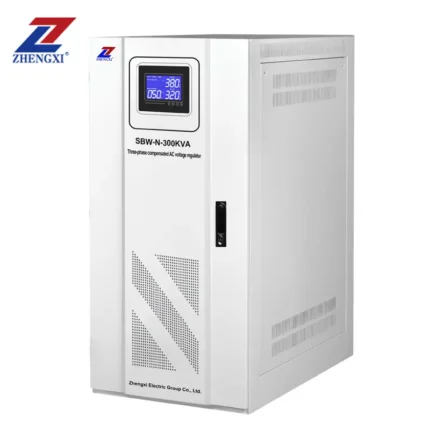
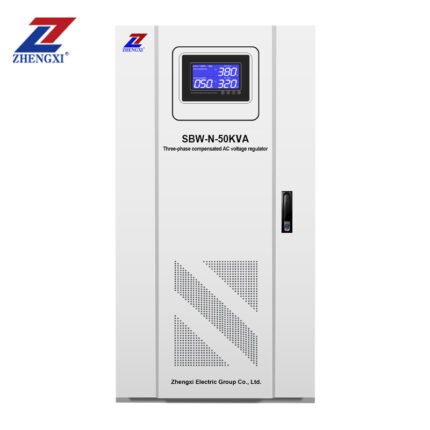
SBW Three-Phase High Power 150Kva Servo Automatic Voltage Stabilizer For Factory Power Control
In industrial environments where voltage fluctuation can damage equipment and interrupt production, a reliable Three-Phase Voltage Stabilizer is essential. The SBW Three-Phase High Power Servo Voltage Stabilizer is designed to provide precise, stable, and continuous voltage regulation for factories, workshops, and heavy-duty industrial systems.
With capacities ranging from 30KVA to 800KVA, including the widely used 150KVA model, this three phase servo voltage stabilizer delivers fast response, high efficiency, and strong load capability—making it a trusted Automatic Voltage Stabilizer solution for factory power control.


SJW 3 Phase 40KVA Servo Voltage Stabilizer for Commercial Data Centers
The SJW 3 Phase 40KVA Servo Voltage Stabilizer is designed to deliver clean, stable, and reliable power for commercial facilities and modern data centers. With its high-accuracy ±3% voltage correction, servo motor control, and real-time digital monitoring, it ensures uninterrupted performance for sensitive IT loads, servers, networking equipment, and precision industrial electronics.
Built for 24/7 continuous operation, this stabilizer helps reduce equipment failure, prevent downtime, and extend the lifespan of mission-critical systems. For organizations that rely on stable power—data centers, telecom rooms, financial institutions, security monitoring hubs, hospitals, and manufacturing lines—SJW stabilizers provide a long-term, high-efficiency power protection solution.
Types of Three Phase Voltage Stabilizers
There are various applications with varying accuracy and speed of response required for voltage stabilization and system configuration. Considering practical industrial needs and applications, we offer the following types of three phase voltage stabilizers.
Servo Type Three Phase Stabilizer
High accuracy in voltage regulation (±3%)
Smooth adjustment of voltage levels suitable for motor-driven equipment
Typical applications: CNC machines, laser cutting machines, and automation equipment
Engineering note:
Servo type voltage stabilizers are suitable for areas with high rates of gradual changes in voltage levels. For areas with rapid and high-frequency changes in voltage levels, a static type voltage stabilizer would be more suitable.
Static Type Three Phase Stabilizer
Fast electronic response with no moving parts
High reliability and low maintenance required
Data centers, sensitive electronics, and extreme industrial environments
Static stabilizers are highly recommended when rapid voltage correction and continuous operation under frequent voltage disturbances are required.
👉 Not sure which type fits your application?
Send us your parameters for free engineering selection support.
Not Sure Which 3 Phase Stabilizer to Choose?
An inappropriate three-phase stabilizer may not provide the required level of protection, may result in oversizing the equipment, or may cause stability problems. In order to recommend the appropriate three-phase stabilizer, our engineering team usually checks the following details:
- The actual input voltage range as measured (minimum and maximum)
- The output voltage level and tolerance
- Total load capacity in kVA
- Type of load: Motor, Resistive, or Mixed
- Scenario and country standard
📌 After verifying the details, we shall make a clear recommendation regarding the stabilizer.
Applications of Three Phase Voltage Stabilizers
Three phase voltage stabilizers are necessary in any situation where industrial equipment is used. Some of these situations include:
- CNC machines and machining centers
- Injection molding machines
- Elevators and lifting equipment
- Manufacturing production lines
- Data centers and server rooms
- Printing machines
- HVAC systems and industrial compressors
In each of these situations, different requirements are necessary. Our stabilizers are designed to meet these requirements individually rather than adopting a one-size-fits-all policy.
Three Phase Voltage Stabilizer Technical Specifications
The following specifications represent typical industrial configurations. Final parameters depend on the selected model and customization.
| Parameter | Typical Range |
|---|---|
| Capacity | 10 kVA – 4000 kVA |
| Phase System | Three Phase (3P+N optional) |
| Input Voltage | Customized wide range |
| Output Voltage | 380V / 400V / 415V (or customized) |
| Regulation Accuracy | ±1% / ±3% (model dependent) |
| Response Time | ≤ 1s |
| Frequency | 50Hz / 60Hz |
| Protection | Over/Under Voltage, Overload, Short Circuit |
| Cooling | Natural Air / Forced Air |
| Installation | Indoor / Outdoor (optional enclosure) |
📎 Detailed datasheets and wiring diagrams are available upon request.
Why Choose Our Three Phase Stabilizers
As a professional three-phase stabilizer manufacturer, we are more interested in practical performance and reliability rather than just theoretical ratings.
From an engineering point of view, stable operation is a function of transformer design margin, heat dissipation effectiveness, control logic, and protection coordination. This is why we design and test each stabilizer based on the actual industrial load behavior and test each unit fully loaded before shipping.
Our strengths are:
- In-house design and manufacturing
- Full-load testing prior to shipment
- Capability to handle unbalanced three-phase loads
- Customizable voltage range and capacity
- Stable export quality for overseas markets
- Pre- and post-sales technical support
How to Choose a Three Phase Voltage Stabilizer
To avoid common selection mistakes, follow these practical steps:
-
Measure voltage fluctuation
Record real minimum and maximum input voltage under working conditions. -
Calculate total load capacity
Include motor starting current and future expansion margin. -
Identify load characteristics
Motor loads, resistive loads, and mixed loads require different design margins. -
Select appropriate regulation accuracy
Higher accuracy is not always necessary — select based on equipment sensitivity. -
Confirm installation conditions
Indoor or outdoor installation, ventilation, ambient temperature.
📌 If you’re unsure, simply send us your parameters — our engineers will handle the rest.
FAQs
What is the difference between a three phase stabilizer and a voltage regulator?
In industrial terms, they can be used interchangeably. The term "Voltage Stabilizer" is used in Asia and Europe, while "Voltage Regulator" is used in North America.
Can the three phase stabilizer support unbalanced loads?
Yes, our three phase stabilizers can support unbalanced loads; however, the level of unbalance will depend on the type and configuration of the stabilizer.
How do I calculate kVA rating for the three phase stabilizer?
kVA rating will depend on the total power load and the starting current. For motor-based systems, margin capacity will have to be factored in.
Can I customize the three phase stabilizer?
Yes, we can customize input voltage range, output voltage, enclosure type, protection level, and control logic.
Get a Quote for Three Phase Stabilizer
If you’re looking for a reliable three phase voltage stabilizer or 3 phase voltage regulator, we’re ready to support your project.
 EN
EN  FR
FR  ES
ES  PT
PT  IT
IT  RU
RU  AR
AR  FA
FA