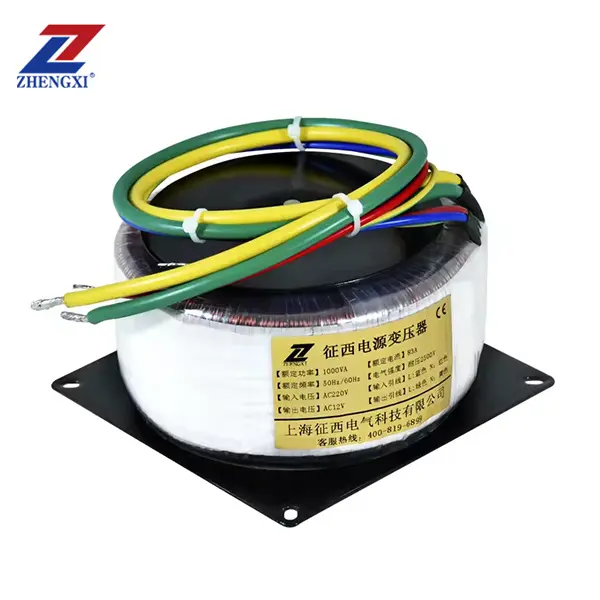
In modern electrical and automation systems, transformers are indispensable components. They not only adjust voltage levels but also ensure safety, stability, and noise suppression across different circuits.

Among the various types of transformers used in industrial environments, the isolation transformer and the control transformer are two of the most common — and often the most misunderstood.

While they share similar construction and operate based on electromagnetic induction, their design intent, electrical behavior, and applications are very different. Understanding these differences is crucial for selecting the right transformer to improve both efficiency and operational safety.

As a professional transformer manufacturer, ZHENGXI provides a wide range of control transformers and isolation transformers tailored for industrial and commercial power systems worldwide.

What Is a Control Transformer?

A control transformer, also known as a control power transformer, is specifically designed to supply power to control circuits, signal lamps, relays, and contactors in machinery or automation systems.

It typically operates on AC 50Hz or 60Hz, with input voltages up to 1000V, and is engineered for continuous operation under rated load.

The main purpose of a control transformer is to step down high input voltage (for example, 380V or 220V) to a lower and safer control voltage such as 36V or 24V. This not only protects operators from electric shock but also ensures stable voltage for control components.

For instance, in a machine tool system, a 380V/36V control transformer provides the necessary voltage for push buttons, indicators, and relays, enabling precise and safe operation.

Key Features of Control Transformers

  • Provide stable and consistent voltage for control circuits.
  • Offer partial isolation between primary and secondary windings.
  • Support multiple secondary voltage outputs (6.3V, 12V, 24V, 36V, 110V, etc.).
  • Designed for continuous duty and small power loads.
  • Commonly used in CNC machines, automation systems, and control panels.

A control transformer is therefore ideal for industrial equipment that requires stable voltage regulation and limited isolation within a compact and efficient design.

What Is an Isolation Transformer?

An isolation transformer, as its name implies, is primarily designed to electrically isolate two circuits while maintaining the same voltage level.

Unlike a control transformer, its primary and secondary windings are completely separated, with no direct electrical connection — only magnetic coupling through the iron core.

This isolation helps prevent electric shock, equipment damage, and electromagnetic interference (EMI). Most isolation transformers have a 1:1 voltage ratio (e.g., 220V to 220V), focusing on safety and noise reduction rather than voltage conversion.

Key Features of Isolation Transformers

  • Provide full galvanic isolation between input and output circuits.
  • Prevent electrical shock and reduce power-line noise.
  • Commonly used for maintenance, testing, medical, and laboratory equipment.
  • Can filter harmonics and suppress electromagnetic interference (EMI).
  • Ideal for sensitive instruments, computers, and precision control systems.

Core Differences Between Control and Isolation Transformers

FeatureControl TransformerIsolation Transformer
Main FunctionSteps down voltage for control circuitsElectrically isolates circuits for safety
Voltage RatioStep-down (e.g., 380V → 36V, 220V → 24V)1:1 (e.g., 220V → 220V)
ConnectionPartial isolation; supplies control loadsFull isolation; no direct electrical connection
ApplicationMachine tools, control panels, automation systemsLabs, testing benches, medical and sensitive devices
Safety FunctionProvides safe low-voltage outputPrevents electric shock and EMI
Power RatingTypically 25VA – 5KVARanges from 0.5KVA to hundreds of KVA

Can a Control Transformer Act as an Isolation Transformer?

In certain cases, a control transformer can serve as an isolation transformer, since it also provides separation between the primary and secondary windings.

For example, a 380V/36V control transformer offers both voltage reduction and electrical isolation for control circuits.

However, the reverse is not true — not all isolation transformers can replace control transformers.

This is because control transformers are designed to handle frequent voltage fluctuations and short-term overloads that occur in control circuits, whereas isolation transformers are optimized purely for safety and noise suppression.

👉 In summary:
Every control transformer provides some level of isolation, but not every isolation transformer can function as a control transformer.

Typical Applications

Control Transformer Applications:

  • Machine tools and CNC machinery
  • Automation and PLC control systems
  • Control cabinets and electrical panels
  • Signal and indicator lamp systems
  • Industrial lighting systems

Isolation Transformer Applications:

  • Maintenance and repair benches
  • Sensitive testing or medical instruments
  • Audio and laboratory equipment
  • Power filtering and surge protection systems

How to Choose Between Them

When selecting the right transformer for your system, consider the following factors:

Selection CriteriaRecommended Transformer
Need for low-voltage power for control circuitsControl Transformer
Need to electrically isolate systems for safety or EMI reductionIsolation Transformer
Require multiple secondary voltagesControl Transformer
Need to test or repair electronic devices safelyIsolation Transformer

If your application requires both voltage regulation and electrical isolation, ZHENGXI can provide custom hybrid transformers that integrate both functions for maximum safety and performance.

Why Choose ZHENGXI Transformers

As a leading transformer manufacturer with decades of experience, ZHENGXI delivers reliable, high-efficiency isolation and control transformers that meet international standards and customer expectations worldwide.

Our advantages include:

High Efficiency: Low power loss and minimal heat generation.
Safety & Durability: Advanced insulation materials and robust construction.
Customization: OEM/ODM options for voltage, capacity, and design.
Certifications: CE, ISO9001, and RoHS compliant.
Global Support: Technical assistance and fast delivery to over 30 countries.

Conclusion

While control transformers and isolation transformers may appear similar in structure, their purposes and design goals differ greatly.

  • A Control Transformer focuses on delivering stable, low-voltage power for control circuits.
  • An Isolation Transformer focuses on safety and electrical separation between systems.

Selecting the correct transformer enhances system safety, equipment reliability, and overall performance.

With a proven reputation for quality and innovation, ZHENGXI provides industrial-grade transformers that meet the power and protection needs of modern automation systems.

👉 Explore Our’s full range of Control and Isolation Transformers or request a customized solution designed for your specific industrial requirements.

Related Blogs

Related Products

Customized Quality Variable Audio Amplifier Power Toroidal Transformer

The Customized Quality Variable Audio Amplifier Power Toroidal Transformer from ZHENGXI is designed to deliver exceptional audio fidelity and electrical isolation for professional audio systems. As a trusted toroidal transformer supplier, ZHENGXI specializes in manufacturing custom audio transformers that ensure minimal distortion, ultra-low noise, and perfect impedance matching — ideal for high-end amplifiers, recording equipment, broadcasting systems, and studio-grade sound engineering.

Unlike conventional EI-core transformers, toroidal transformers feature a circular core design that provides superior efficiency, low electromagnetic interference (EMI), and excellent frequency response across the 20Hz to 20kHz audio spectrum.
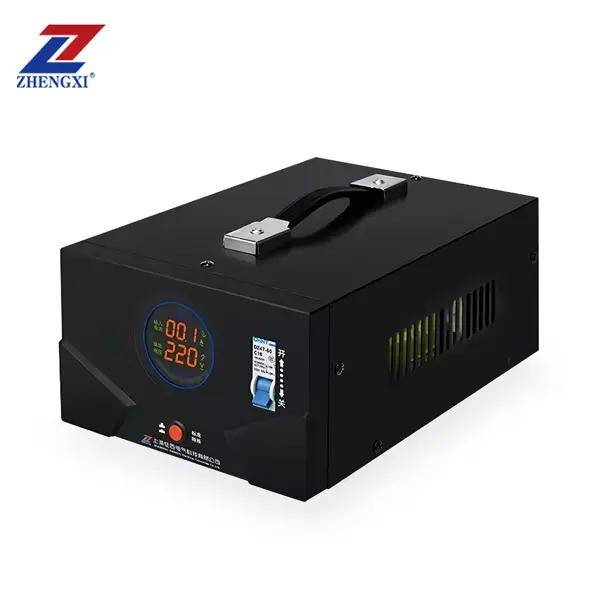
Single Phase Toroidal Isolation Transformer 220v To 220v With 2 Output Sockets

This 220V to 220V single-phase toroidal isolation transformer is made to supply delicate electronic and audio devices with clean, steady, and noiseless power. It efficiently isolates electrical noise and interference using high-efficiency toroidal core technology, guaranteeing connected devices operate at their best and are safe. With two outputs and a smart HD LCD display, users can effortlessly keep an eye on operating condition, load, and voltage in real time. This isolation transformer provides clean power, low electromagnetic interference, and long-term reliability whether it is utilized in industrial control systems, medical equipment, audio systems, or labs.
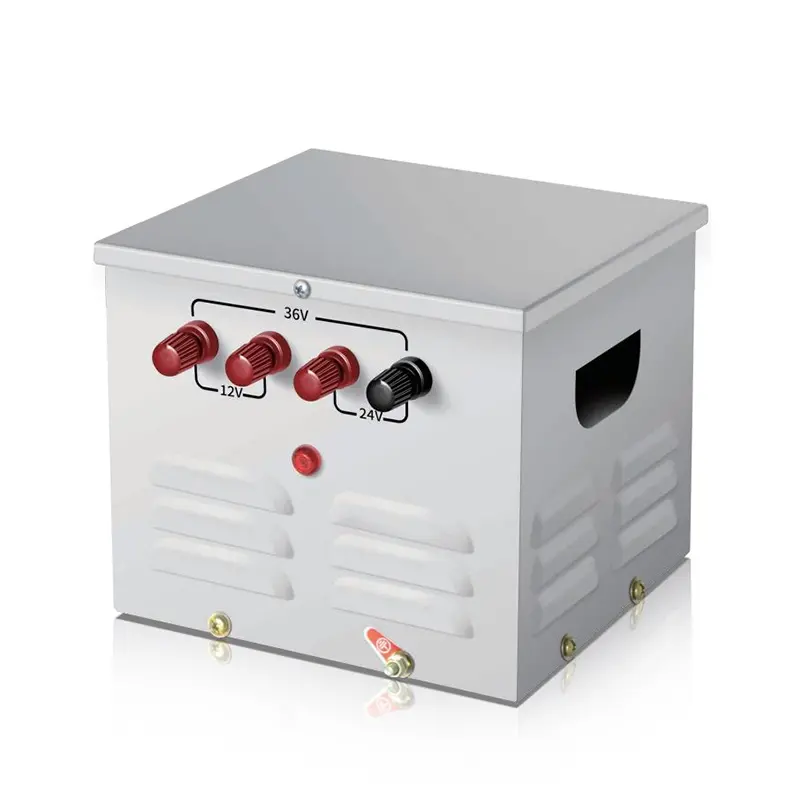
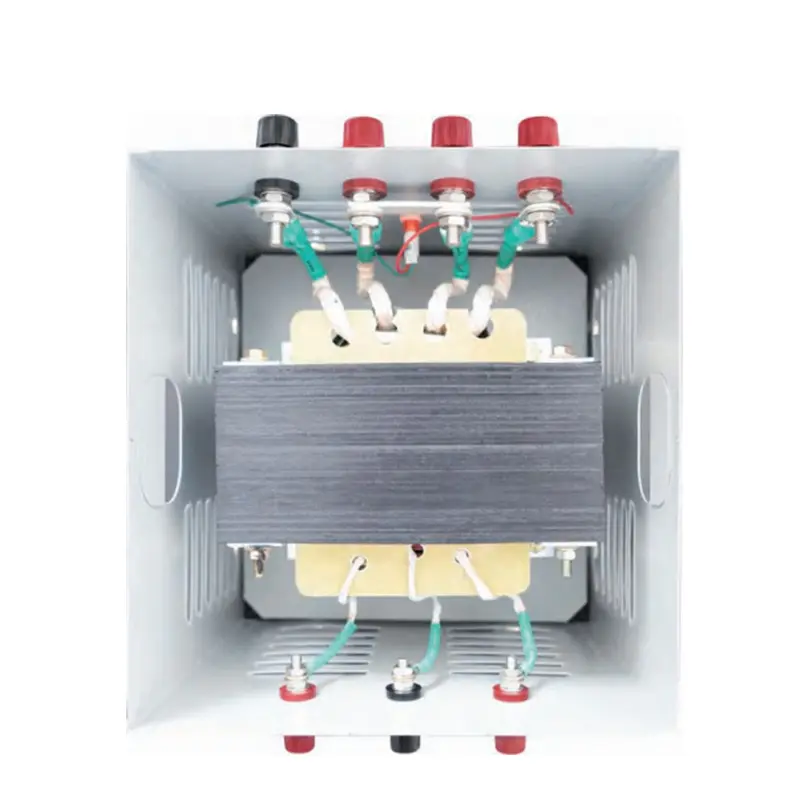
JMB Single-Phase Portable Lighting Step Down Control Transformer 25Va~50Kva

The JMB series is our rugged, portable single-phase control transformer built for lighting and small industrial equipment. It steps down common mains voltages to isolated, Safety Extra-Low Voltage (SELV) outputs — ideal for damp job sites, confined spaces and metal enclosures where safety matters. Available from 25 VA up to 50 kVA, with multiple taps and optional protective features.
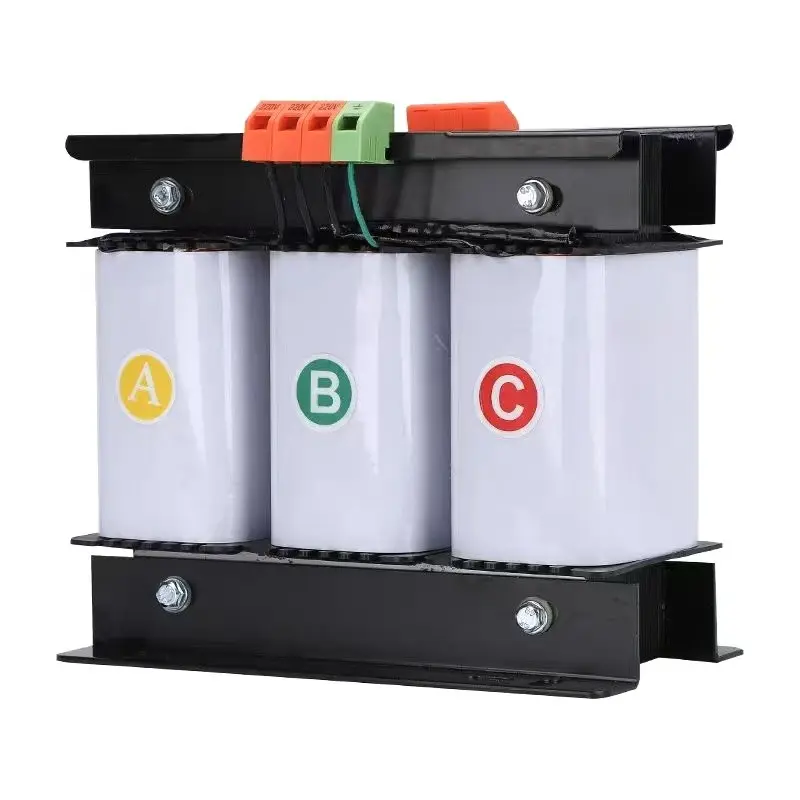
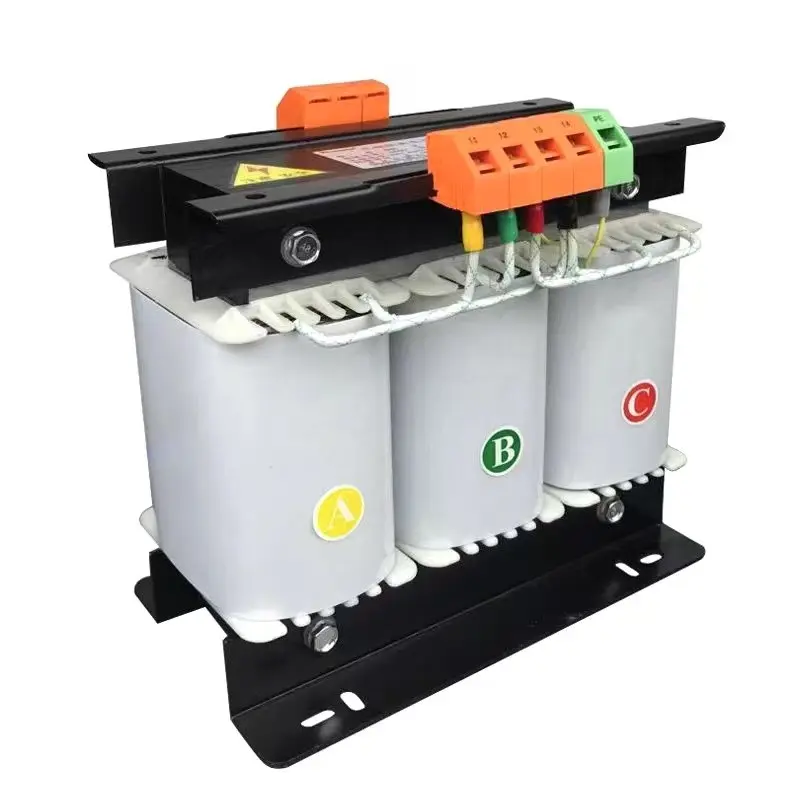
High-Efficiency 500va-1000Kva Three Phase Dry Type Control Transformer 415V 400V 380V

The SBK Series three-phase dry-type control transformer (500VA–1kVA) delivers compact, reliable voltage conversion for industrial control, automation and machinery applications. Available with configurable primary and secondary voltages (standard: 380V / 400V / 415V) and rated for 50Hz or 60Hz systems, this transformer is designed for low-voltage networks (<1kV). Its dry, air-cooled construction eliminates oil, reduces fire risk and lowers routine maintenance — making it a safe, cost-effective choice for motor control centers, CNC systems, PLC cabinets and distribution panels.