




SBW Industrial Outdoor 100KVA 3 Phase Servo Automatic Voltage Stabilizer for Mechanical Equipment
ZBW 10Kva-4000Kva 3 Phase IGBT Static Automatic Voltage Stabilizer For High-Precision Machines
SBW Three-Phase High Power 150Kva Servo Automatic Voltage Stabilizer For Factory Power Control
SJW 3 Phase 40KVA Servo Voltage Stabilizer for Commercial Data Centers
Why Voltage Stabilizer Derating Matters
Selecting the correct capacity of a voltage stabilizer is not only about matching the rated kVA or kW of the connected equipment. In real-world installations, environmental conditions such as high temperature, high altitude, and continuous heavy loading can significantly reduce the actual output capability of the stabilizer.
This reduction is known as voltage stabilizer derating. Understanding derating factors helps engineers, electrical contractors, and facility managers avoid overheating, unexpected shutdowns, shortened equipment lifespan, and poor voltage regulation performance.
A properly selected stabilizer should operate reliably under the actual installation conditions instead of only under laboratory-rated conditions. This article explains the key factors affecting stabilizer capacity, including stabilizer temperature derating, altitude derating, and continuous load capacity.
What Is Voltage Stabilizer Derating?
Voltage stabilizer derating refers to reducing the maximum allowable output capacity of a stabilizer when operating conditions exceed the standard design environment.
Most voltage stabilizers are rated under standard conditions, commonly:
- Ambient temperature: around 40°C
- Installation altitude: below 1000 meters above sea level
- Continuous operation at rated load
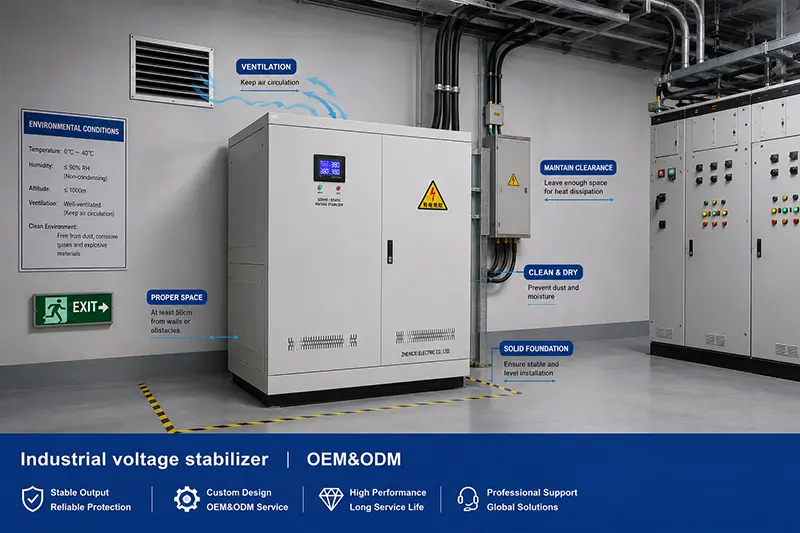
- Normal ventilation conditions
When the actual operating environment becomes more demanding, the stabilizer may not be able to deliver its full rated capacity. Engineers must apply a correction factor during selection.
For example, a 100 kVA voltage stabilizer installed in a hot industrial environment may need to be upgraded to 125 kVA or higher depending on temperature and load conditions.
Why Environmental Conditions Affect Voltage Stabilizer Capacity
A voltage stabilizer contains power components such as transformers, voltage regulating motors, SCR modules, contactors, copper conductors, and electronic control circuits. The performance of these components depends heavily on heat dissipation and insulation capability.
According to electrical equipment design principles referenced in standards such as IEC 60076 for transformers and IEC 60947 for low-voltage equipment, thermal performance directly influences equipment loading capability.
When heat cannot be effectively removed, internal temperatures increase, causing:
- Higher winding temperature rise
- Reduced insulation lifetime
- Increased component stress
- Protection trips during peak demand
- Lower long-term reliability
Temperature Derating of Voltage Stabilizers
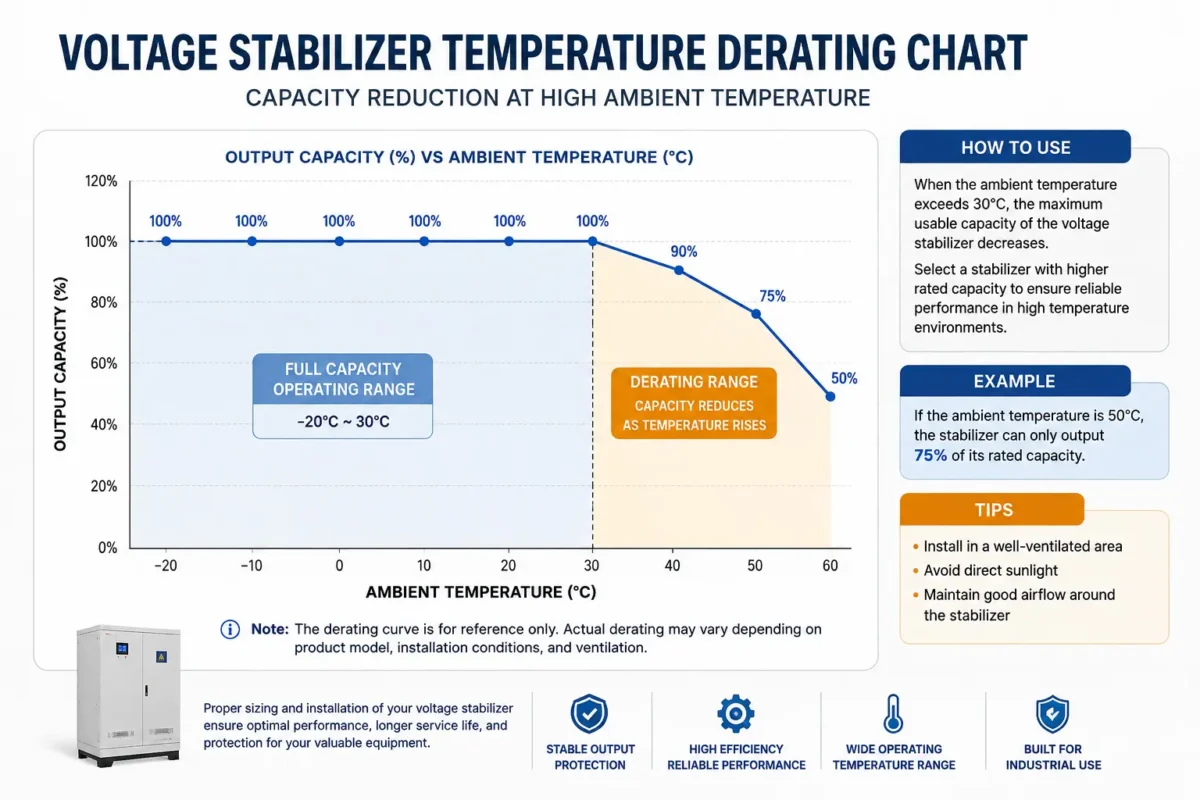
Stabilizer temperature derating is one of the most important considerations when installing equipment in hot climates, outdoor electrical rooms, factories, and poorly ventilated areas.
Electrical components generate heat during operation. As ambient temperature increases, the available temperature margin decreases, meaning the stabilizer must operate at a lower load percentage to maintain safe internal temperatures.
Typical temperature derating guidelines may look like:
| Ambient Temperature | Recommended Loading Capacity |
|---|---|
| ≤40°C | 100% rated capacity |
| 45°C | Approximately 95% capacity |
| 50°C | Approximately 85-90% capacity |
| 55°C | Approximately 80% capacity |
The exact derating value depends on stabilizer design, cooling method, insulation class, and manufacturer specifications.
For example, a servo voltage stabilizer installed in a tropical region with an ambient temperature of 50°C should not continuously operate at 100% load. Selecting a larger capacity model improves thermal margin and reliability.
【img】
Alt: Voltage stabilizer temperature derating chart showing capacity reduction at high ambient temperature
Altitude Derating: How High Elevation Reduces Stabilizer Capacity
Altitude derating becomes important when voltage stabilizers are installed in mountainous regions or locations above 1000 meters elevation.
At higher altitudes, air density decreases. Since many electrical devices rely on natural air cooling or forced ventilation, reduced air density lowers heat transfer efficiency.
The main effects include:
- Reduced cooling efficiency
- Higher operating temperature
- Lower insulation performance margins
- Reduced safe continuous load capacity
According to common electrical equipment design practices, equipment installed above 1000 meters may require capacity adjustment.
A general example:
| Installation Altitude | Typical Derating Consideration |
|---|---|
| 0-1000 m | No additional derating required |
| 1500 m | Small capacity reduction may be required |
| 2000-3000 m | Higher derating factor recommended |
| >3000 m | Special high-altitude design required |
For high-altitude projects, engineers should confirm cooling design, insulation level, and transformer specifications with the stabilizer manufacturer.
Continuous Load Capacity and Voltage Stabilizer Selection
Another critical factor in voltage stabilizer derating is continuous load operation.
Many applications such as data centers, medical equipment, CNC machines, industrial automation systems, and communication facilities operate 24 hours a day. Unlike temporary loads, continuous loads create constant thermal stress.
A stabilizer operating continuously at its maximum rating leaves little safety margin for:
- Load fluctuations
- Motor starting current
- Future equipment expansion
- Ambient temperature changes
For continuous operation, many engineers recommend selecting a stabilizer with additional capacity rather than operating close to 100% loading.
A common selection approach:
Required stabilizer capacity = Actual load × Safety factor × Environmental correction factor
For example:
- Connected load: 80 kVA
- Continuous operation factor: 1.25
- High temperature correction: 1.10
Required capacity:
80 × 1.25 × 1.10 = 110 kVA
Therefore, a 120 kVA stabilizer would provide a safer operating margin.
Voltage Stabilizer Derating Comparison: Standard vs Harsh Environment
| Operating Condition | Standard Installation | Harsh Environment |
|---|---|---|
| Temperature | ≤40°C | 50°C+ |
| Altitude | Below 1000m | Above 2000m |
| Load Pattern | Intermittent load | 24/7 continuous load |
| Recommended Selection | Rated capacity | Oversized capacity with derating calculation |
How Voltage Stabilizer Derating Differs Between Technologies
Different stabilizer technologies have different thermal characteristics.
Servo Voltage Stabilizer
- Uses motor-driven variable transformer technology
- Strong overload capability
- Suitable for industrial applications
- Requires consideration of motor and transformer heat generation
Static Voltage Stabilizer
- Uses power electronics such as IGBT or SCR control
- Fast voltage correction response
- Requires effective cooling system
- Semiconductor temperature limits are important
Oil-Cooled Stabilizer
- Better thermal management
- Suitable for high-capacity outdoor applications
- Often preferred in harsh industrial environments
Choosing the correct technology depends on load type, environmental conditions, response requirements, and maintenance expectations.
Practical Guide: How to Select the Correct Stabilizer Capacity
Before purchasing a voltage stabilizer, consider the following factors:
- 1. Measure actual load: Check real operating current instead of relying only on nameplate ratings.
- 2. Evaluate voltage conditions: Record minimum and maximum input voltage fluctuations.
- 3. Check installation environment: Consider temperature, altitude, ventilation, and dust conditions.
- 4. Calculate continuous load: Equipment running 24/7 requires additional capacity margin.
- 5. Consider future expansion: Avoid selecting a stabilizer that operates permanently near full capacity.
Industry Trends and Future Development
With increasing demand for reliable power quality in industrial automation, renewable energy systems, healthcare facilities, and data centers, voltage stabilizer selection is becoming more precise.
Modern stabilizer manufacturers are improving designs through:
- Smart monitoring systems
- Temperature sensors
- Remote diagnostics
- Higher efficiency power components
- Improved cooling technologies
Organizations such as IEEE and IEC continue developing electrical equipment standards that emphasize safety, reliability, and energy efficiency.
FAQ
A voltage stabilizer requires derating because environmental conditions such as high temperature and altitude reduce cooling efficiency and electrical component performance. Derating ensures safe and reliable operation.
For continuous industrial loads, engineers commonly add 20%-30% capacity margin depending on load characteristics, environmental conditions, and future expansion requirements.
Yes, but altitude correction may be required above approximately 1000 meters. The manufacturer should confirm the appropriate derating factor and cooling design.
Conclusion
Understanding voltage stabilizer derating is essential for achieving reliable power protection in real-world applications. Temperature, altitude, and continuous load conditions directly influence the actual performance of a stabilizer.
Selecting the correct capacity with proper stabilizer temperature derating, altitude derating, and continuous load capacity calculations helps prevent overheating, unexpected failures, and unnecessary maintenance costs.
As an experienced voltage stabilizer and transformer manufacturer, we provide customized solutions based on your operating environment, load requirements, and power quality challenges. Contact our engineering team for professional stabilizer selection support and a reliable power protection solution tailored to your application.