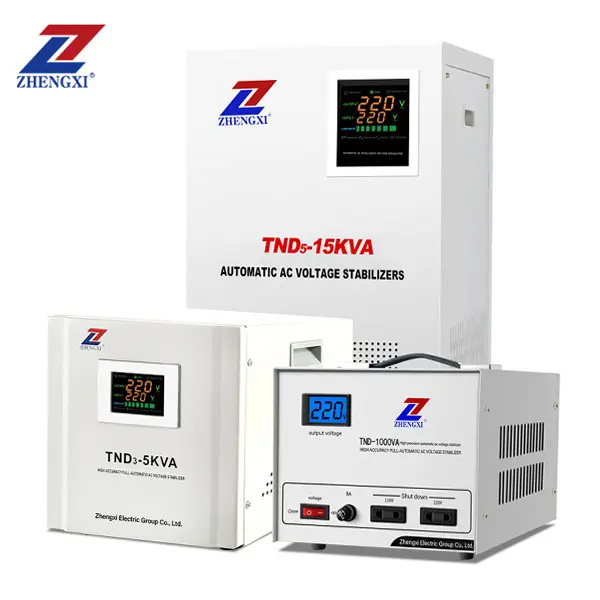
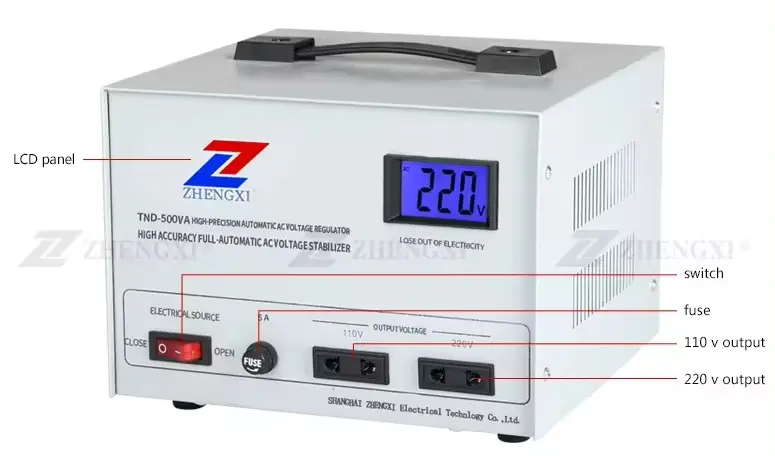
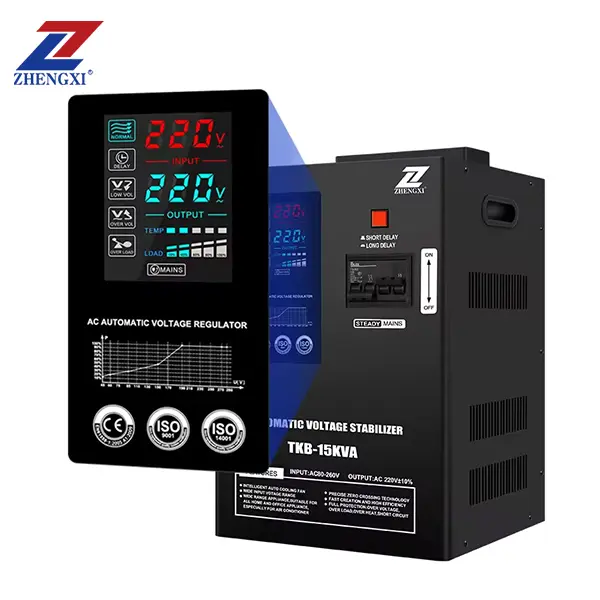
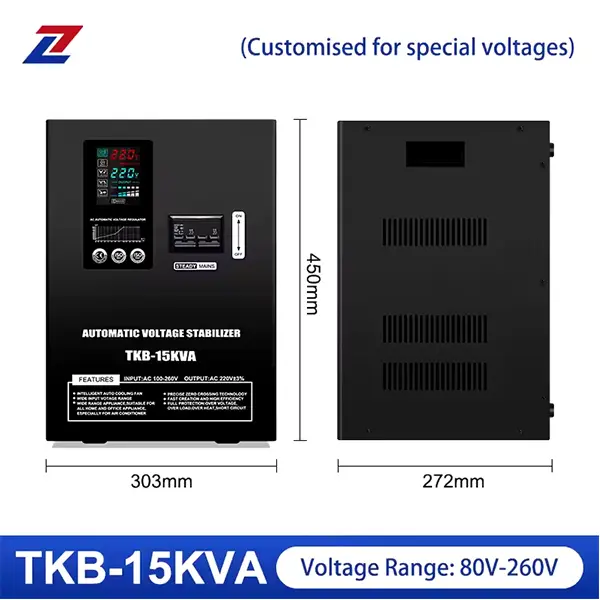
A stable voltage is essential to ensure the proper functioning of various electrical and electronic devices.
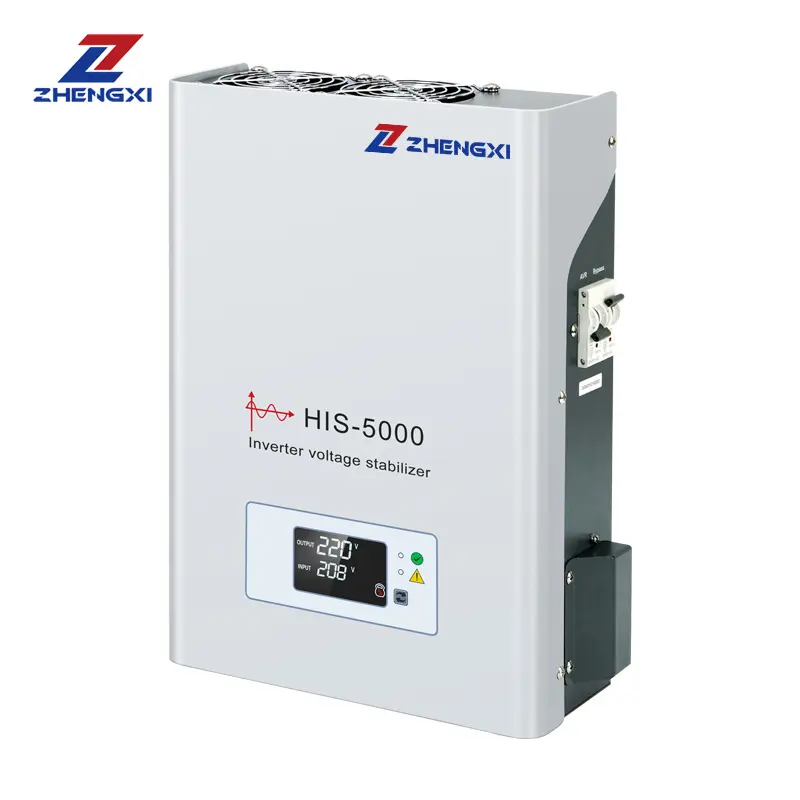
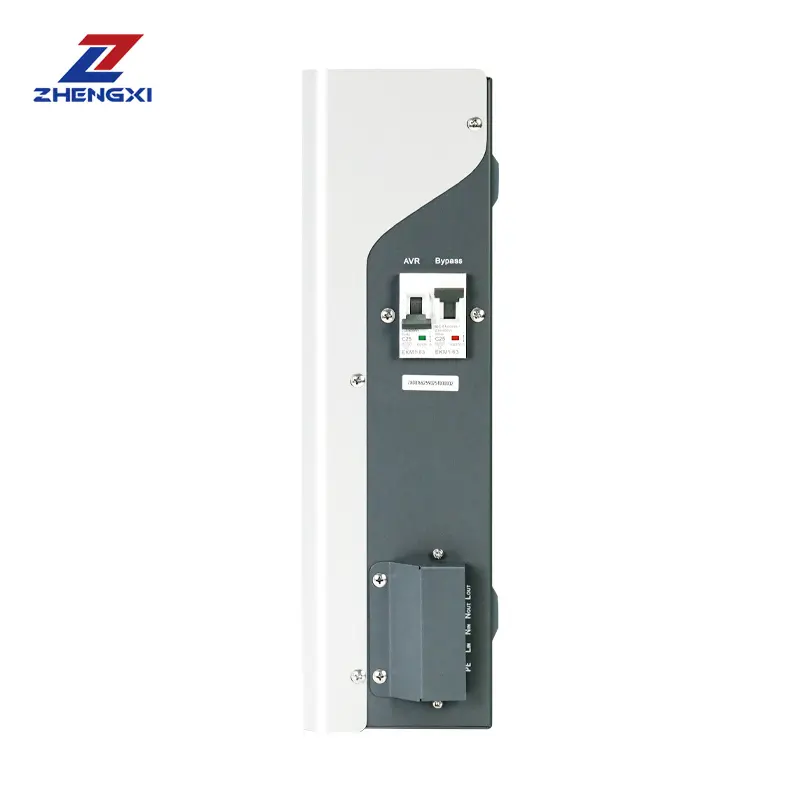
This Single Phase IGBT Pure Sine Wave Inverter Voltage Regulator Stabilizer is specifically engineered to provide higher precision voltage regulation, fast response, and low harmonic distortion, especially in situations where conventional servo or relay voltage stabilizers fail to perform adequately.
With the adoption of IGBT-based inverter regulation technology, this single-phase stabilizer ensures a clean and stable AC output even during harsh conditions associated with intense grid fluctuations, making it an ideal stabilizer for sensitive loads.
If your home or business suffers from frequent voltage drops or spikes, your electrical appliances—especially refrigerators—are at risk. The 20KVA Single-Phase Full Automatic AC Voltage Stabilizer is designed to deliver stable, clean voltage to protect refrigerators, freezers, air conditioners, and other sensitive electronics.
Built with a servo motor control system, this AVR offers high accuracy, fast correction, and reliable performance—ideal for residential homes, commercial kitchens, supermarkets, and cold storage environments.
Type: Vertical typer, Wall-mounted
Available ranges: AC 45–260Vr, 80–260V, 100–260V, 140–260V (Custom voltage is supported)
The 30KVA Automatic Voltage Regulator (AVR) is specially designed for residential homes, commercial offices, shops, and light industrial use where stable power is important for electrical appliances, computers, lighting and communication equipment. With wide input voltage options and a compact design, this model helps protect devices against unstable grid power, voltage drops, and unexpected surges.
This home stabilizer uses relay control technology, digital monitoring, and multiple built-in protections, making it a reliable and cost-effective solution for long-term voltage regulation.
The Customized Single Phase Wall Mounted Automatic Voltage Stabilizer is designed to provide reliable voltage regulation and protection for household and commercial electrical appliances. With a power range from 3.5kVA to 10kVA, this wall-mounted stabilizer ensures steady, safe, and efficient power delivery, even in areas with unstable or fluctuating mains voltage.
Built with advanced relay or servo motor control technology, it maintains a constant 220V output by automatically correcting under-voltage or over-voltage conditions. Compact, quiet, and efficient, it’s ideal for homes, offices, and small businesses seeking dependable voltage protection in a sleek wall-mounted design.
In industrial, commercial, and residential power systems, a voltage stabilizer (also known as a volt stabilizer or AC voltage stabilizer) is widely used to protect equipment from unstable grid conditions.
However, frequent tripping under load is one of the most common issues reported in real-world applications—especially in factories, workshops, and sites with motor-driven equipment.
This article explains why a voltage stabilizer trips when load is applied, the underlying electrical reasons, how to diagnose the problem correctly, and—most importantly—how to select the right stabilizer to prevent repeated shutdowns. The explanations are based on practical field experience and industry standards (IEC / IEEE), rather than theory alone.
Quick Answer
A voltage stabilizer trips frequently under load mainly because of undersized kVA capacity, high inrush current from inductive loads, low input voltage, poor power factor, or overheating. In most cases, the stabilizer itself is not defective—the issue lies in incorrect selection or mismatch between load characteristics and stabilizer design.
How a Voltage Stabilizer Works (Core Concept)
A voltage stabilizer is designed to maintain a stable output voltage despite fluctuations in the input supply. Typical internal components include:
Protection systems (overload, short-circuit, over-temperature)
When the input voltage deviates from the rated range, the stabilizer compensates by adjusting transformer taps or regulating electronically, ensuring a constant output voltage to the load.
In unstable grids, stabilizers are widely used to mitigate voltage sags, swells, and long-term fluctuations, as defined in IEEE 1159 power quality standards.
What Does “Tripping Under Load” Actually Mean?
“Tripping” occurs when the stabilizer’s internal protection system disconnects the output intentionally to prevent damage.
If tripping only happens after the load is connected or during startup, it usually indicates one or more of the following:
Excessive current draw
Thermal overload
Protection thresholds being exceeded
Abnormal operating conditions
Understanding the cause requires analyzing both the load behavior and the stabilizer’s design limits.
Main Reasons Why a Voltage Stabilizer Trips Frequently Under Load
1. Stabilizer Capacity Is Undersized (Most Common Cause)
This is the number one cause in industrial and commercial installations.
Many users size a voltage stabilizer based only on rated load power (kW) and ignore:
Starting / inrush current
Power factor (PF)
Simultaneous operation of multiple loads
For example: Motor-driven equipment (compressors, pumps, HVAC systems) can draw 3–6 times the rated current during startup. If the stabilizer is sized only for running power, it will trip the moment the motor starts.
Industry practice: Most professional manufacturers recommend 30–50% capacity margin for inductive loads.
2. High Inrush Current from Inductive Loads
Inductive equipment such as:
Electric motors
Air conditioners
Elevators
Welding machines
creates short-duration but very high surge currents. Even if the average load is within limits, these surges can activate overload or short-circuit protection.
Servo-controlled AC voltage stabilizers are particularly sensitive if they are not designed for dynamic or shock loads.
3. Input Voltage Outside the Designed Operating Range
Every AC voltage stabilizer has a defined input voltage window (for example: 140–260V or 160–280V).
If the actual grid voltage:
Drops too low → excessive boosting current
Rises too high → increased bucking stress
The stabilizer must work harder, which significantly increases internal current and temperature—often leading to protective tripping.
IEEE power quality studies confirm that deep or prolonged voltage sags dramatically increase current stress on regulating equipment.
4. Poor Power Factor (PF) of the Load
Low power factor is frequently overlooked.
When PF < 0.8:
More current is required for the same kW
Transformer losses increase
Overload protection triggers earlier
Many users incorrectly assume kW = kVA, which leads directly to undersized volt stabilizer selection.
5. Overheating Due to Installation or Environment
Voltage stabilizers generate heat during normal operation. Tripping may occur if:
Installed in confined or poorly ventilated spaces
Ventilation openings are blocked
Ambient temperature exceeds design limits
Cooling fans fail or are clogged
Industrial-grade stabilizers usually include thermal sensors that disconnect output before insulation damage occurs.
6. Internal Component Aging or Mechanical Wear
In long-term operation, especially with servo stabilizers, frequent tripping may result from:
Worn carbon brushes
Degraded relays or contactors
Loose internal wiring
Aging insulation
According to IEC guidelines, mechanical wear and insulation degradation are major reliability factors in older stabilizers.
7. Incorrect Protection Settings or Calibration
Some industrial stabilizers allow adjustable protection parameters. Improper factory or field calibration can cause:
Overly sensitive overload protection
False tripping under normal conditions
This is common in customized or non-standard assemblies without proper load testing.
Properly Sized vs Undersized Voltage Stabilizer (Technical Comparison)
Parameter
Properly Sized Stabilizer
Undersized Stabilizer
Load current
Within design limit
Exceeds rated current
Temperature rise
Normal
Excessive
Tripping frequency
Rare
Frequent
Service life
Long
Shortened
Output stability
Stable
Interrupted
How to Prevent Frequent Tripping (Practical Solutions)
1. Correct Stabilizer Selection (Most Important)
When selecting a voltage stabilizer, always consider:
Total connected load (kW)
Power factor
Starting current
Possible future expansion
Rule of thumb:
Stabilizer kVA ≥ Load kW ÷ PF × 1.5–2.0
2. Choose Stabilizers Designed for Inductive Loads
Look for features such as:
High overload withstand capability
Copper-wound transformers
Fast-response servo or electronic control
Industrial-grade contactors
Professional manufacturers design stabilizers specifically for motors, HVAC, CNC machines, and welding equipment, rather than using one generic model.
3. Ensure Proper Installation Conditions
Maintain sufficient airflow clearance
Avoid high-temperature environments
Keep ventilation openings clean
4. Perform Regular Inspection and Maintenance
Preventive checks should include:
Current measurement
Thermal scanning
Brush and relay inspection
Protection calibration verification
Voltage Stabilizer vs Other Voltage Regulation Solutions
Technology
Key Difference
UPS
Battery-based, limited backup time
AVR
Narrow correction range
Voltage stabilizer
Continuous regulation, high load handling
Inverter
DC–AC conversion, not direct regulation
For continuous voltage correction without energy storage, a voltage stabilizer remains the most cost-effective solution.
Buying Checklist: How to Choose the Right Voltage Stabilizer
Before purchasing, confirm:
Input voltage range matches real grid conditions
kVA rating includes sufficient margin
Load type (resistive or inductive)
Manufacturer’s engineering capability
Compliance with IEC / IEEE standards
Frequently Asked Questions
Q1: Can frequent tripping damage a voltage stabilizer? Yes. Repeated tripping increases thermal and mechanical stress, shortening service life and increasing failure risk.
Q2: Is choosing a higher kVA stabilizer always better? Not blindly—but a moderately oversized stabilizer runs cooler, handles surges better, and is more reliable for inductive loads.
Q3: Does low input voltage increase tripping risk? Absolutely. Low voltage forces higher current draw, which often triggers overload or thermal protection.
Conclusion
Frequent tripping of a voltage stabilizer under load is almost never random. In most cases, it signals undersizing, improper application, or unsuitable operating conditions rather than a product defect.
By understanding load characteristics, selecting the right AC voltage stabilizer, and following proper installation and maintenance practices, users can greatly improve system reliability, safety, and long-term performance.