As a stabilizer manufacturer, overheating is one of the most discussed issues we have-from customers’ inquiries on-site inspections to long-term performance feedback.
In practical applications, voltage stabilizers work almost incessantly under fluctuating grid conditions, heavy loads, and challenging environmental conditions. Although well-designed AC voltage stabilizers are capable of withstanding thermal stress, overheating usually serves as an indication of mismatched conditions for design, application, or operation.
In this article, we will explain what causes voltage stabilizer overheating, how it develops from an engineering and manufacturing perspective, and how users can effectively prevent such a scenario based on practical experience, rather than theory.
How a Voltage Stabilizer Generates Heat (Manufacturer Perspective)
From a design point of view in a factory, every voltage stabilizer is always about finding a balance between the following:
Electrical performance
Thermal dissipation capability
Mechanical structure
Long-term reliability
A voltage stabilizer regulated the output voltage that is constantly changing due to the fluctuations in input by always adjusting transformer taps or electronic switching paths.
Any kind of correction action creates a loss, primarily in the form of heat:
Copper losses in windings
Core losses in magnetic materials
Switching and control circuit losses Overheating occurs when actual operating heat exceeds the thermal margin designed for the stabilizer either temporarily or continuously.
Common Causes of Voltage Stabilizer Overheating
2.1 Load Exceeds Rated Capacity
One of the most common causes we see is underestimated load demand.
When a stabilizer operates above its rated kVA:
Winding current increases sharply
Copper (I²R) losses rise non-linearly
Internal temperature climbs faster than expected
In many industrial cases, the stabilizer does not fail immediately. Instead, insulation materials age faster, reducing service life silently.
From our manufacturing experience, many overheating complaints originate from load expansion after installation—without upgrading the stabilizer capacity.
2.2 Inadequate Ventilation or Improper Installation
Even a correctly designed stabilizer will overheat if it cannot dissipate heat effectively.
We frequently encounter overheating caused by:
Installation inside sealed or undersized cabinets
Blocked ventilation openings
Insufficient clearance around air inlets and outlets
High ambient temperatures beyond design limits
From a factory standpoint, cooling design is validated under open-air conditions with defined clearances. Once those conditions are ignored on-site, thermal performance degrades rapidly.
2.3 Frequent Voltage Fluctuations from Unstable Power Grids
In regions with unstable or weak grids, stabilizers operate in near-continuous correction mode.
From long-term test data and field feedback, continuous correction creates cumulative heat stress, even if the stabilizer is nominally sized correctly.
2.4 Transformer Design and Material Selection
The transformer is the heart of any voltage stabilizer—and also its primary heat source.
From a manufacturer’s perspective, overheating is far more likely when designs rely on:
Low-grade silicon steel cores
Undersized windings to reduce cost
Insulation systems with limited temperature margins
In well-engineered stabilizers, we typically focus on:
CRGO silicon steel to minimize hysteresis and eddy current losses
Conservative winding current density
Class F or Class H insulation for continuous operation
Thermal reliability is decided at the design stage, not after installation.
2.5 Loose Connections and Contact Resistance
Another frequent issue identified during factory returns or site inspections is poor electrical connections.
Loose or oxidized terminals create high contact resistance, which results in:
Localized overheating
Terminal discoloration
Risk of arcing under high current
This is especially common in high-capacity industrial stabilizers exposed to vibration or repeated load changes.
Regular torque checks are a simple but highly effective preventive measure.
2.6 Harmonics from Modern Non-Linear Loads
Many modern industrial loads generate significant harmonic distortion, including:
CNC machines
VFD-driven motors
UPS systems
Switching power supplies
From a manufacturing standpoint, harmonics increase:
Copper losses due to higher RMS current
Core losses from distorted magnetic flux
Overall operating temperature
If a stabilizer is not designed or selected with harmonic tolerance in mind, overheating becomes inevitable in such environments.
2.7 Aging Components and Insufficient Maintenance
Over time, all stabilizers experience component aging:
Insulation materials lose flexibility
Cooling fans degrade or fail
Carbon brushes (in servo types) wear down
From factory lifecycle analysis, lack of routine maintenance is a major contributor to late-stage overheating, even in originally well-designed equipment.
Applications Where We See Higher Overheating Risk
Based on long-term field feedback, overheating risk is higher in:
Manufacturing plants with fluctuating heavy loads
Medical facilities with sensitive equipment
Data centers operating under continuous high demand
Areas with unstable or poor-quality power supply
In these applications, thermal design margin is not optional—it is essential.
4. Key Design Parameters That Affect Thermal Performance
Parameter
Why It Matters
Rated kVA
Undersized units overheat quickly
Efficiency
Lower efficiency means higher heat losses
Insulation Class
Determines safe operating temperature
Cooling Method
Natural air vs forced air vs oil cooling
Duty Cycle
Continuous operation generates more heat
From a manufacturing perspective, thermal sensors and protective shutdown mechanisms are critical for long-term safety.
Based on long-term field feedback, overheating risk is higher in:
Manufacturing plants with fluctuating heavy loads
Medical facilities with sensitive equipment
Data centers operating under continuous high demand
Areas with unstable or poor-quality power supply
In these applications, thermal design margin is not optional—it is essential.
5. Voltage Stabilizer vs Other Power Conditioning Equipment
From an application-matching viewpoint:
Voltage stabilizer: Continuous regulation, higher thermal load
UPS: Different heat profile due to batteries and converters
From our perspective as a voltage stabilizer factory, thermal performance is the foundation of reliability.
A stabilizer that delivers accurate voltage regulation but operates near its thermal limit will not survive real-world conditions for long. That is why experienced manufacturers design stabilizers with:
Conservative thermal margins
Material selection focused on continuous operation
Cooling systems integrated into the electrical design
In practice, voltage accuracy and thermal stability must be achieved together—one without the other is not sufficient.
8. Final Thoughts
Voltage stabilizer overheating is rarely caused by a single defect. In most cases, it is the result of capacity mismatch, installation errors, unstable grid conditions, or insufficient thermal design.
From a manufacturer’s standpoint, understanding these factors early—during selection and installation—is the most effective way to ensure long service life, safety, and stable performance.
A well-designed voltage stabilizer is not just a voltage control device—it is a long-term thermal system built to operate reliably under real electrical conditions.
A stable voltage is essential to ensure the proper functioning of various electrical and electronic devices.
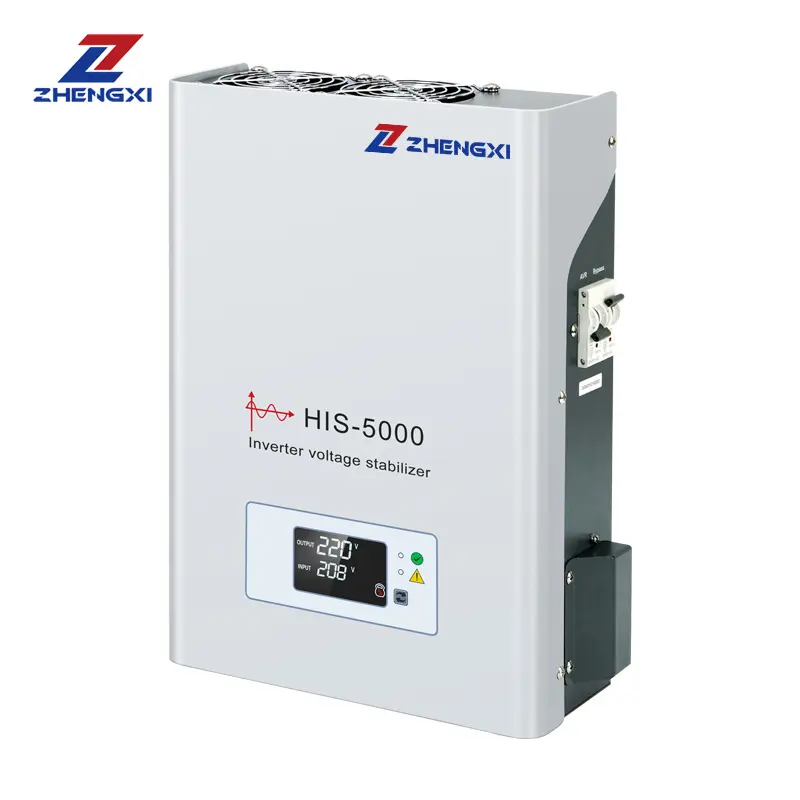
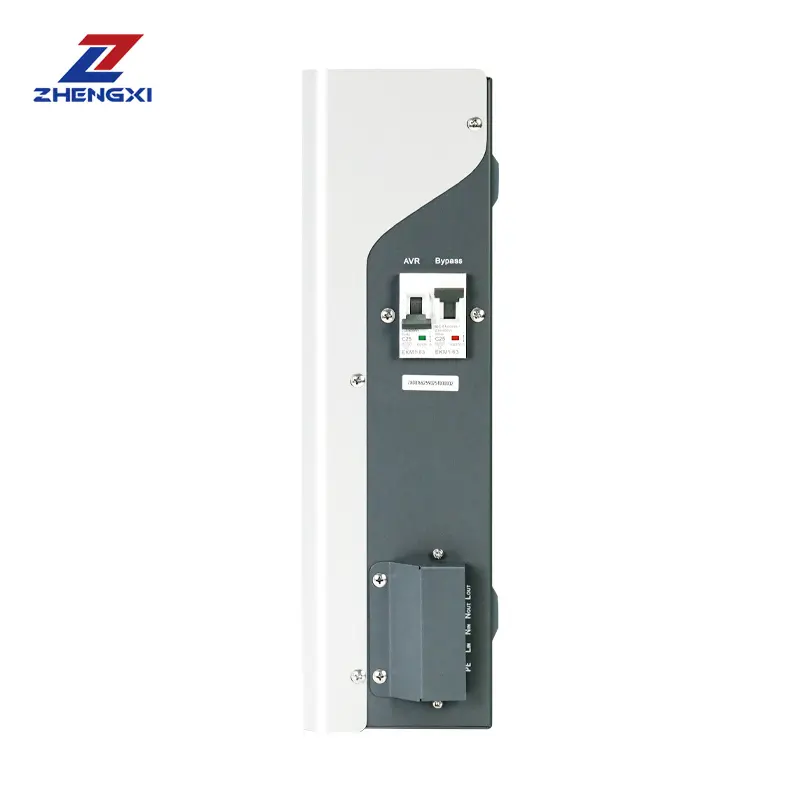
This Single Phase IGBT Pure Sine Wave Inverter Voltage Regulator Stabilizer is specifically engineered to provide higher precision voltage regulation, fast response, and low harmonic distortion, especially in situations where conventional servo or relay voltage stabilizers fail to perform adequately.
With the adoption of IGBT-based inverter regulation technology, this single-phase stabilizer ensures a clean and stable AC output even during harsh conditions associated with intense grid fluctuations, making it an ideal stabilizer for sensitive loads.
If your home or business suffers from frequent voltage drops or spikes, your electrical appliances—especially refrigerators—are at risk. The 20KVA Single-Phase Full Automatic AC Voltage Stabilizer is designed to deliver stable, clean voltage to protect refrigerators, freezers, air conditioners, and other sensitive electronics.
Built with a servo motor control system, this AVR offers high accuracy, fast correction, and reliable performance—ideal for residential homes, commercial kitchens, supermarkets, and cold storage environments.
Type: Vertical typer, Wall-mounted
Available ranges: AC 45–260Vr, 80–260V, 100–260V, 140–260V (Custom voltage is supported)
The 30KVA Automatic Voltage Regulator (AVR) is specially designed for residential homes, commercial offices, shops, and light industrial use where stable power is important for electrical appliances, computers, lighting and communication equipment. With wide input voltage options and a compact design, this model helps protect devices against unstable grid power, voltage drops, and unexpected surges.
This home stabilizer uses relay control technology, digital monitoring, and multiple built-in protections, making it a reliable and cost-effective solution for long-term voltage regulation.
The Customized Single Phase Wall Mounted Automatic Voltage Stabilizer is designed to provide reliable voltage regulation and protection for household and commercial electrical appliances. With a power range from 3.5kVA to 10kVA, this wall-mounted stabilizer ensures steady, safe, and efficient power delivery, even in areas with unstable or fluctuating mains voltage.
Built with advanced relay or servo motor control technology, it maintains a constant 220V output by automatically correcting under-voltage or over-voltage conditions. Compact, quiet, and efficient, it’s ideal for homes, offices, and small businesses seeking dependable voltage protection in a sleek wall-mounted design.







 EN
EN  FR
FR  ES
ES  PT
PT  IT
IT  RU
RU  AR
AR  FA
FA