
Transformer Blog

How to Identify an Isolation Transformer — Practical Tests, Nameplate Clues & Buyer Checklist

An isolation transformer provides galvanic separation between its primary and secondary windings. That electrical separation improves safety, reduces common-mode noise and ground-loop interference, and protects sensitive equipment. Before installation, testing, or procurement, it’s important to be able to confirm that a unit is a true isolation transformer — not an autotransformer or a different control transformer. This guide gives field-tested, safety-first steps and the documentation you should demand from suppliers.
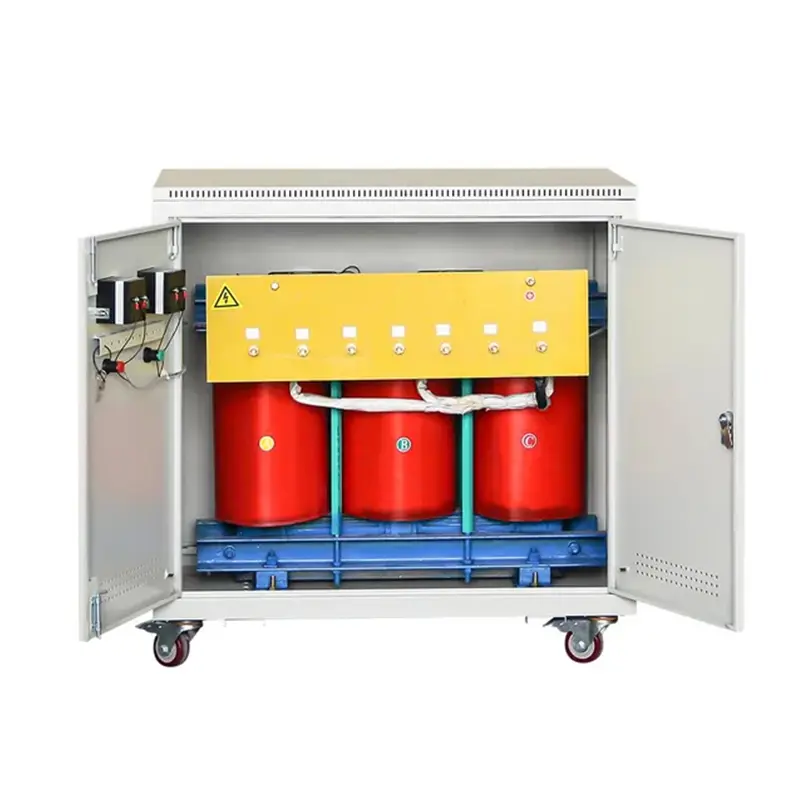
SG 10kva-1000kva Three Phase Dry Type Isolation Step Down Transformer

1. Check the nameplate and datasheet first

The quickest, non-intrusive check is the transformer nameplate and accompanying datasheet. Look for clear indicators:

  • Primary and secondary voltages (e.g., 230 V : 230 V) and kVA rating.
  • Explicit wording like “Isolation Transformer”, “Isolating”, or a 1:1 specification when isolation is the unit’s purpose.
  • Vector group or connection diagram and insulation class (F/H).
  • Factory test references (hi-pot, insulation resistance) listed or available on request.

A nameplate alone isn’t definitive, but it’s the first and required piece of evidence.

2. Visual & wiring clues on the unit

Isolation transformers typically have separate, clearly labelled terminal blocks for primary and secondary. Additional signs: a dedicated shield/earth terminal (for electrostatic screens), separate enclosure compartments, and robust insulation barriers. If terminals are tied together or share the same block, treat that unit with suspicion.

3. Continuity check (quick, safe, non-destructive)

Important: always disconnect power and apply lockout/tagout before testing.

Using a digital multimeter in ohms mode, check for continuity between any primary terminal and any secondary terminal. For a genuine isolation transformer you should read no continuity (open circuit). A low resistance reading means the windings are directly connected — that unit is not isolated.

4. Insulation resistance (megger) test — field verification

An insulation-resistance (megger) test measures how well primary and secondary are isolated. Measure MΩ between primary and secondary and between each winding and earth. Acceptable values are typically in the megaohm range; compare to the manufacturer’s datasheet. Low insulation resistance indicates compromised inter-winding insulation.

5. Turns-ratio test (TTR) — confirms winding correctness

A Transformer Turns Ratio tester verifies the expected ratio between primary and secondary. For 1:1 isolation transformers the TTR should read near 1.0. Significant deviations can indicate shorted turns, incorrect wiring, or manufacturing faults.

6. Hi-pot (dielectric) test — definitive proof (trained personnel only)

High-potential testing applies a controlled high AC or DC voltage between primary and secondary to validate insulation strength. This test must be performed by trained technicians following standards (IEC/UL/local codes). Do not hi-pot on site without proper procedures — it can stress insulation if done incorrectly.

7. Ask for documented evidence (EEAT checklist)

To prove isolation performance and support procurement decisions, request:

  • Factory hi-pot and insulation test reports.
  • TTR and temperature-rise test reports.
  • Compliance certificates (IEC/UL/CE as required).
  • Wiring diagrams and installation instructions.

Buyer’s quick checklist (one view)

  • Nameplate: labelled “Isolation” or 1:1 spec ✔
  • Separate primary & secondary terminals ✔
  • Continuity test: no primary-to-secondary continuity ✔
  • Megger: MΩ per datasheet ✔
  • TTR: expected ratio ✔
  • Factory hi-pot & test reports ✔

FAQs

Q1 — Can a 1:1 transformer still NOT be an isolation transformer?
Yes. 1:1 ratio indicates equal voltages but does not guarantee separate windings. Always confirm separation via terminal layout, continuity and test reports.

Q2 — Is a megger test enough to prove isolation?
A megger is a strong field test but should be combined with TTR and hi-pot (when needed) plus factory reports for full assurance.

Q3 — Who should perform hi-pot and TTR tests?
Only trained technicians or authorized service engineers should perform hi-pot or TTR tests, following safety procedures and standards.

Need verified isolation transformers with factory test reports and on-site commissioning? Contact ZHENGXI Technical Support for datasheets and certified test documentation.
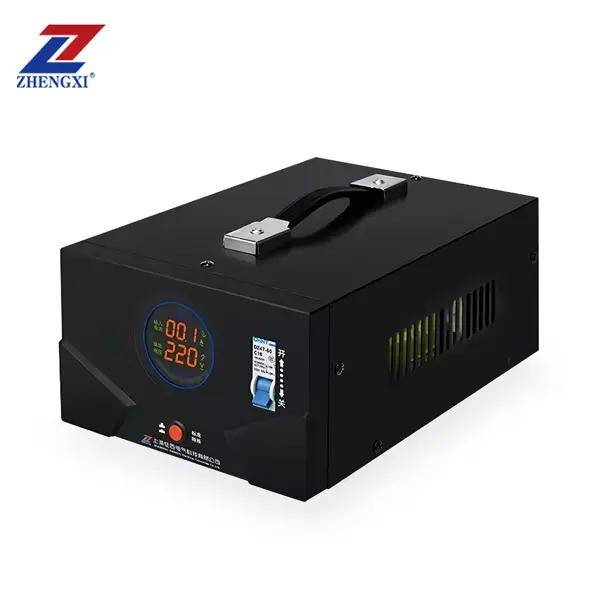
 

Related Blogs

Related Products

Single Phase Toroidal Isolation Transformer 220v To 220v With 2 Output Sockets
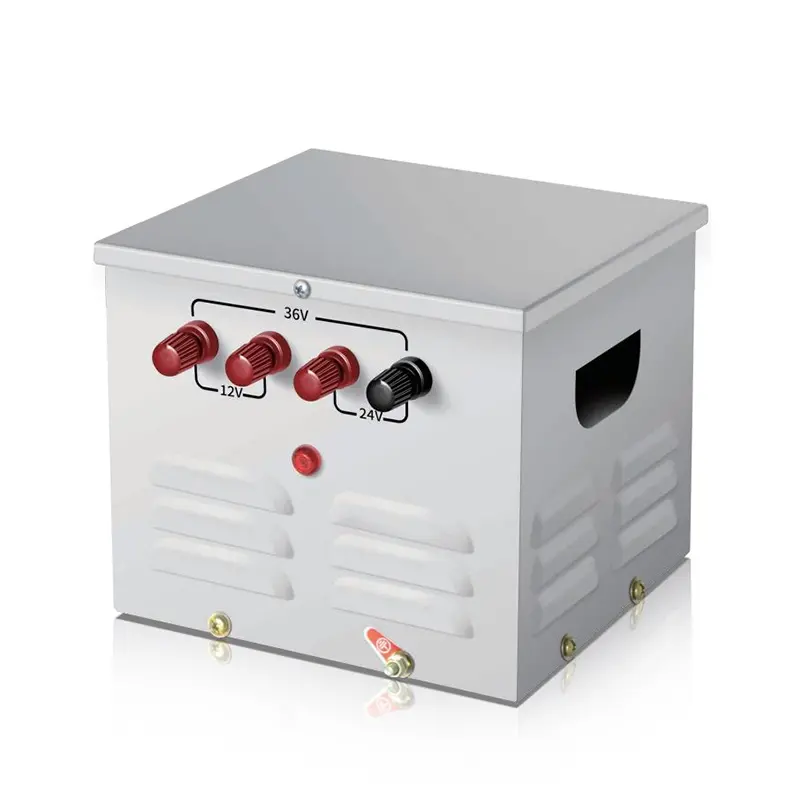
This 220V to 220V single-phase toroidal isolation transformer is made to supply delicate electronic and audio devices with clean, steady, and noiseless power. It efficiently isolates electrical noise and interference using high-efficiency toroidal core technology, guaranteeing connected devices operate at their best and are safe. With two outputs and a smart HD LCD display, users can effortlessly keep an eye on operating condition, load, and voltage in real time. This isolation transformer provides clean power, low electromagnetic interference, and long-term reliability whether it is utilized in industrial control systems, medical equipment, audio systems, or labs.

JMB Single-Phase Portable Lighting Step Down Control Transformer 25Va~50Kva
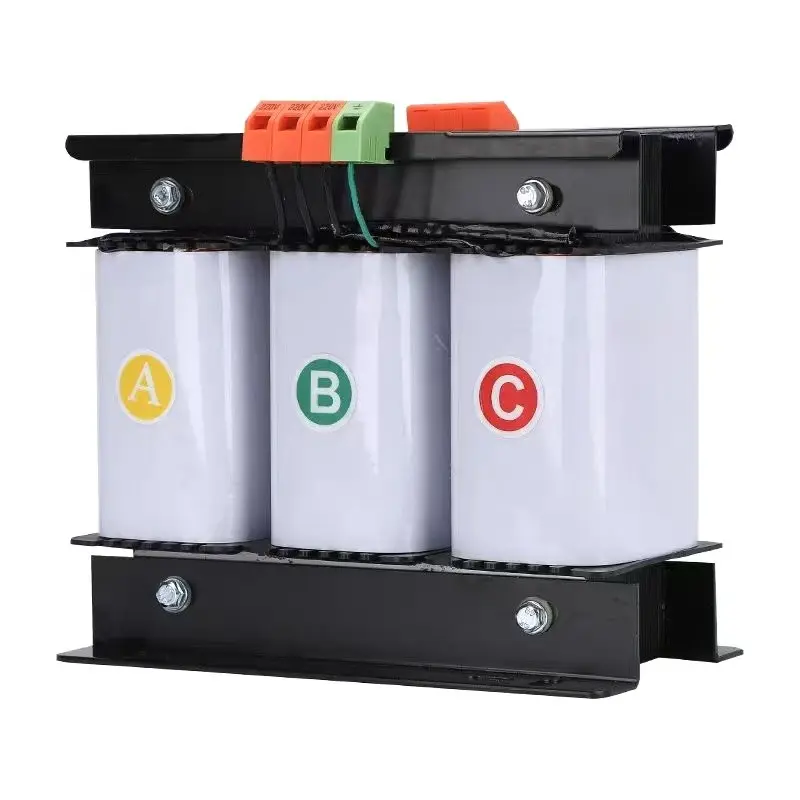
The JMB series is our rugged, portable single-phase control transformer built for lighting and small industrial equipment. It steps down common mains voltages to isolated, Safety Extra-Low Voltage (SELV) outputs — ideal for damp job sites, confined spaces and metal enclosures where safety matters. Available from 25 VA up to 50 kVA, with multiple taps and optional protective features.

High-Efficiency 500va-1000Kva Three Phase Dry Type Control Transformer 415V 400V 380V
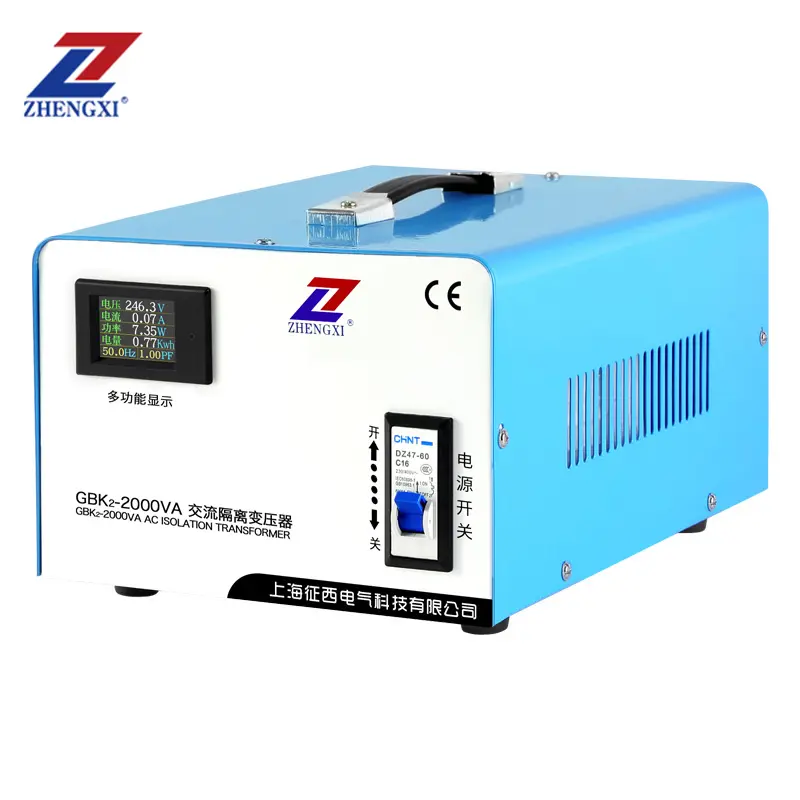
The SBK Series three-phase dry-type control transformer (500VA–1kVA) delivers compact, reliable voltage conversion for industrial control, automation and machinery applications. Available with configurable primary and secondary voltages (standard: 380V / 400V / 415V) and rated for 50Hz or 60Hz systems, this transformer is designed for low-voltage networks (<1kV). Its dry, air-cooled construction eliminates oil, reduces fire risk and lowers routine maintenance — making it a safe, cost-effective choice for motor control centers, CNC systems, PLC cabinets and distribution panels.

GBK2 Single Phase 220v To 220v Toroidal Balanced Isolation Transformer 300va-2Kva

Ensure pristine power quality and maximum safety for sensitive loads with the GBK2 toroidal isolation transformer. Designed for applications that demand low noise, low leakage and stable output (220V → 220V), the GBK2 series isolates your equipment from mains disturbances, suppresses transients and reduces common-mode interference. Its compact toroidal core delivers higher efficiency and lower audible hum than conventional laminated transformers—ideal for medical devices, pro audio, laboratory instruments and industrial controls.

Related Blogs

Related Products

TC 100va-5Kva Portable Small Step Up And Down Voltage Converter 110v To 220v Transformer

The TC Series Portable Step Up and Down Voltage Converter is designed for users who need to operate electrical appliances with different voltage standards. This reliable 110V to 220V transformer efficiently converts power between 110V–120V and 220V–240V, ensuring safe and stable performance for your devices anywhere in the world.

With its dual-core design, the 110 To 220 Transformer works both ways:

  • Converts 110V to 220V (step-up)
  • Converts 220V to 110V (step-down)

Simply select the correct input voltage for your region using the built-in voltage selector switch — available options: 110V / 220V / 230V / 240V. The corresponding output provides clean and stable AC power for your equipment.

High-Efficiency 500va-1000Kva Three Phase Dry Type Control Transformer 415V 400V 380V
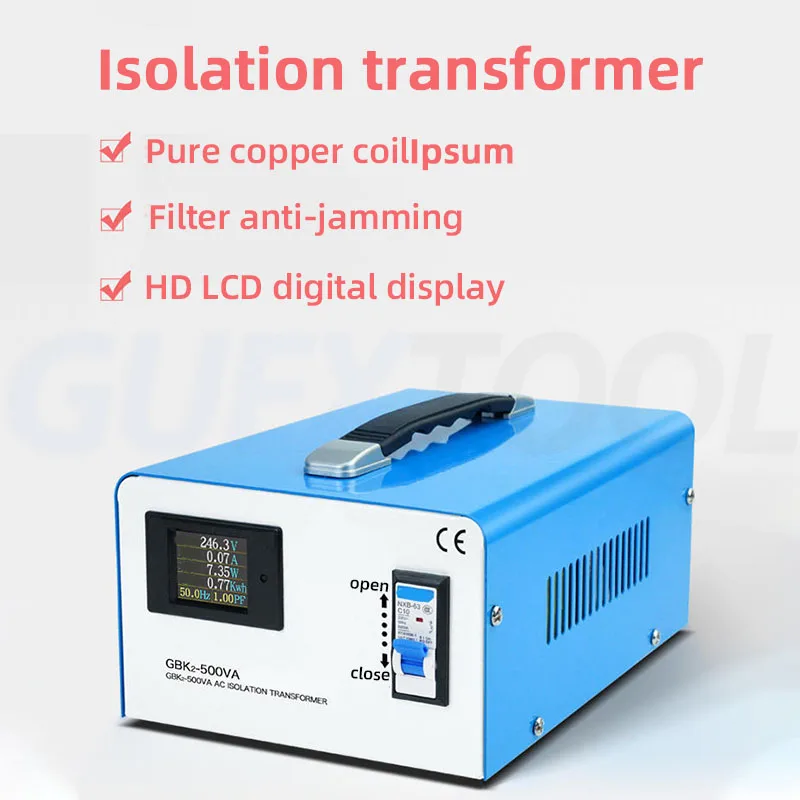
The SBK Series three-phase dry-type control transformer (500VA–1kVA) delivers compact, reliable voltage conversion for industrial control, automation and machinery applications. Available with configurable primary and secondary voltages (standard: 380V / 400V / 415V) and rated for 50Hz or 60Hz systems, this transformer is designed for low-voltage networks (<1kV). Its dry, air-cooled construction eliminates oil, reduces fire risk and lowers routine maintenance — making it a safe, cost-effective choice for motor control centers, CNC systems, PLC cabinets and distribution panels.

High-Efficiency 3000W Toroidal Power Transformer 220V 110V 36V 18V 120V 6V 65V 10kva

Designed with a low-frequency toroidal power transformer, it provides high-efficiency voltage conversion with minimal noise and thermal loss. This makes it highly reliable for demanding industrial and commercial applications. These transformers provide wide input voltages ranging from 110V to 220V AC, together with a number of secondary output voltages available between 6V and 120V, making it specifically configurable to support many different system requirements.

QSG Chinese 3 phase Dry Type Auto transformer 440v to 220v

If your facility requires stable and efficient voltage conversion—from 440V to 220V, 380V to 220V, or other customized three-phase voltages—the ZHENGXI QSG Series Three-Phase Dry Type Autotransformer is designed to deliver reliable performance, high efficiency, and long service life. As a trusted Chinese transformer manufacturer, ZHENGXI provides advanced engineering, strict quality control, and competitive 3 phase transformer price options to support global industrial applications.
Get Free Consultation!

We are ready to answer right now! 

I consent to the processing of personal data and agree with the user agreement and privacy policy

We use cookies to improve your experience on our website. By browsing this website, you consent to our use of cookies.
Shop
My account